
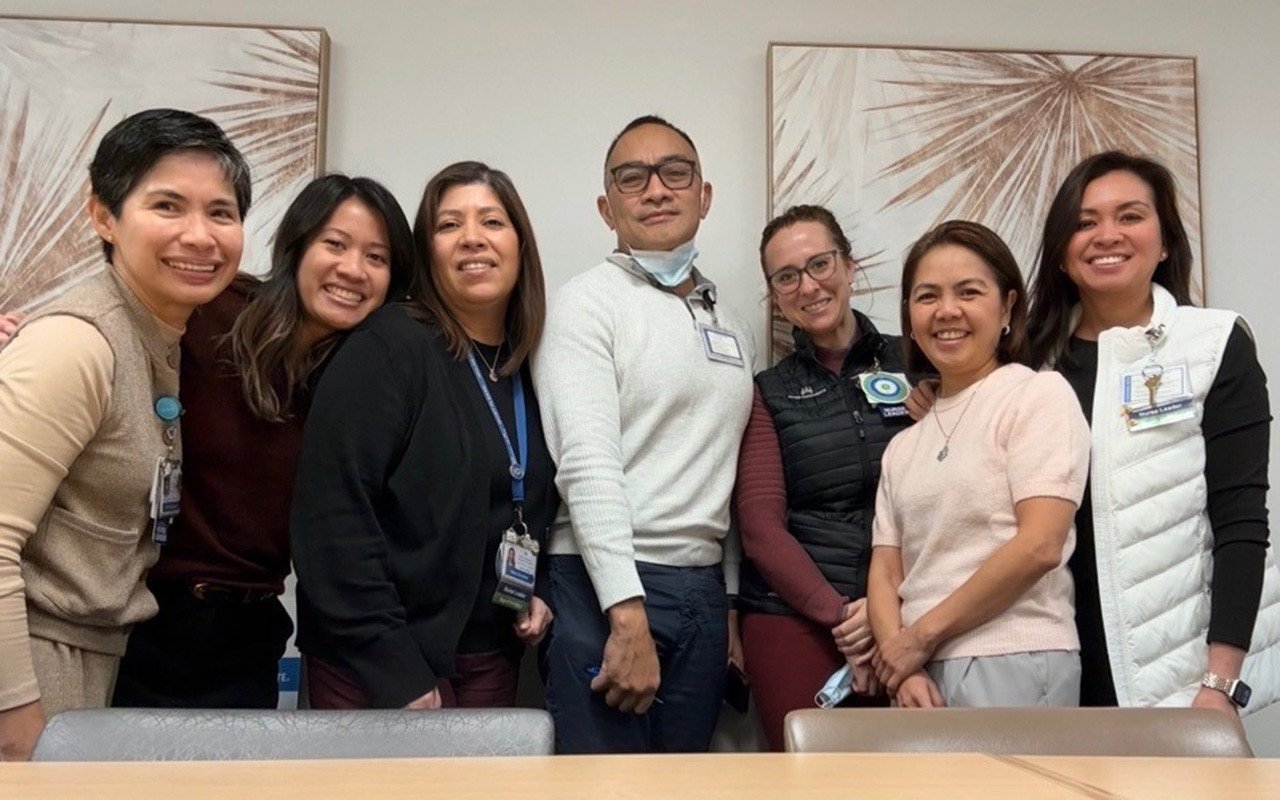
When leaders are engaged, their teams follow suit. Research shows that leaders influence up to 70% of their team’s engagement. Well-being and engagement go hand in hand: leaders who feel supported and emotionally healthy bring more energy to their work and foster environments where teams flourish. As leaders thrive, their well-being radiates outward, sparking greater productivity, enthusiasm, and a deeper dedication to delivering outstanding patient care.
Despite the various organizational resources available, middle managers reported low perceptions of organizational support for well-being. In 2025, Lydia Marque, MSN, RN, PCCN, Nurse Manager for 1 East/1 South, identified an opportunity to enhance support for leadership well-being. Baseline data indicated areas for improvement. The Employee Interest Survey reported a perceived support score of 6.5 out of 10, and the People Pulse Culture of Health score for Assistant Nurse Managers (ANMs) was 60, both below established benchmarks.
To address these findings, Marque initiated a six-month interdisciplinary performance improvement project focused on two primary interventions:
- The Digital Oxygen Mask Toolkit, a SharePoint-based platform, provided streamlined access to mindfulness tools, stress management resources, and employee assistance information.
- The Leadership Well-Being Committee, a cross-departmental collaborative, was established to promote connection, shared learning, and a culture of care among leaders.
The committee, co-led by Kristen Davis, MSN, RN, House Supervisor, convened via Teams to review the toolkit, plan monthly events for leaders, and coordinate participation using a leader sign-up sheet. Membership to to the Leadership Wellbeing Committee included leaders from multiple departments, such as Assistant Nurse Managers, Trisha Whaley, MSN, RN (ED), Ayieda Bibb, BSN, RN, and Brenda Wong, MSN, RN (PCC), Chinenye Obiaga, DNP, RN (1E/S), Bradley Pierson, MSN, RN (1W), Leah Medalle, BSN, RN (5th Floor), Carold Gantuangco, BSN, RN, CCRN (ICU), Valentino Passetti, ADN, RN (PACU), Michael Smirnov (EVS), Joseph Viduya, BSRT, RRT (RT), Racquel Agamata, MSN, RN, PCCN (Education), Teresa Capina, MSN, RN (COC), Edoardo Morlet, MSN, RN (Quality), and Linzy Davenport, DNP, RN, CENP (COO, Project Mentor).
The committee focused on targeted, individual engagement with Assistant Nurse Managers. Leadership rounding, check-ins, and leader walks facilitated open discussions regarding stress, work-life balance, and resilience. These efforts normalized conversations about well-being and contributed to a culture of mutual support.
Ongoing feedback and adaptive leadership enabled the initiative to develop into a sustainable model for leader connection and professional growth. The outcomes included the following:
- Employee Interest Survey scores increased from 6.5 to 8.5.
- Culture of Health scores improved from 60 to 70 among Assistant Nurse Managers.
- The Digital Oxygen Mask Toolkit received 278 views from 34 users, indicating substantial engagement.
The initiative not only improved perception scores, but most importantly it highlighted the need for supporting leader’s wellbeing.