
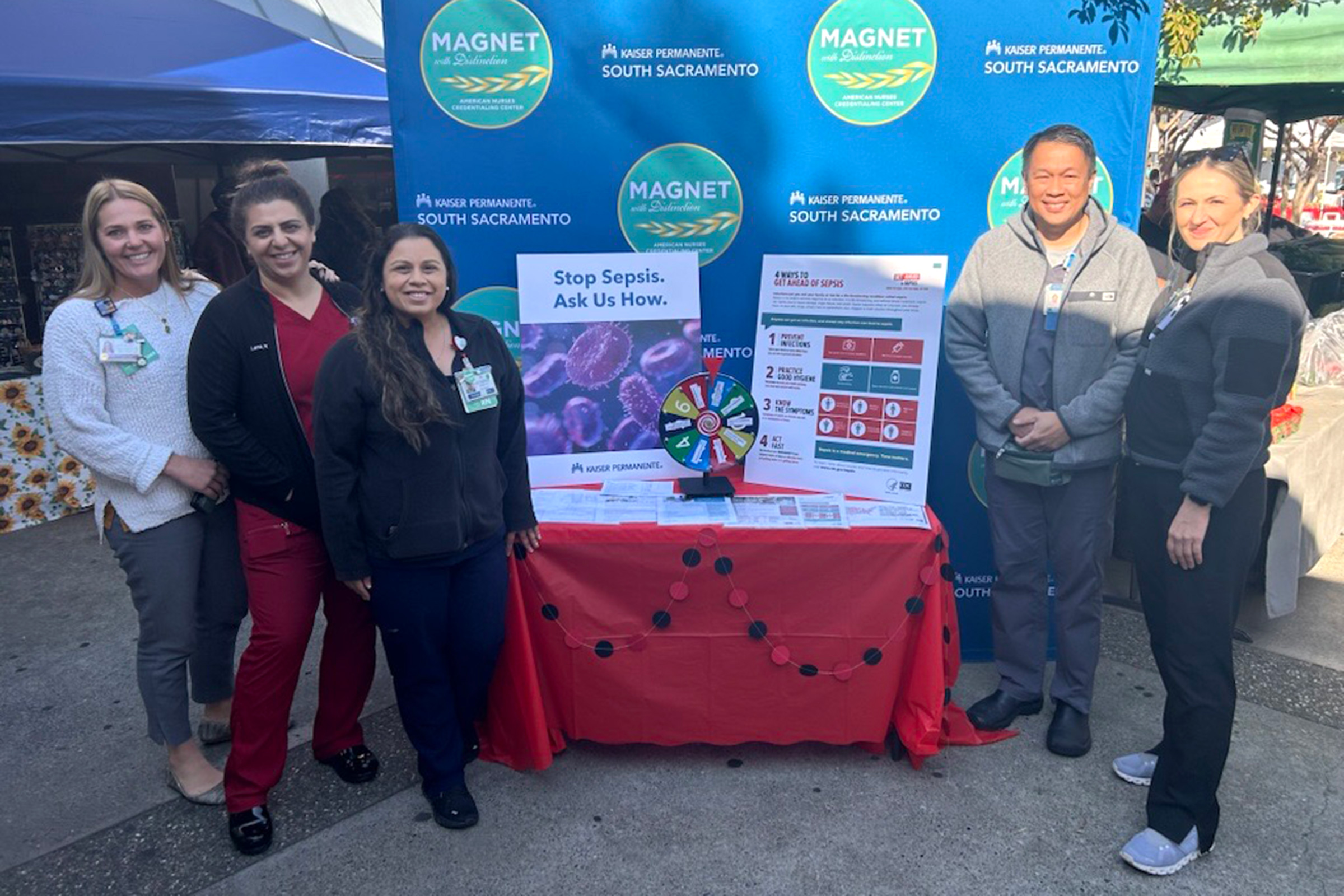
The ‘Stop Sepsis’ Booth initiative at Kaiser Permanente South Sacramento (SSC) shines as a model of RN’s proactive health education and community engagement. Recognizing the grave threat sepsis poses — impacting approximately 1.7 million adults in the United States annually and claiming at least 350,000 lives during hospitalization or shortly thereafter — RNs at SSC responded with a dynamic, multifaceted approach aimed at turning awareness into action. SSC is a 275-bed Level 2 trauma center and one of California’s busiest emergency departments, with sepsis as its leading cause for both admissions and readmissions across all major racial and ethnic groups.
Recognizing the need for increased community awareness of sepsis, its risk factors, and early warning signs, Pamela Jagur, BSN, RN, PHN; Brandon Bert, BSN, RN; Mahedia Zadran, RN; Lena Yaqubi, RN; Mark Mamaclay, BSN, RN; Darya Grymaylo, BSN, RN; Neneh Barrie-Fania, MSN, RN, PHN; and Carminda ‘Armie’ Pantoja, BSN, RN, developed the Stop Sepsis Booth initiative. The booth was set up each week during the Friday Farmers’ Market outside the medical center, with SSC RNs educating patients, members, and the broader community with essential knowledge to recognize sepsis symptoms early and seek timely medical intervention.
The booth featured interactive learning stations, expert-led discussions, and accessible handouts that illuminated sepsis pathophysiology, risk factors, early warning signs, and the vital importance of seeking prompt medical care. The initiative didn’t stop at information: It offered fun incentives, vital sign screenings, and survey participation, making learning both meaningful and memorable.
The results speak volumes: Every single one of the 98 participants reported heightened awareness and greater confidence in recognizing sepsis symptoms. Many attendees expressed newfound clarity about when to seek medical attention and how to lower their risks through simple infection control and chronic disease management practices. The booth successfully reflected and reached the community’s diversity, with significant participation from Black/African American, White, Hispanic/Latino, and Asian groups, echoing the demographics of those most affected by sepsis at SSC.
This celebration of community-driven health promotion underscores the power of education to save lives. We are proud of the impact our RNs have and continue to have in the community!