
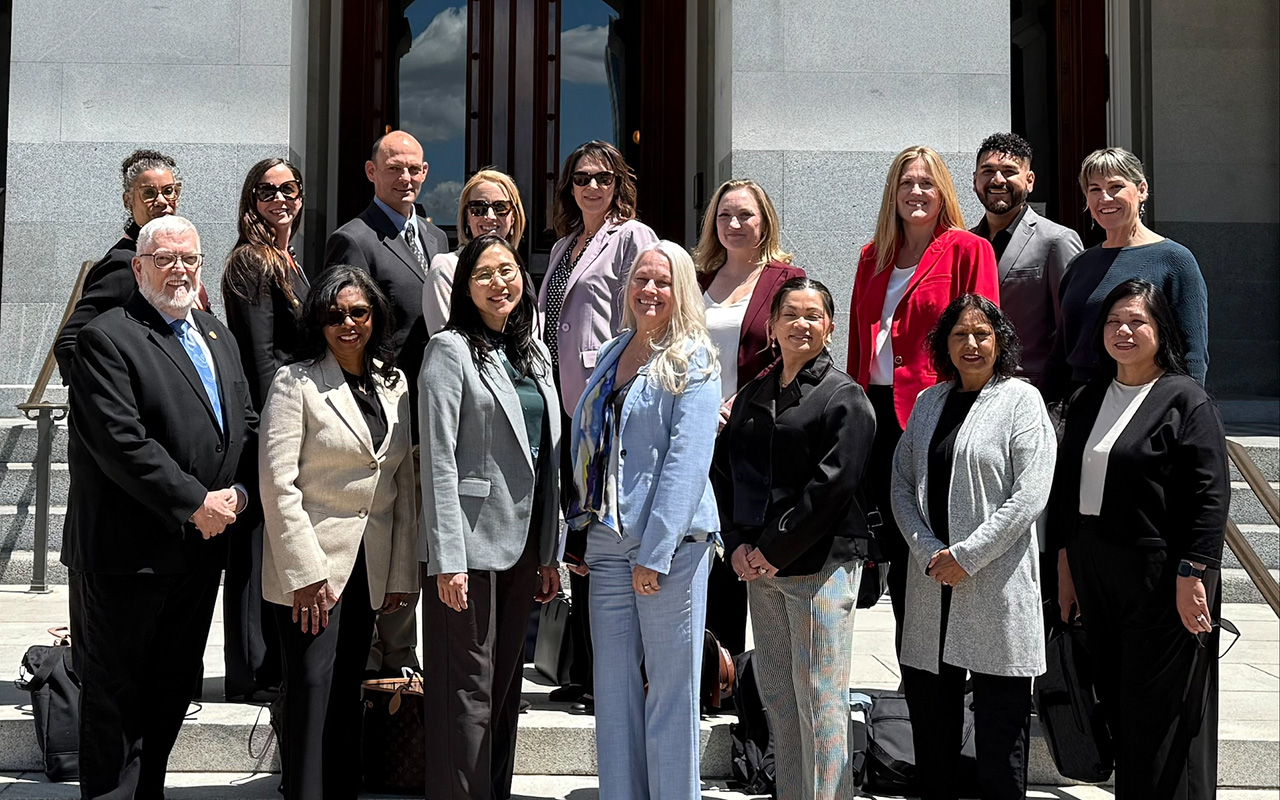
In May 2025, nursing leaders from Kaiser Permanente Northern California participated in Day at the Capitol, an initiative led by the KP Scholars Academy in collaboration with the California chapter of the American Nurses Association (CA‑ANA) and the KP Government Relations team. The program aimed to reinforce structural empowerment by expanding nurses’ capacity to proactively influence health policy. Provision 9 of the American Nurses Association Code of Ethics emphasizes that “nurses and their professional organizations work to enact and resource practices, policies, and legislation to promote social justice, eliminate health inequities, and facilitate human flourishing.” Day at the Capitol introduced nurse leaders to legislative advocacy, effective message development, and strategic communication — reinforcing that nurses should be engaged early in the legislative process to bring forward subject matter expertise and advance professional nursing excellence.
ANA‑California: Moving From Reactive to Upstream Influence
The morning sessions focused on skill building in partnership with CA‑ANA, guiding participants through three structured components: Introduction to Legislative Advocacy, Message Development & Strategy, and Practical Application & Feedback. The goal was to equip nurse leaders to transform authentic clinical and operational experiences into clear, consistent messages that effectively inform and influence policymakers.
Reflecting on her experience, Carrie Maloney Robertshaw, DNP, MSN, RN, NEA‑BC, FACHE, Chief Operating Officer at Kaiser Permanente Vallejo Medical Center said, “As nurses, it is essential that we use our voices to influence the political process. I left feeling empowered to become more engaged in advocacy efforts.”
She also emphasized the importance of sustaining the program so more nursing professionals can benefit from this training.
Promoting KP Voice: A Pathway for Organizational Engagement
A key component of the day highlighted KP Voice as a platform enabling employees and physicians to participate in advocacy aligned with Kaiser Permanente’s mission and values. KP Voice operates as an impartial grassroots initiative that allows participants to influence policy decisions at all levels of government. More than 14,000 KP employees and physicians are active in KP Voice, collectively completing over 47,200 advocacy actions nationwide.
By pairing advocacy skill development with a clear internal framework for sustained engagement, Day at the Capitol strengthened structural empowerment — expanding access to tools, information, and pathways that enable nurse leaders to influence broader systems beyond their immediate settings.
Meeting Legislators as Subject Matter Experts
Participants also engaged with the KP Government Relations team to gain insights into Kaiser Permanente’s advocacy priorities, message coordination, and opportunities for nursing leaders to contribute effectively. In the afternoon, nurse leaders visited the California State Capitol and Swing Building, participating in observations, structured legislative meetings, and a facilitated debrief. During these conversations, nurse leaders served as subject matter experts, bringing forward frontline perspectives and offering solution‑focused insights. The dialogue remained nonpartisan and grounded in a commitment to policies that support safe, effective care and enable nurses to practice fully within their education and scope.
Following the event, nursing leaders affirmed that this initiative is purposeful and expanding. The goal is to advance beyond awareness toward meaningful engagement aligned with Kaiser Permanente’s mission and values. They also shared that the program would continue under the KP Voice initiative as “a great way to stay informed and to expand engagement.”
Community Engagement
External nurse leaders were also invited to participate. Eight months after the event, Nicole Barnett, DHSc, MBA, RN, NEA‑BC, President and Chief Executive Officer of Planned Parenthood Northern California, shared “The experience and training last year helped me prepare for my role at Planned Parenthood in shaping reproductive justice policy. Since completing your program, I have met with state legislators, members of Congress, mayors, and community partners. In each interaction, I am able to make a concise and compelling pitch for policy that moves the needle on health access and equity.”
Day at the Capitol exemplifies structural empowerment in action—creating opportunity, building capability, and strengthening the conditions that allow nursing leaders to influence change both within and beyond the organization. Most importantly, the program affirms a clear position: nurses should not be consulted only at the final stages of policymaking. Their expertise is essential early in the process, shaping decisions that affect patients, communities, and the nursing profession.