
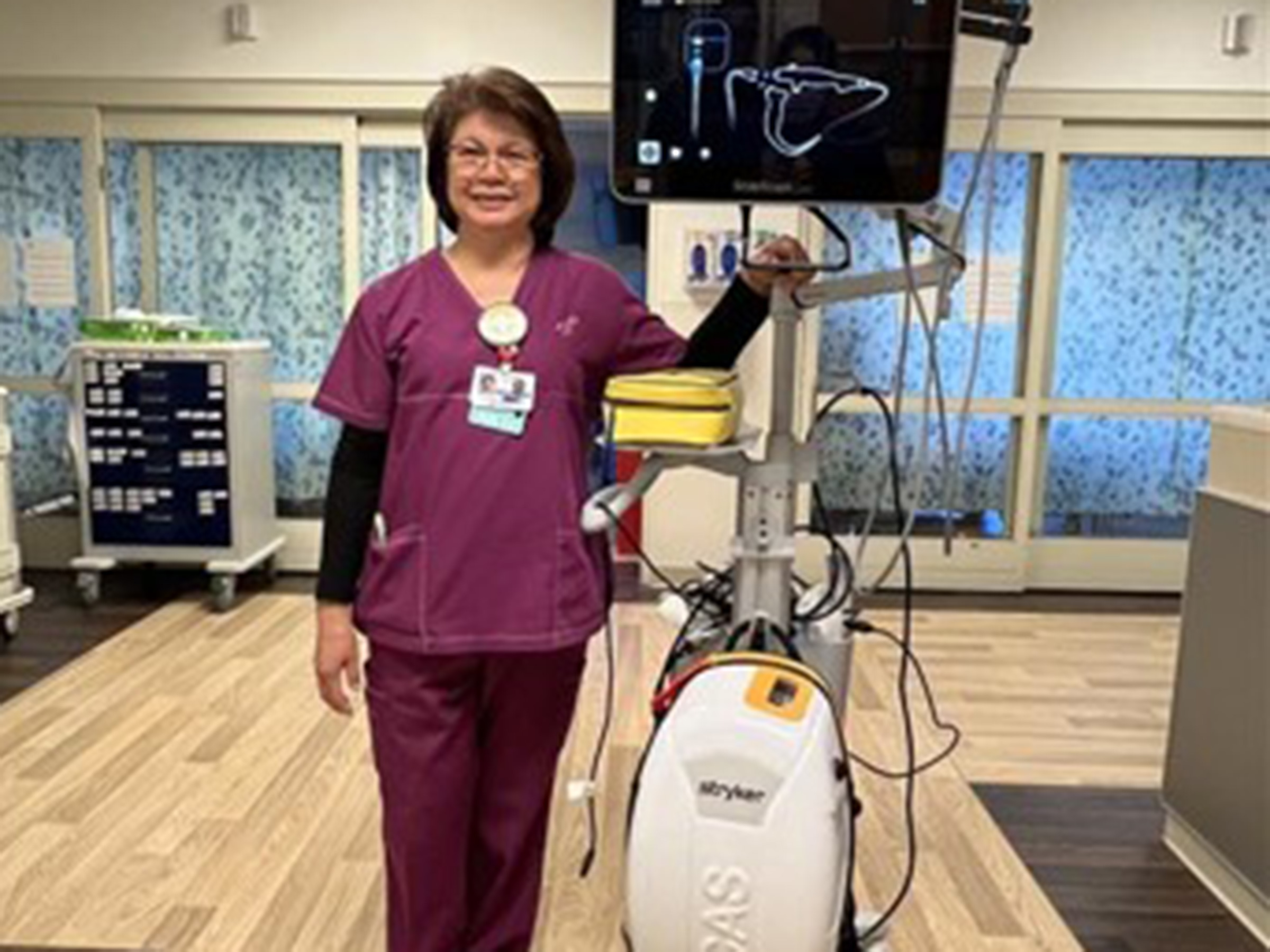
At the Fremont Medical Center, transporting the LUCAS Device, a portable, automated external chest compression system for critically ill patients posed significant challenges due to its weight and bulk, making safe movement difficult.
Although the device is vital for delivering high-quality chest compressions during transport, its size created logistical issues during emergencies, such as a Code Blue, when quick movement between floors was required. The physical strain of moving the device put nursing staff at risk for musculoskeletal injuries, raising serious concerns about staff safety and well-being.
The ICU nursing team sought to address the challenges of safely transporting the LUCAS device while reducing physical strain on staff. They identified that the existing Glidescope stand could be repurposed as a practical transport solution for the device. Its stable design allowed for smooth movement with minimal effort, eliminating the need for manual lifting by staff. This innovative adaptation was introduced as a trial solution to support routine patient transport, particularly in emergency situations.
Since the implementation of the new system, there have been zero reported injuries related to transporting the LUCAS device in the ICU. The use of the Glidescope stand facilitated faster movement of the LUCAS device between floors, reducing delays during critical moments. Timelier deployment of the LUCAS device during emergencies led to better patient outcomes, particularly for patients experiencing cardiac arrest, by ensuring immediate and continuous chest compressions.
This RN-driven innovation demonstrates the effectiveness of practical, staff-led solutions in improving both employee safety and patient care. By reducing the risk of injuries and improving transport efficiency, nursing staff can focus on delivering optimal care without the added physical strain. The success of this initiative highlights the importance of involving frontline health care workers in the problem-solving process to foster sustainable improvements in health care settings.