
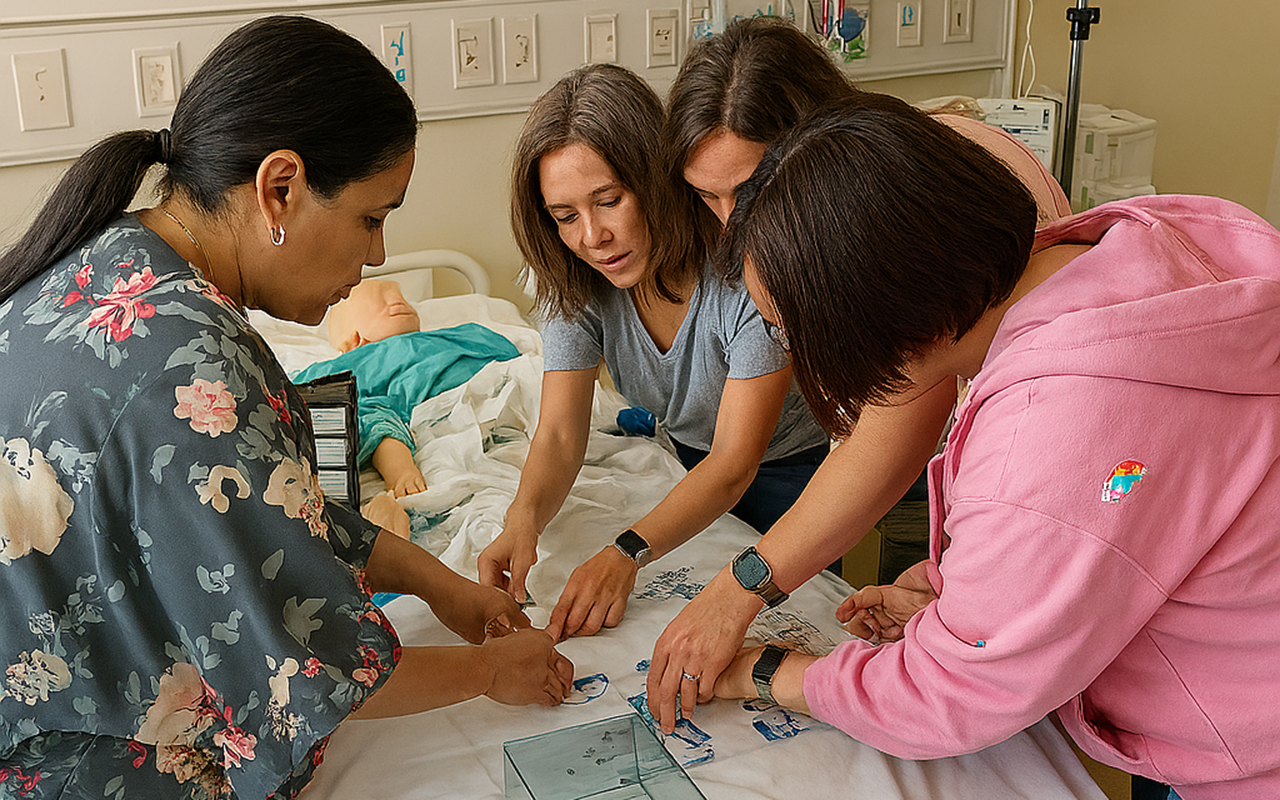
 Liberty Hilario, MSN, RN, CPN, (pictured at left) a clinical nurse on the PICU transport team at Kaiser Permanente Santa Clara (KP SCL), found inspiration for an innovative educational project after attending the 2024 Magnet Conference. During the event, Hilario participated in a session that showcased how one facility successfully used an escape room to teach a protocol algorithm to its nursing team. This experience sparked her interest in applying a similar concept to pediatric nursing education. After conducting further research, Hilario recognized that creating a Pediatric Sepsis Escape Room would be an engaging and effective way to enhance learning during Pediatric Skills Day.
When selecting a graduate project for her master’s program, Hilario chose to dedicate her research and efforts to developing this escape room for pediatric nurses. She completed her Master of Science in Nursing in Clinical Leadership Education through Samuel Merritt University in partnership with the Kaiser Permanente Nurse Scholars Academy. Reflecting on her motivation, Hilario shared, “I have always had a strong passion for nursing education and wanted to introduce a fresh, interactive approach to learning. This project reflects my commitment to advancing nursing education through creative, evidence-based strategies that improve knowledge retention, teamwork, and confidence in managing critical conditions.”
The Pediatric Sepsis Escape Room was designed to strengthen pediatric nurses’ confidence in recognizing and managing sepsis through an immersive simulation experience. It focuses on improving recognition of early sepsis indicators using tools such as the Pediatric Early Warning Score, promoting timely interventions including fluid resuscitation and antibiotic administration, and fostering teamwork and critical thinking in a dynamic, high-pressure environment.
Hilario conducted a qualitative study using pre- and post-surveys to evaluate pediatric nurses’ perception and knowledge of the sepsis algorithm before and after the escape room experience. Results showed a trend of improved knowledge and confidence following participation.
This project not only introduced an innovative approach to pediatric nursing education but also demonstrated the power of creativity in advancing clinical practice. By transforming a critical topic like pediatric sepsis into an interactive, gamification experience, Hilario has set a new standard for engagement and knowledge retention. The Pediatric Sepsis Escape Room reflects a growing commitment within nursing at KP SCL to embrace evidence-based, experiential strategies that prepare clinicians to respond confidently and effectively to enhance patient outcomes.