
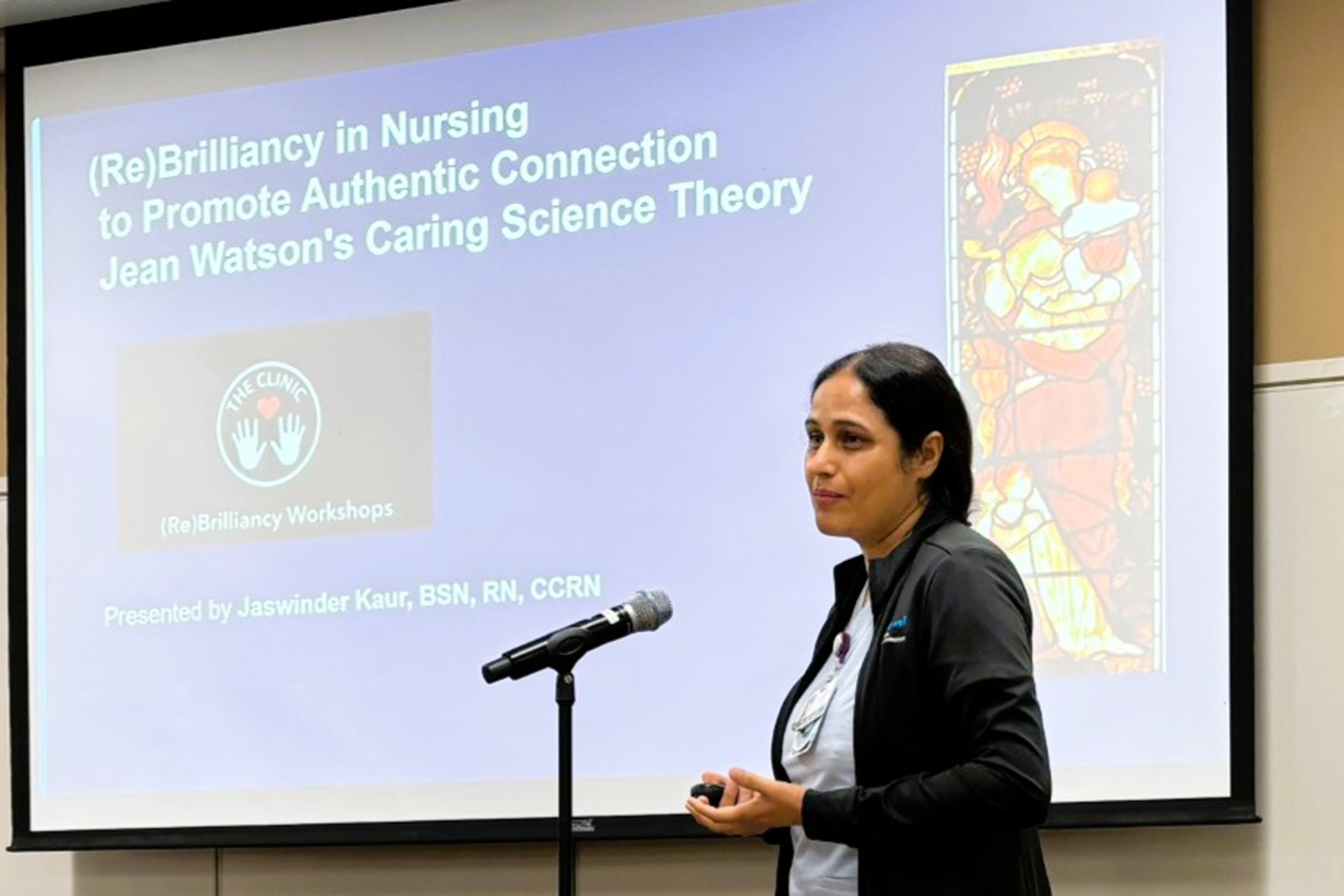
In November 2025, Clinical Nurse Jaswinder Kaur, BSN, RN, CCRN, from the Intensive Care Unit, presented The Clinic: An 8-Hour Resiliency Educational Workshop at Kaiser Permanente Santa Clara during the quarterly Town Hall meeting. Centered on Jean Watson’s Caring Science Theory, the workshop drew approximately 40 in-person attendees and an additional 119 virtual participants.
Kaur, who also participated in this study’s workshop, shared insights into its aim, literature review, strategies for nurturing resilience, examples of self-care, KP Santa Clara resources that support well-being, and the study’s results. The goal was to reduce compassion fatigue and burnout, enhance job satisfaction and self-compassion among nurses, and ultimately improve patient care while decreasing nursing turnover rates.
Kaur reviewed findings from the literature, identifying key contributors to burnout and compassion fatigue, as well as a decline in meaningful social connections among healthcare professionals. She emphasized the importance of self-care as a foundation for resilience and positive change.
Physical self-care strategies discussed included maintaining a nutritious diet, staying hydrated, establishing a consistent sleep routine, decluttering personal spaces, dedicating time to cooking, dressing in ways that promote comfort and confidence, and engaging in uplifting activities such as singing or dancing to energetic music.
Emotional self-care practices included nurturing relationships through visits or phone calls with loved ones, setting boundaries around time and energy to prevent overwhelm, and listening to favorite music — highlighting its therapeutic benefits. Additional strategies involved journaling for personal reflection, listing one’s positive attributes, and revisiting joyful memories through photo albums or digital galleries.
Post-workshop surveys showed gains in self-kindness and compassion satisfaction, along with reduced secondary traumatic stress, confirming the interventions’ effectiveness.
The key takeaway from Kaur’s presentation was the importance of “filling our own cups first” to build resilience effectively. Chief Nursing Executive Stacy Alves, DNP, MS, RN, NEA-BC, reinforced this message by encouraging attendees to take time each day to pause and breathe deeply as a simple yet powerful way to support personal resilience.