
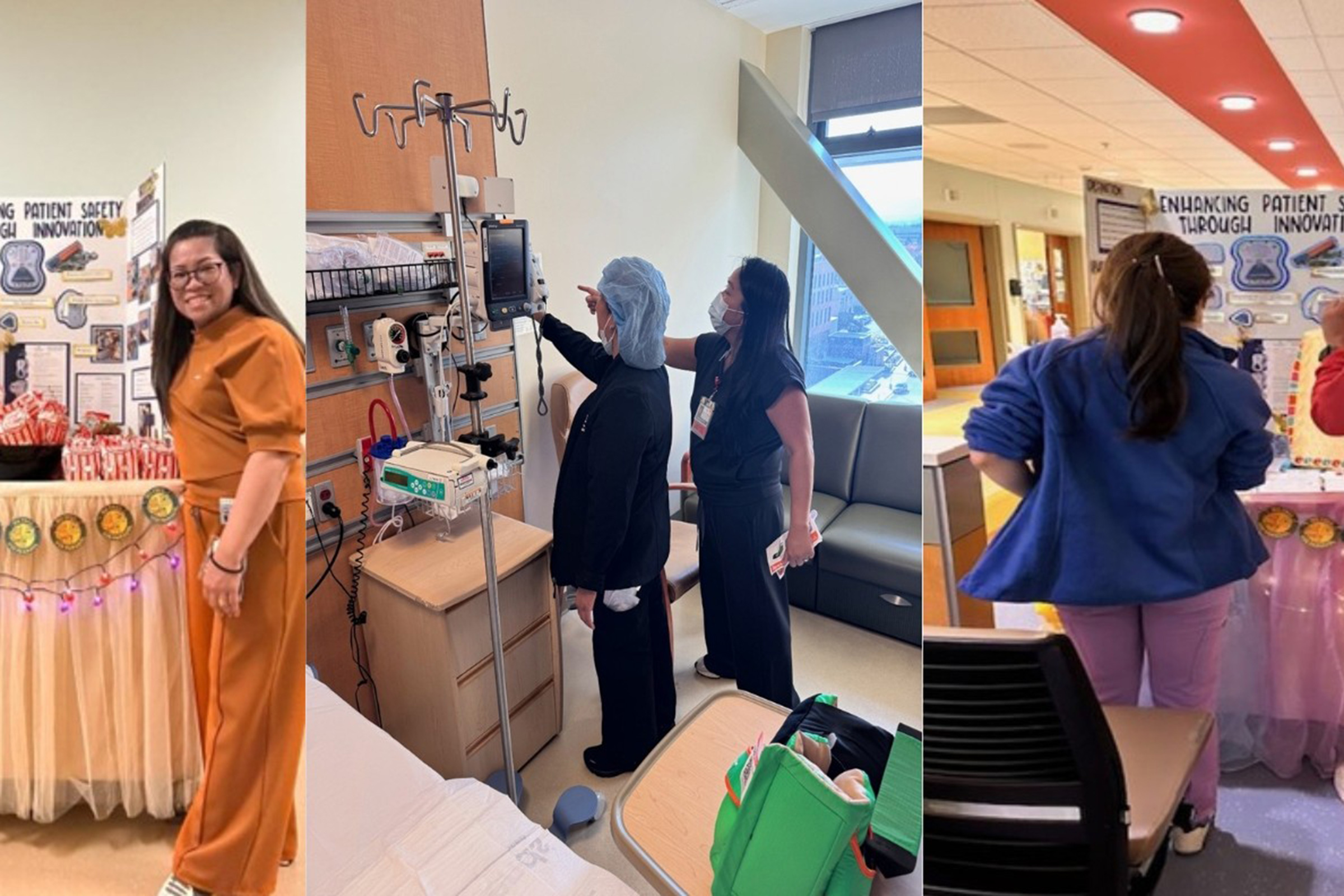
Falls remain a significant safety risk for hospitalized patients, often resulting in harm and increased costs. At Kaiser Permanente Redwood City, nursing staff observed that patients with cognitive impairment or language barriers face additional challenges with fall prevention. Despite standard measures such as non-slip socks, alarms, call lights, and direct observation, falls continued to be a concern.
Clinical Adult Nursing Director Karen Cepero, DNP, RN, NEA-BC, CCRN, CEN, partnered with Yinghua Zhou, MSN, RN, NEA-BC, SCRN, Nurse Manager of the 5 South Neuroscience Observation Unit, to pilot the Parasol device as an innovative fall-prevention strategy. Unlike traditional alarms, Parasol uses personalized voice recordings, often from family members and in the patient’s primary language, to redirect patients attempting to exit the bed or chair. This approach provides comfort and reassurance to the patient while alerting staff through an audible alarm linked to nurses’ Vocera phones.
Staff were trained on device use, and personalized recordings were created whenever possible. The results were significant: comparing the pre-intervention period to the post-rollout phase, the pilot unit achieved a 17% reduction in falls.
In 2025, following this success, the Parasol device was expanded to all adult service units hospital-wide. To support the rollout, RN Quality Liaison Sherie-May Domingo, BSN, RN, Ashley Kong, BSN, RN, Gilda Santos, BSN, RN, CMSRN, GERO-BC, and Grace Malasan, BSN, RN, provided peer-to-peer education with a roving cart to demonstrate proper device use. This cost-effective, patient-centered intervention underscores the importance of nursing leadership partnering with frontline staff to adopt evidence-based practices that enhance safety and reduce harm. The Parasol implementation also highlights the need for nurse leaders to continually evaluate and advance strategies that promote patient safety.