
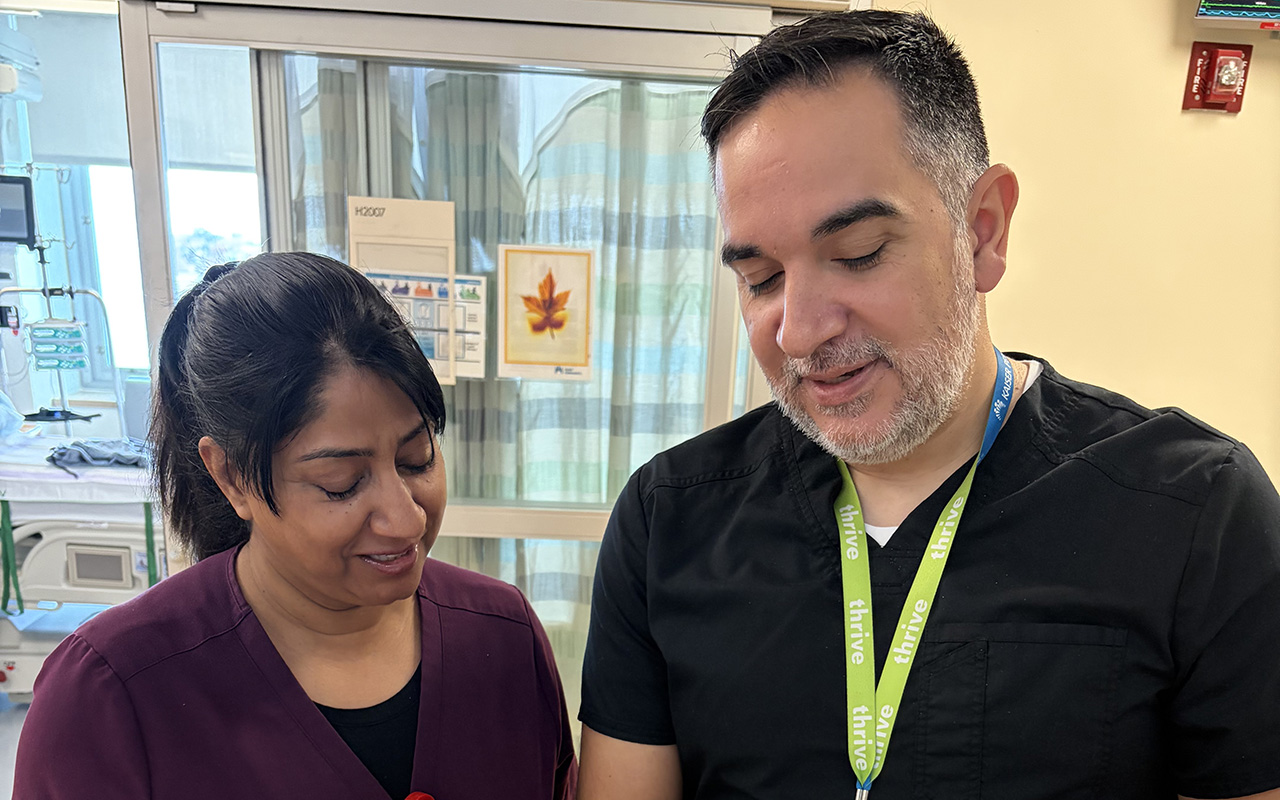
In early 2025, Intensive Care Unit (ICU) nurses identified a concerning trend: five preventable hospital-acquired pressure injuries (HAPIs) occurred in the first quarter alone — more than twice the total from the previous year. Four of these injuries were related to medical devices such as forehead pulse oximeters and nasogastric tubes. Recognizing the need for immediate action, ICU nurse champions Sherydahn Aldrich, BSN, RN, and Kulwinder Chanan, MSN, RN, partnered with Ruben Lopez, MSN, RN, Nursing Professional Development Specialist (NPDS); the Wound Care team; ICU Manager Rozanne Sherlock, BSN, RN; and Director Charity Shelton, DNP, RN to launch an innovative prevention program known as HAPI Hour.
HAPI Hour is a daily rounding initiative in which the NPDS, nurse champions, and primary nurses collaborate to assess device placement, protective barriers, and potential skin risks. Using a standardized audit tool, the team performs necessary interventions and provides real‑time education at the bedside. This included standardizing nasogastric tube securement using a vendor device, reinforcing correct pulse oximeter placement, and retraining staff on bridle application. For patients too unstable to reposition, wound‑care specialists helped implement individualized off‑loading strategies.
During the first four months, the team completed 337 device audits, with nearly one‑fifth requiring adjustments or preventative measures. Notably, no device‑related HAPIs occurred during this period. Preventing these injuries not only supported patient safety and quality outcomes but also reduced the significant resource demands typically associated with HAPI management.
Following these strong results, leadership approved protected time for nurse champions to sustain and expand the program. HAPI Hour is now under consideration for spread to medical-surgical, telemetry, and perioperative units. This nurse‑led initiative showcases how frontline insight, structured teamwork, and focused education can meaningfully reduce harm, strengthen accountability, and advance a culture of zero‑harm.