Skip to content
A group of nurses holding a banner and signs

Redwood City Nurses attend ANCC Magnet Conference  

Fourteen nurses attended the 2024 ANCC Magnet Conference, 12 of whom were first timers! This incredible opportunity allowed them to engage in inspiring learning sessions and bring back valuable insights to elevate nursing excellence within the organization. 

PED09d009

Creating space for better pediatric asthma care  

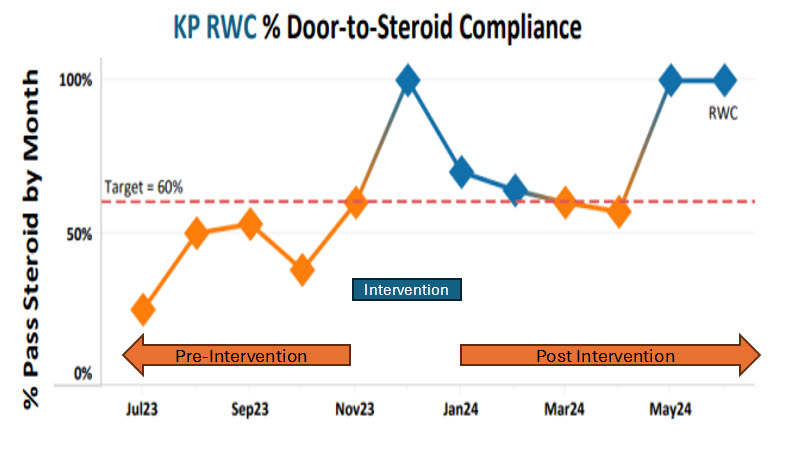
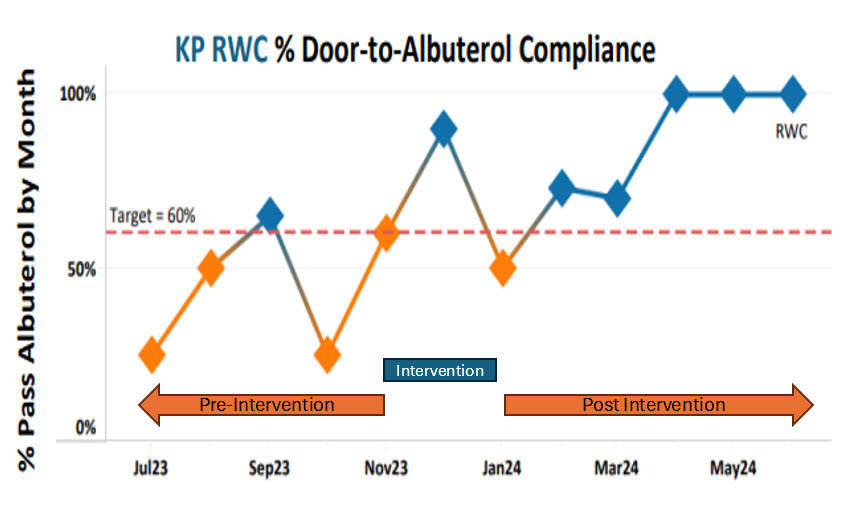
To address the growing need for pediatric asthma care in a busy Emergency Department, the Nursing Unit Council, led by Chair Sheila Rowe, MSN, RN, CEN and Christina Fowlks, MSN, RN, collaborated with leadership to establish a dedicated space equipped with a pediatric asthma chair and equipment cart. This space facilitates the early administration of dexamethasone and albuterol, an evidence-based intervention proven to reduce length of stay and decrease pediatric ICU admissions.

The council also partnered with our Pharmacy team to facilitate auto-verification of these medications to reduce delays in care. Since implementation of these and other tailored performance improvement interventions, the ED has continued to see a sustained improvement in their time from door to albuterol and steroid compliance.

Graphic
Graphic
3 nurses smiling with certificates

Empowering new graduate nurses through evidence-based practice

This year, our new graduate nurses, Joe Solar, MSN, RN, and Sara Otaru, BSN, RN, demonstrated their commitment to improving patient outcomes by completing the first three steps of the EBP process. They investigated whether wearable technology, such as the LEAF System, could effectively reduce hospital-acquired pressure injuries (HAPI). 
 
Through a thorough literature review and critical appraisal of available evidence, the team concluded that there is currently insufficient evidence to support the implementation of these devices. However, their work has laid the foundation for future exploration, sparking the possibility of advancing this inquiry into a formal research project. 

Innovation featured image placeholder

ICU Liberation Bundle course and workshop: Enhancing patient and family-centered care

The ICU Liberation Bundle was initially implemented in Kaiser Permanente Santa Rosa ICU in 2021. However, as with all protocols, maintaining up-to-date best practices requires consistent updates and reeducation. This ensures that nurses and other disciplines continue to provide the highest standard of care aligned with current evidence-based guidelines. 

In March 2024, planning began under the leadership of Anna Gappi BSN, RN and Christina Andrade RN, MS, APRN-CNS, CNRN to host the SCCM NorCal Chapter’s ICU Liberation Bundle Course at KP SRO. This initiative aimed to provide a local venue for our team to access this valuable training. Our certified instructors from KP SRO were set to facilitate the course alongside SCCM lead instructors. The event was scheduled for October 24–25, but unfortunately, the course was cancelled due to insufficient participant registration. 

In response, Gappi and Andrade pivoted to develop an ICU Liberation Bundle Workshop, tailored specifically for the KP SRO ICU team. This workshop was held on December 11, 2024, as a 4-hour course approved for BRN Continuing Education Units (CEUs). It was offered to staff from the ICU, Respiratory Therapy (RT), and Rehabilitation (Rehab) departments. 

The workshop was made possible by the expertise of the KP SRO SCCM-certified instructors, including: 

  • Anna Gappi, BSN, RN 
  • Christina Andrade, RN, MS, APRN-CNS, CNRN 
  • Caroline Nganga, RT 
  • Joan Cosper, OT 
  • Chelsea Whitaker, PT 
  • Elizabeth Au, MD, Intensivist  

Workshop Goals: 

  • Understand the ICU Liberation Bundle: Review its components and their importance in patient outcomes. 
  • Assess Current Implementation: Highlight effective practices and identify areas needing improvement. 
  • Promote Patient and Family-Centered Care: Emphasize strategies to improve engagement and support. 

The KP SRO ICU team tracks the success of the ICU Liberation Bundle implementation through the following measures: 

  • SAT/SBT (Spontaneous Awakening Trial/Spontaneous Breathing Trial) Compliance 
  • Lung Protective Ventilation 
  • CAM-ICU (Confusion Assessment Method for ICU) Compliance 
  • ICU-Specific Mobilization 
  • Mean Days on Ventilator 
  • ICU Length of Stay 
  • ICU Mortality 

This nurse-led workshop will now be offered annually to sustain our efforts in liberating patients from Post-Intensive Care Syndrome and fostering continuous improvement in ICU care delivery. 

One of the most significant outcomes of this work has been the sustained reduction in ICU Length of Stay (LOS), which consistently remains under the goal. This achievement underscores the impact of the ICU Liberation Bundle in driving high-quality, efficient care in the ICU. 

Innovation featured image placeholder

Home Health LENS Board: An innovative approach to virtual communication

Following review of staff injuries within the department and the People Pulse Workplace Safety Index score, the Home Health leadership team explored new and innovative ways to have central communication to keep the multidisciplinary team safe. To address these challenges, KP SRO’s Home Health Department has implemented several strategies to foster effective communication and maintain alignment with organizational goals.  

Recognizing the potential of the Learning and Engagement System (LENS) to enhance workplace safety and team coordination, the Home Health leadership team at KP Santa Rosa decided to pilot the system within their department. LENS offers a centralized platform for disseminating critical updates, including safety protocols, equipment use guidelines, and alerts about potential hazards. By integrating this tool, the department aims to address gaps in communication that may contribute to staff injuries and improve overall safety culture. 

Regular interdisciplinary team huddles are conducted virtually utilizing the LENS board to provide updates, share case studies, and discuss departmental initiatives. These huddles ensure that all team members, regardless of their geographical location, are informed about changes in care protocols and organizational priorities. 

The interactive features of LENS allow team members to share feedback, report incidents, and participate in virtual huddles, fostering a collaborative environment despite the decentralized nature of their work. For example, a nurse encountering a safety hazard in a patient’s home can quickly log the issue into LENS, ensuring that other team members are promptly informed and can take precautions. 

Preliminary results from other KP facilities using LENS have shown promising outcomes, including a reduction in workplace injuries and improved staff satisfaction scores. By implementing this system, KP Santa Rosa’s Home Health Department is poised to enhance not only team safety but also the overall efficiency and quality of patient care. 

Leadership featured image placeholder

KP CARES 2.0: Expanding equity, inclusion, and diversity in nursing research

KP CARES 2.0 is a regional, multi-site study that builds upon the foundational KP CARES 1.0 research by integrating experiential learning content focused on equity, inclusion, and diversity (EID). This mixed-methods, prospective study has three primary objectives: 

  • Evaluate Effectiveness: Measure the impact of an experiential education program grounded in Dr. Jean Watson’s Human Caring Theory/10 Caritas Processes and Kaiser Permanente’s Belong at KP initiative. Effectiveness is assessed using pre-, post-, and six-month follow-up evaluations. 
  • Application of Principles: Investigate if and how participants integrate Caring Science, HeartMath, and EID principles into their professional and personal lives, and examine the associated impacts over time. 
  • Validation of Results: Identify thematic validation of survey findings through individual interviews, exploring alignment between quantitative and qualitative data. 

The study utilizes validated tools to assess a range of outcomes: 

  • Watson Caritas Self-Rating Score (WCSS) 
  • Watson Caritas Leader Self-Rating Score (WCLSS) 
  • Watson Caritas Organizational Culture Scale (WCOCS) 
  • Professional Quality of Life Scale (measuring compassion satisfaction, burnout, and secondary traumatic stress) 
  • Modified Bias in Maternal Health Survey (assessing bias awareness, bias mitigation self-efficacy, and bias mitigation practice) 

In addition to these surveys, individual interviews are conducted to uncover thematic insights. Themes are defined as clusters of interconnected categories that convey shared meanings and form cohesive units of analysis. 

Participants include interprofessional team members—nurses, therapists, and ancillary staff—from KP medical centers in Central Valley, Fremont, Fresno, Oakland, Redwood City, Richmond, Sacramento, San Francisco, San Rafael, Santa Clara, Roseville, San Jose, Santa Rosa, South San Francisco, Vacaville, and Vallejo. 

Each site designates a clinical nurse and nurse leader to serve as co-investigators, fostering a secondary goal of building nursing research capacity. At KP SRO, Gigi Gaytan MSN, RN, CN, Magnet Program Director; Kelli Cox MSN, RN, SNIV, Clinical Nurse Emergency Department; and Gudrun Reiter-Hiltebrand DNP, RN, RNC-NIC, C-ONQS, C-ELBW, CNL, Maternal Child Nursing Professional Development Specialist have led this work at the local level as Site PIs. These co-investigators are mentored throughout the research process, enhancing their skills and contributing to the study’s outcomes. 

The program has received overwhelmingly positive feedback. By empowering participants with tools to integrate Caring Science and EID principles, KP CARES 2.0 continues to advance the mission of fostering resilience, inclusivity, and compassionate care across Kaiser Permanente’s regional medical centers. 

2 Nurses at the RIA Conference

Oakland Nurses present posters at conferences

At the KP Research & Innovation Conference, 4 posters were presented that highlighted nurse-led projects across the Oakland Medical Center.

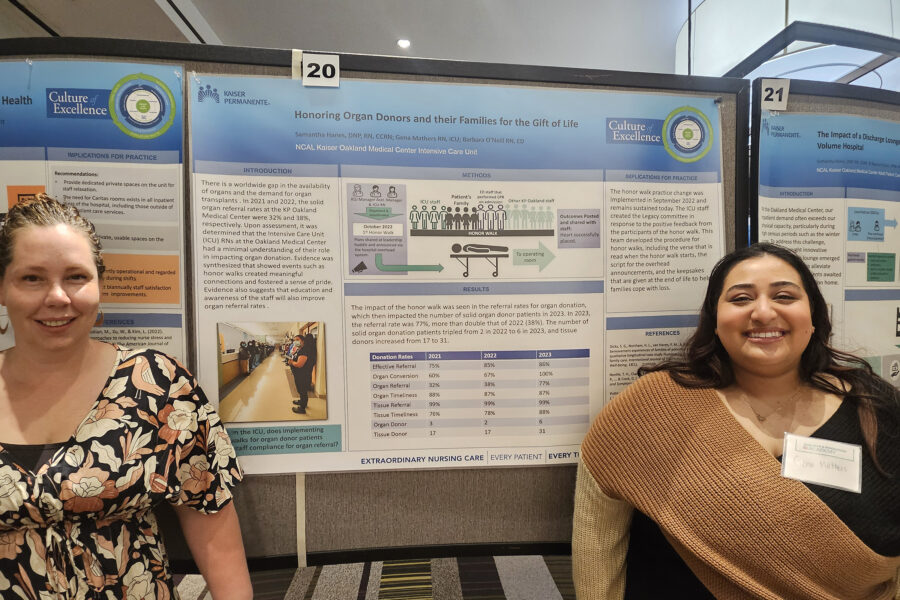
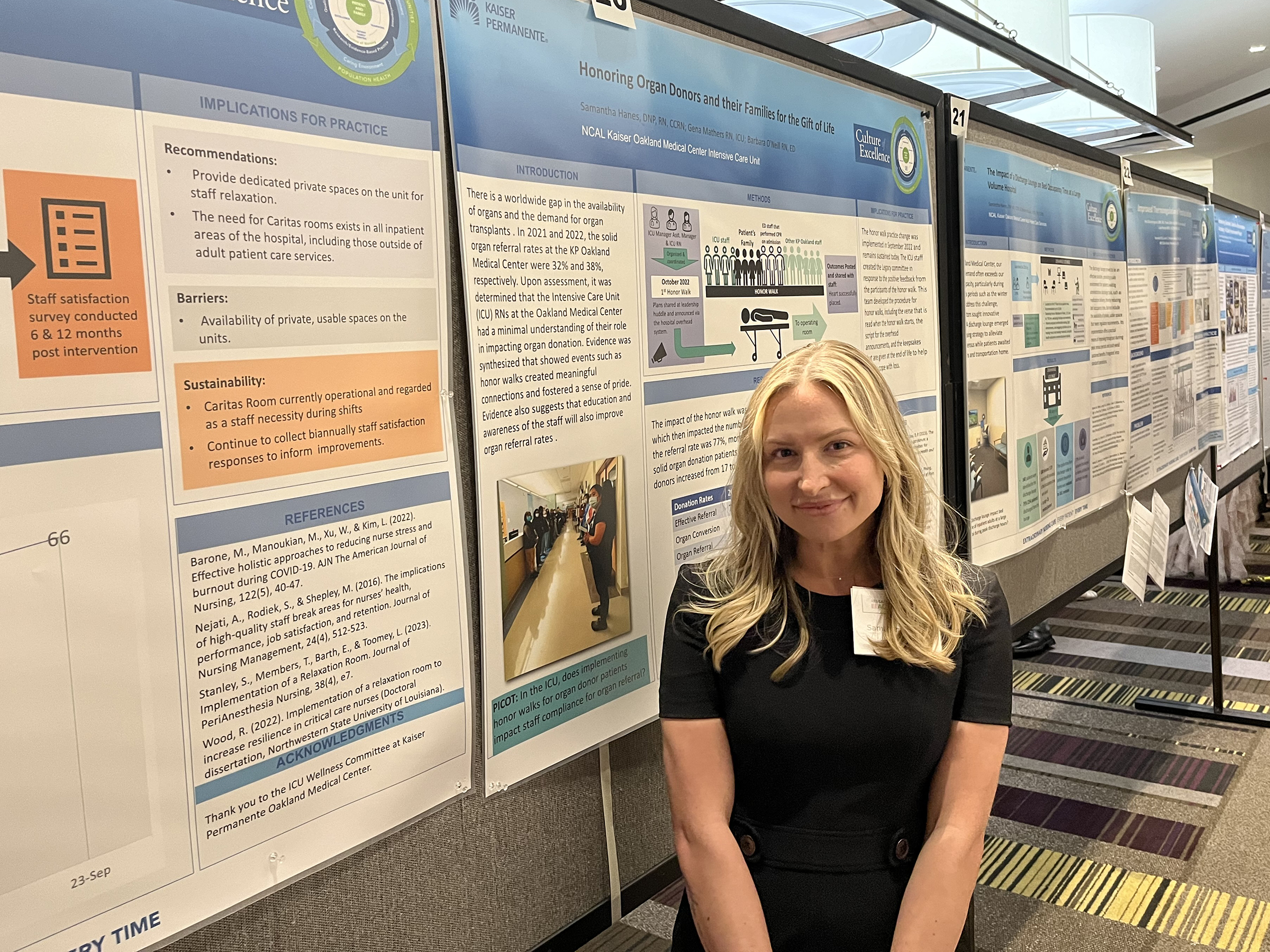
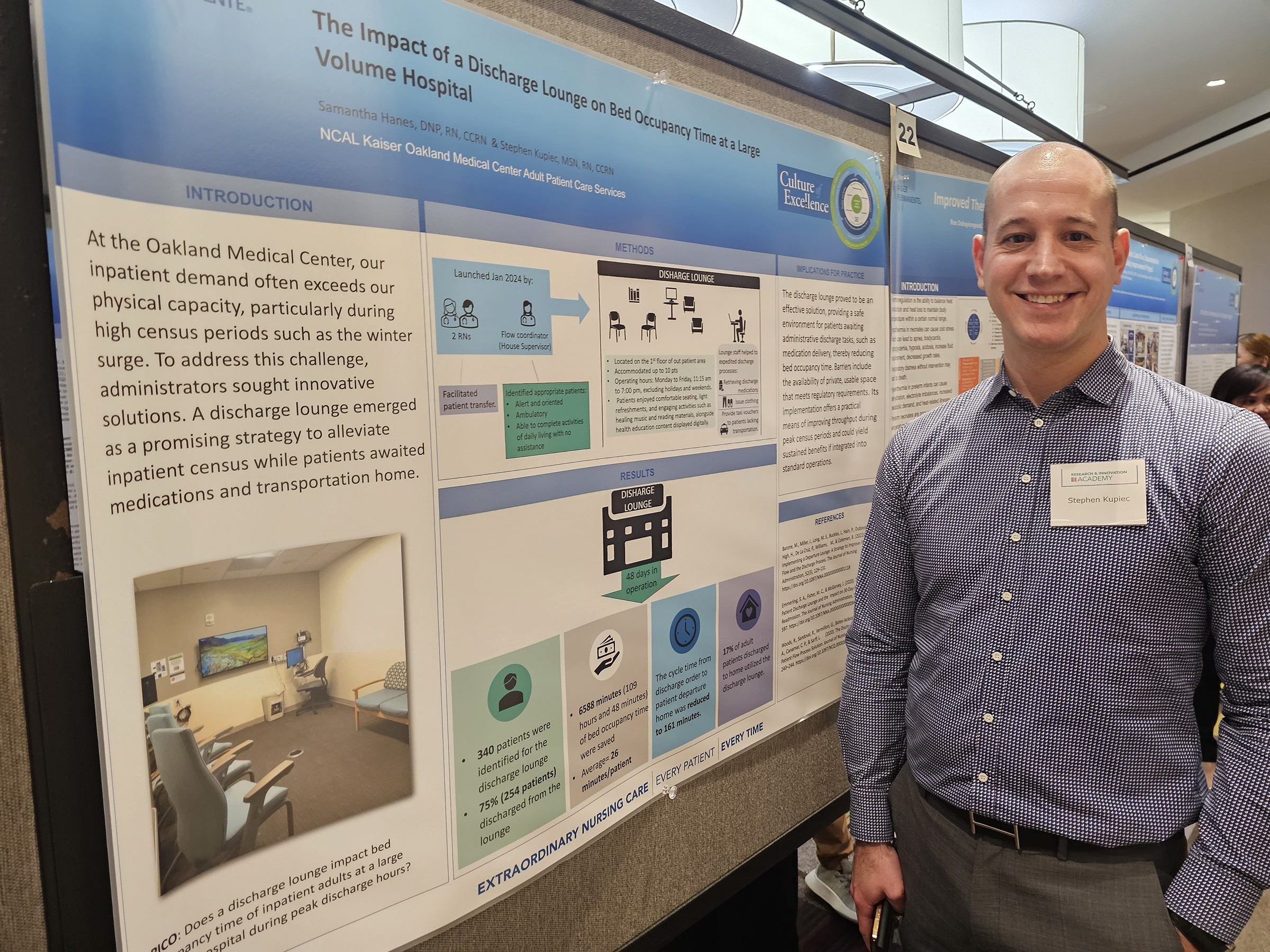
Deborah Bolton, MN, RN, ACNS-FNP, OCNS, AOCNP shared best practices around the administration of newly FDA-approved chemotherapy drug. The ICU team shared the positive impact of a Caritas Room to drive positive Culture of Health scores on their People Pulse surveys. The ICU also shared their best practices to improve organ donation rates through the efforts of their Legacy Committee and Donor Walk. Samantha Amen, DNP, RN, CCRN, NEA-BC and Stephen Kupiec, MSN, RN, CCRN, NEA-BC shared the effect of the Discharge Lounge on reducing discharge times and bed occupancy.

At the KP National Nursing Conference, Samantha Amen, DNP, RN, CCRN, NEA-BC shared the positive outcomes of the Discharge Lounge and Pavna Sloan, DNP, MDN, BSN, NEA-BC, RNC-OB participated in a panel presentation on Leader Rounding.

Samantha-Amen-DNP-RN-CCRN-NEA-BC
Samantha Amen, DNP, RN, CCRN, NEA-BC
Stephen Kupiec, MSN, RN, NEA-BC, CCRN
Health and wellness caring science featured image placeholder

Improving nurse’s confidence on heart disease prevention

NK_Improv Nurse Conf_S.Lewandowski

Sean Lewandowski DNP, ACNP-BC led an EBP project to improve the knowledge and confidence of nurses delivering post-cardiac procedure patient education on 6N and Interventional Services Departments. By implementing an online educational module, the nurse’s confidence improved.  


Nurses at a conference

Oncology nurses attend symposium 

Deborah Bolton, RN, Oncology CNS and nine clinical nurses from the 10 North Oncology Unit attended the Oncology Nurses Symposium in Washington, D.C where nine posters were accepted for presentation.  

    • Bolton,D., Gamido, MA. Chemotherapy Navigation from Admission to Discharge by Unit Based RNs in a Community Hospital Acute Care Setting: AN RN IV and III Project. 
    • Bolton,DL., 10S Nursing Staff. Adopting photo documentation the CLABSI Prevention Bundle: A Novel Concept in Benchmarking. 
    • Bolton, D.L. , Ascanero, J,A. (Artist) Art Journey: Transforming Challenges into Healing Experiences from a Patient’s Point of View. 
    • Bolton, D.L., Lunghkawa, T. Innovative Nursing Interventions in Challenging Skin Conditions. 
    • Bolton, D.L., Kim, H., RD. Neutropenia, CLANSI Prevention, and Food Safety: Patient and Family Education.
    • Bolton, D.L., Sumbillo, P.T., Gamido, M.A. RN 4 Project-Chemotherapy Administration Delays in the Acute Care Setting for Hematologic and Solid Tumor Patients Phase 1: Benchmarking Barriers.
    • Bolton, D.L., Martin, J., Bana, A. Standardization of Chemotherapy/Immunotherapy Competencies, Policies, and Procedures Across a Regional Health Care System. 
    • Bolton, D.L., Martin, J., Bana, A. Administration of Teclistamab Shortly after Food and Drug Approval in a Community Hospital System 
    • Martin, J.R., Bana, A., Bolton, D.L. Standardization of a Regional Chemotherapy Administration Policy. 

Pictured above: Deborah Bolton, RN;  Angela Brooks, RN; Genet Teiki, RN;  Mary Ann Gamido, RN; Annie Ellen Dehr, RN; Marilyn  Meriflex, RN; Katina Green, RN. 

Photo of chairs in a lounge waiting room

Lounge expedites discharge process

In January, 2024, the Oakland Medica Center launched the Discharge Lounge to alleviate patient census by providing a safe and comfortable waiting area for patients ready for discharge. It is staffed by two RN’s and help to expedite the discharge process by retrieving medications, issuing clothing and assisting with transportation. 

After the initial 48 days in operation, 340 patients met the criteria for the discharge lounge and 75% (254) of them successfully utilized the discharge lounge. The cycle time from discharge order to patient departure was reduced to 161 minutes and an average of 26 minutes/patient were saved. 17% of adult patient discharged to home utilized the discharge lounge. 

Back To Top