Skip to content
2 nurses sitting down smiling

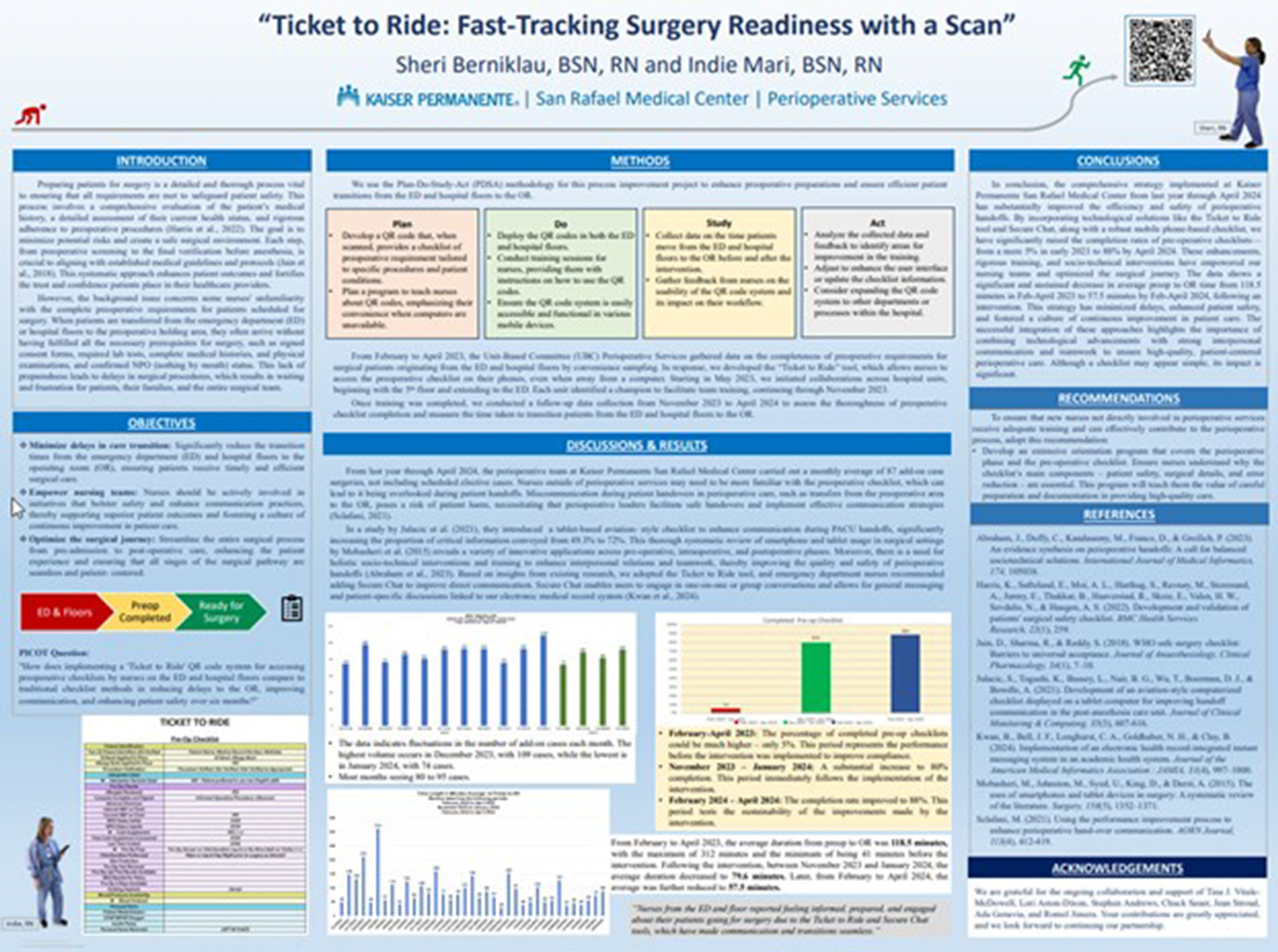
Ticket to ride: Fast-tracking surgery readiness with a scan

Patients from emergency and inpatient units were transferred to the preoperative holding area with missing elements needed for surgery such as signed consents, required lab tests, full medical histories, and NPO status, thus causing surgical delays.  This was a direct source of frustration for the patients and the surgical team. 

In alignment with the Kaiser Permanente Nursing Professional Practice Model, the patient and family are at the center of this initiative.  The objectives were to prevent delays in care, improve communication, empower nursing teams, optimize the surgical journey, and increase patient satisfaction. Using the PDSA model, the team created the Ticket to Ride (preoperative checklist) with a QR code. 

The nurses from the ED and inpatient units can now scan the QR code to see the checklist of preoperative requirements adapted to individual procedures and patient situations. Baseline data in 2023 started at 5% completion of the preoperative checklist and by January 2024, preoperative checklists were completed 80% of the time.  January through April 2024, increased up to 88% and has been sustained.  In addition, secure chat, a messaging tool designed to allow users to communicate through a secure messaging channel has allowed for more efficient ED to OR times because it has decreased delays and reduced the amount of phone calls needed to convey pertinent information.   

The project was lead by Sheri Berniklau, BSN, RN, CPAN, CAPA and Indie Mari, BSN, RN.  

16.1-From-bedside-to-podium-illuminating-nursing-excellence-poster

From bedside to podium: Illuminating nursing excellence 

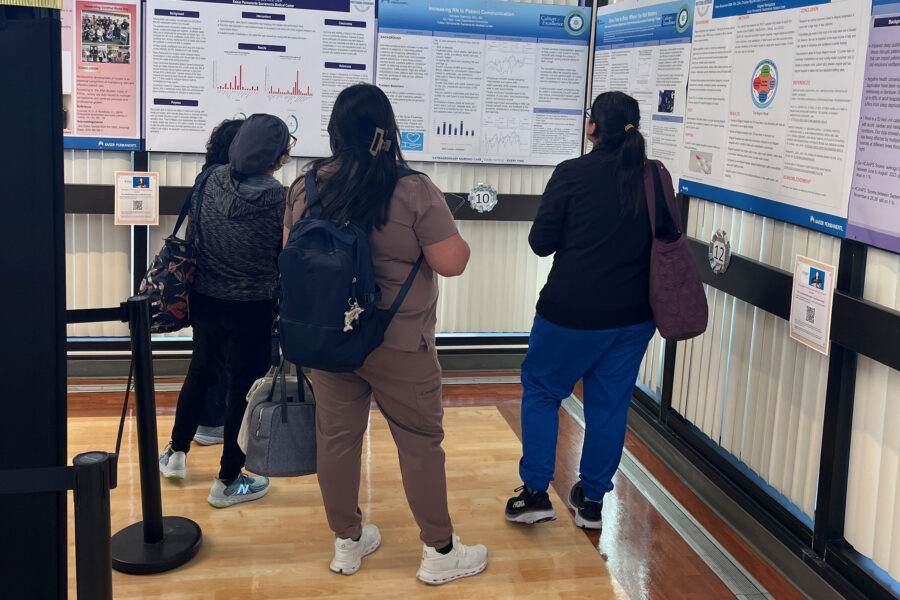
Congratulations to clinical nurses who have presented their work in local and national professional conferences and meetings, which highlight evidence-based practices, quality improvement initiatives, and patient-centered care strategies. Their work reflects a commitment to advancing nursing excellence and sharing impactful solutions with the broader health care community. 

Vanessa Stammler, BSN, RN. Increasing RN to Patient Communication. Presented at: KP Sacramento Medical Center Exemplary Professional Practice Poster Exhibit, Sacramento, CA. May 6-10, 2020 (Poster) and KP 2024 National Nursing Conference: Commit to Extraordinary, Virtual, September 19-20, 2024 (Podium). 

Ace Delos Santos, BSN, RN, MEDSURG-BC. Ambulation (Get Up Moving). Presented at: KP Sacramento Medical Center Exemplary Professional Practice Poster Exhibit, Sacramento, CA. May 6-10, 2020 (Poster) and KP 2024 National Nursing Conference: Commit to Extraordinary, Virtual, September 19-20, 2024 (Poster). 

Kristen Terwillinger, MSN, RN; Christine Swanson, ADN, RN. When Time is Brain, Where You Wait Matters. Presented at: KP Sacramento Medical Center Exemplary Professional Practice Poster Exhibit, Sacramento, CA. May 6-10, 2020 (Poster) and KP 2024 National Nursing Conference: Commit to Extraordinary, Virtual, September 19-20, 2024 (Poster). 

Ella Silchenko, BSN, RN, GERO-BC; Rosanne Manzo, BSN, RN; Julie Telenten, BSN, RN; Jolly Varghese, MSN, RN, GERO-BC; Fanny Burgess, BSN, RN; Edoardo Morlet, MSN, RN. Delirium Toolkit. Presented at: KP Sacramento Medical Center Exemplary Professional Practice Poster Exhibit, Sacramento, CA. May 6-10, 2020 (Poster) and KP 2024 National Nursing Conference: Commit to Extraordinary, Virtual, September 19-20, 2024 (Poster). 

Dulce Meneses, BSN, RN; Zach Julian, BSN, RN; Inna Shumska, BSN, RN; Roy Pinca, BSN, RN, MEDSURG-BC; Lance Reem, BSN, RN. Counting Sheep-Sleep Disturbance PI. Presented at: KP Sacramento Medical Center Exemplary Professional Practice Poster Exhibit, Sacramento, CA. May 6-10, 2020 (Poster) and KP 2024 National Nursing Conference: Commit to Extraordinary, Virtual, September 19-20, 2024 (Poster). 

Arlyn Weber, BSN, RN; Gerald Williams, MSN, RN, CNOR; Mary Jane Talento, MSN, RN, CNOR. Combating burnout in nursing practice: The vital role of wellness teams. Presented at: KP Sacramento Medical Center Exemplary Professional Practice Poster Exhibit, Sacramento, CA. May 6-10, 2020 (Poster). 

Jolly Varghese, MSN, RN. Hands up for safety. Presented at: KP Sacramento Medical Center Exemplary Professional Practice Poster Exhibit, Sacramento, CA. May 6-10, 2020 (Poster). 

Roy Pinca, BSN, RN; Alyssa Gonzales, ADN, RN. Professional Development: Turning mirrors into windows. Presented at: KP Sacramento Medical Center Exemplary Professional Practice Poster Exhibit, Sacramento, CA. May 6-10, 2020 (Poster). 

Franco Balitaan, MSN, RN, CPAN; Christine Swanson, BS, ADN, RN; Elisaden Samier, BSN, RN; Olga Bodnar, BSN, RN; Elizabeth West, MSN, RN, CCRN; Monica Mudron, BSN, RN; Minako Felder, ADN, RN. Got Evidence? Presented at: KP Sacramento Medical Center Exemplary Professional Practice Poster Exhibit, Sacramento, CA. May 6-10, 2020 (Poster). 
Mary Boardman, BSN, RN, CEN; Christine Nguyen, BSN, RN; Javier Sanchez, BSN, RN; Laura Aiello, BSN, RN, CCRN, CNRN. Staff Satisfaction in Magnet vs. Non-Magnet Hospitals. Presented at: KP Sacramento Medical Center Exemplary Professional Practice Poster Exhibit, Sacramento, CA. May 6-10, 2020 (Poster). 
Jemary Salonga, BSN, RN, CCRN; Heechul Kim, BSN, RN, CCRN, CSC; Jupree Lamson, BSN, RN, CNRN, Central Line Associated Bloodstream Infection (CLABSI). Presented at: KP Sacramento Medical Center Exemplary Professional Practice Poster Exhibit, Sacramento, CA. May 6-10, 2020 (Poster). 
Raquel Mercado, BSN, RN, CNOR; Susan Parker, BSN, RN, CNOR. Prevention of Sharp Injuries during Microscopic Procedures at the Eye Surgery Center. Presented at: KP Sacramento Medical Center Exemplary Professional Practice Poster Exhibit, Sacramento, CA. May 6-10, 2020 (Poster). 
Nancy Nguyen BSN, RN; Franco Balitaan MSN, RN, CPAN; Erin Joy Uniza, BSN, RN. Improvement of Home Care Instructions and Perceptions of ASU Patients. Presented at: KP Sacramento Medical Center Exemplary Professional Practice Poster Exhibit, Sacramento, CA. May 6-10, 2020 (Poster). 

Amanda Bates, BS, ADN, RN. Improving Nursing Care of S/P Whipple Procedure Patients. Presented at: KP Sacramento Medical Center Exemplary Professional Practice Poster Exhibit, Sacramento, CA. May 6-10, 2020 (Poster). 

15.-Wellness-Class-for-Stroke-Prevention

Wellness class for stroke prevention  

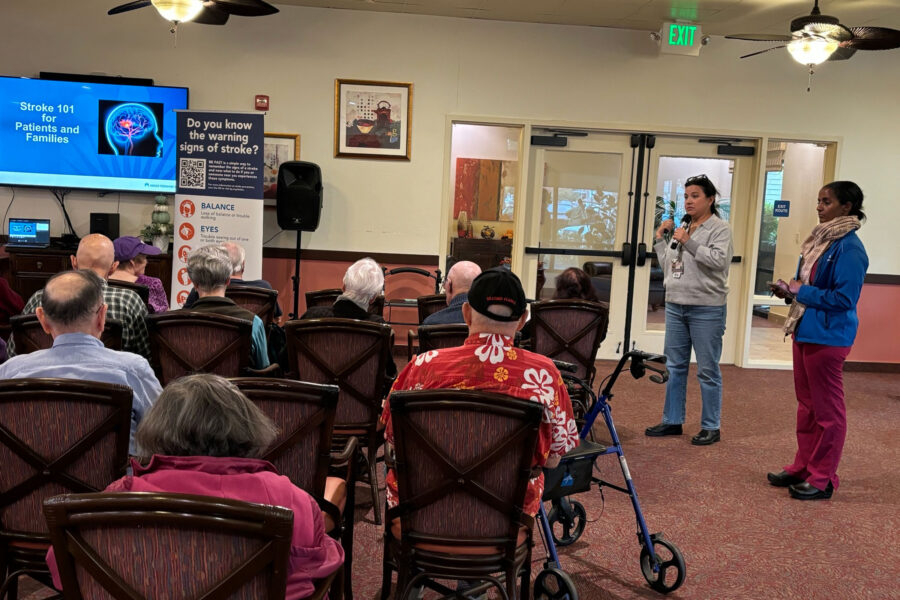
As a local leader in advanced neuro care, Sacramento Medical Center expanded the Wellness to Prevent Stroke and Wellness After Stroke educational programs. These free educational programs are open to both members and non-members. It focuses on community education regarding stroke prevention, lifestyle modification, rehabilitation, social services and spiritual care, and recovery after stroke. The participants learn to recognize stroke signs and symptoms, make lifestyle modifications—diet, exercise, and stress management—and adhere to prescribed medications.  

Taught by a multidisciplinary team of clinical nurses, dietitians, and other health professionals specializing in stroke care and prevention, the program has been warmly received, and classes are now being held in assisted living facilities, where patients are usually placed while recovering after a stroke, bringing needed education to stroke patients, caregivers, and the community. 

Almaz Haile, MSN, RN, CCNS, a Neuro Clinical Nurse Specialist who facilitates the program, shared: “It’s rewarding to see patients and their caregivers learn about stroke prevention through lifestyle changes and to witness stroke survivors and their families regain confidence in their recovery. This program equips participants with valuable knowledge, empowering them to make informed health decisions to make lifestyle changes and promote overall health and wellness.” 

Patient D. Gomez suffered an ischemic stroke and attended the Wellness After-Stroke class; he shared: “I didn’t realize how much my diet could impact my health. Learning about the foods by reading the food labels helps me watch what I eat, and it’s important because I have high blood pressure. I now understand how to avoid food high is salt. I highly recommend this class to other patients.” 

14.-Enhancing-Staff-Safety-in-the-Operating-Room-(OR)

Enhancing staff safety in the operating room

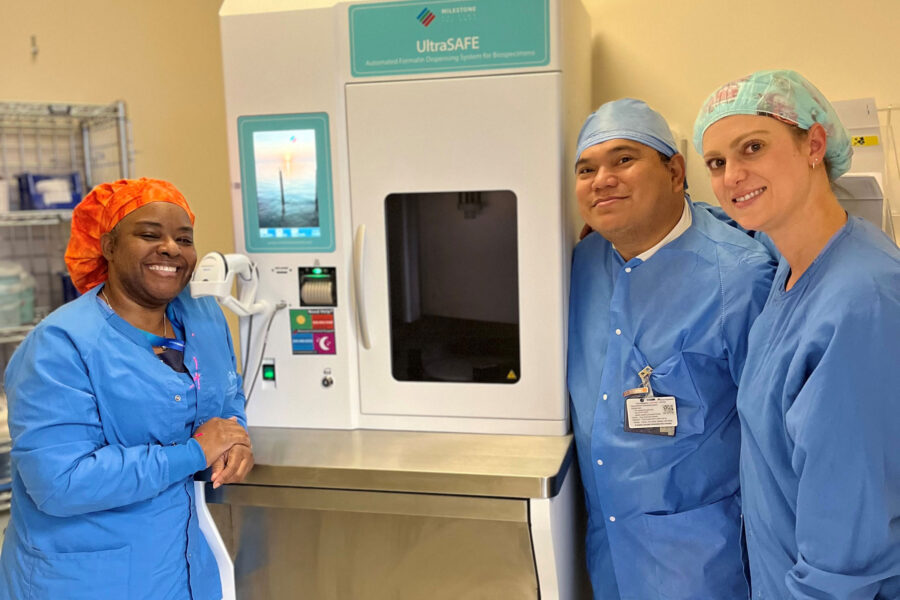
In the operating room (OR), formalin is commonly used as a preservative for biological specimens, such as tissues removed during surgery, which must be stored for pathological examination. However, traditional manual formalin dispensing methods increased the staff’s exposure risk to fumes. Formaldehyde fumes can cause respiratory irritation, allergic reactions, and long-term health issues, so proper handling and safety precautions are essential.  

A baseline assessment was conducted to measure the frequency and severity of formalin spills and staff exposure to formalin fumes. Chemical exposure (e.g., respiratory exposure through inhalation) is one of the top five incidents in Sacramento’s Main OR from October 2023 to July 2024. Out of twenty-two incidents, 13% were reported as chemical exposure. Staff feedback highlighted concerns and areas for improvement, shaping the implementation strategy. 

To address this concern, a multidisciplinary team, including nurses Ian Tumulak, BSN, RN, SNII- Safety Lead, Johnjay Roque, BSN, RN, SN IV-Safety Co-Lead, Jennice Singh, MSN, RN, CNOR, ANM, Chris Cooley, ADN, RN, ANM, Amelia Dayucos, MSN, RN, CNOR, Nursing Professional Development Specialists, perioperative leaders and pathologists collaborated to review safety procedures and advocate for resources to minimize or prevent staff exposure to formalin in the OR. 

The initiative began with a comprehensive review of existing formalin handling procedures, identifying areas where spills and fume exposure were most likely. A cost-benefit analysis and vendor evaluation led to the selection and installation of an automatic dispensing machine in the OR. A training program for staff related to device use and workflow changes was also implemented. 

Following the implementation in May 2024, a significant reduction in formalin exposure levels and spills was observed. The incidence of formalin spills has decreased to zero, and staff reported that the air quality in the specimen management area had improved. Staff also reported increased confidence in handling specimens and a higher perception of safety. Additionally, the precision of formalin dispensing was enhanced, ensuring optimal conditions for specimen preservation. 

13.0 Deep Brain stimulation program implemented at SacramentoCROPPED

Deep Brain Stimulation program implemented at Sacramento Medical Center

Deep Brain Stimulation (DBS), an advanced treatment for movement disorders like Parkinson’s disease, essential tremor, and dystonia, is now available at Kaiser Permanente in Sacramento. This procedure involves implanting electrodes in targeted brain regions to regulate abnormal activity through electrical impulses, offering patients improved quality of life and restored independence. 

Implementing the DBS surgery program required strong interdisciplinary collaboration among physicians, nurses, surgical technicians, specialists, and department leaders. The outcome relies not only on surgical expertise but also on pre-and post-operative care, workflow optimization, and robust training. 

Clinical nurses, nurse leaders, and Nursing Professional Development Specialists (NPDS) played a key role in implementing the DBS program. Amelia Dayucos, MSN, RN, CNOR, a Perioperative NPDS, led efforts to prepare staff for this new service. “When I first learned that this program was coming to Sacramento, I knew staff preparation would be critical. Our team worked on developing a comprehensive education program tailored to our staff’s learning needs,” she explained. She emphasized the importance of engaging clinical nurses in the process, noting, “Clinical nurses must be part of workflow design as experts in nursing care because they will use and execute the processes.”  

Nurses, alongside their interdisciplinary partners, were instrumental in designing workflows, creating educational resources, and ensuring the best patient care. In the Operating Room, neurology nursing lead clinical nurses Earl Penalosa, BSN, RN, co-lead, Nancy Nguyen, BSN, RN, Surgical Tech Trevor Williams, OR Neuro Specialist Dustin Leyden, and Larry Bodden, MD, epilepsy neurosurgeon, conducted mock trial runs to optimize workflow, created detailed preference cards, visual board, and equipment use guides. 

To guide post-operative care, Post Anesthesia Care Unit (PACU) clinical nurse Olga Bodnar, BSN, RN, and nursing team worked with Dr. Bodden, MD, to create pre- and post-operative workflows tailored to the procedure. The team also developed a checklist to guide the PACU nurses and streamline post-op care. In addition, the PACU education committee also led and implemented staff training sessions about DBS. 

The interdisciplinary perioperative team’s work at Sacramento Medical Center has expanded Kaiser members’ access to DBS treatment. It also highlighted the critical role of nurses, from clinical to leadership, as leaders and change agents. 

12.1-A-culture-of-continous-listening-group-picture

A culture of continuous listening

Employee feedback shapes organizational priorities, work culture, and staff satisfaction. Voluntary and anonymous surveys and direct report rounding are some of the mechanisms for capturing and addressing staff input. Sacramento Medical Center embraces a culture of continuous listening, ensuring employees have multiple avenues to share their feedback.  

The People Pulse Survey 

Conducted biannually in the Spring and Fall through Glint, the People Pulse Survey is available to all hospital employees except physicians. The survey focuses on engagement, speaking up, team effectiveness, workplace and patient safety, inclusion, culture of health, talent development, organizational performance, integrity and ethics.  

The RN Excellence Survey 

A prerequisite for the Magnet application, the RN Excellence Survey, administered by Press Ganey, captures nurses’ feedback on seven domains of excellence, including nursing autonomy, adequacy of resources and staff, interdisciplinary collaboration, teamwork and collaboration, nursing leadership access and responsiveness, and nursing professional development. 

Employee Feedback 

In 2024, Sacramento’s staff feedback survey results indicate a positive employee engagement and satisfaction trend. The People Pulse engagement index, which measures overall staff engagement, has improved compared to previous survey years. Similarly, the RN Excellence survey also reflected a significantly improved nurses’ satisfaction and engagement, outperforming national benchmarks in five domains (adequacy of resources and staffing, interprofessional relationships, leadership access and responsiveness, and professional development) in most units surveyed. 

Sacramento had a 98% response rate in the third quarter of the People Pulse survey and 75% in the RN Excellence Survey, placing the medical center among the top performers regionally. Esperanza Chaves, MSA, BSN, RN, Chief Nurse Executive, noted, “The fact that many staff members participated in the surveys means that our staff trust the process and their commitment to the organization’s growth. They want to be part of the solution and have confidence in the organization’s commitment to taking meaningful action. We cannot enhance employee engagement without the staff’s feedback. It is an ongoing process, and actions to improve it must evolve with the dynamic changes in the work environment and culture.”  

12.2-A-culture-of-continous-listening-picture-3Wellness Councils  

In 2022, Sacramento Medical Center established Wellness Committees within nursing units and a hospital-wide Wellness Council under the Nursing Professional Governance Council structure. This initiative was launched in response to staff feedback from the People Pulse Survey, which highlighted challenges such as low staff engagement, burnout, and low morale. The overarching goals are to improve morale, strengthen team dynamics, reduce burnout, and enhance staff engagement. 

The clinical nurses lead the unit-level committees and the hospital-wide Wellness Council, which have been implementing initiatives and promoting staff well-being and team-building-related activities at work. In addition to workplace-focused efforts, the committees also organized out-of-work activities designed to build personal connections and deepen relationships among team members.  

Maureen Coloma, BSN, RN, Wellness Committee lead in the ICU, shared her perspective: “Out-of-work activities help me learn more about my colleagues outside of their work roles. Connecting in a relaxed setting and having fun is important to recharge. Our unit staff looks forward to these events because they create a sense of camaraderie. Even when some events require out-of-pocket costs, staff eagerly participate, often bringing their families to share in the fun.” 


Caritas Graduation Dec 2024CROPPED

Caring Science Academy expands programs in 2024

Kaiser Permanente Northern California launched the inaugural session of the Caritas Coach Education Program (CCEP) Faculty Development, a cornerstone of the Regional Caring Science Academy. This pioneering initiative marks a significant milestone in our commitment to embedding Caring Science as the foundational theory within our Professional Practice Model and the Discipline of Nursing. Developed in partnership with the Watson Caring Science Institute (WCSI), the program commenced with a transformative 3-day training in January 2024, bringing together Caritas leaders from our medical centers and regional offices to deepen their expertise in Caring Science.

As of December 2024, the Regional Caring Science Academy has achieved remarkable milestones. We now have 20 CCEP faculty members and one faculty intern, with 32 new CCEP coach students beginning their training in June and 28 set to complete the program this month. Additionally, 38 students successfully completed HeartMath certification between June and October. Our commitment to immersive learning was further demonstrated through four Equine sessions and four ReBrilliancy sessions, each receiving outstanding reviews.

Further advancing Caring Science integration, we developed and piloted Caring Science and HeartMath modules for PCSO across select medical centers, with a full rollout planned for 2025. Additionally, we launched a Caring Science Dashboard for CNEs, providing key insights to support nursing leadership.

Looking ahead, our goal is to train 100 Caritas Coaches annually, reinforcing our unwavering commitment to a Caring Culture at Kaiser Permanente. These accomplishments underscore our dedication to fostering compassionate, patient-centered care and ensuring Caring Science remains at the heart of nursing practice throughout our organization and beyond. 

Stroke committee at screening event

Keeping stroke at bay: Kaiser Permanente Richmond’s stroke committee’s educational outreach events 

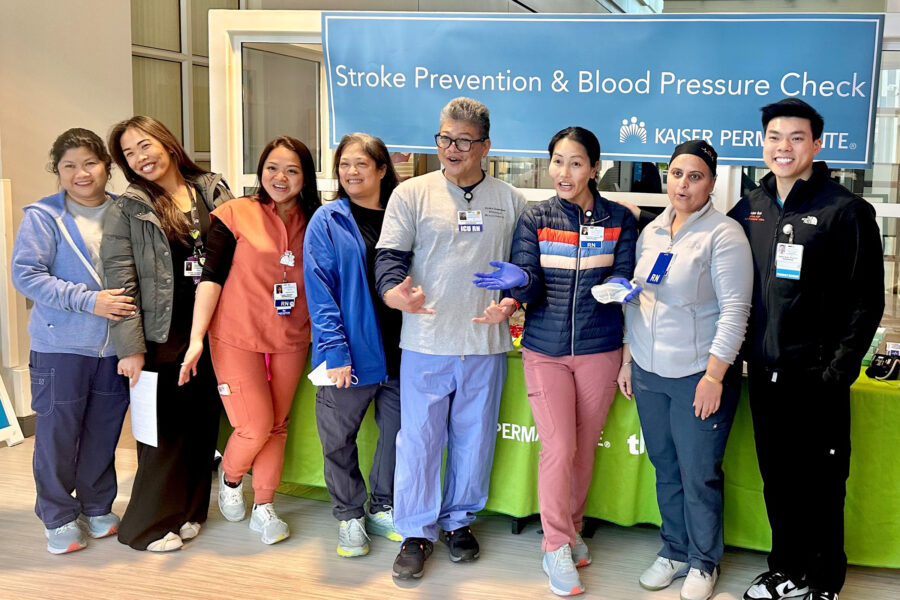
Kaiser Permanente Richmond’s Stroke Committee demonstrated their unwavering commitment to community health by hosting stroke risk and blood pressure screening events that served 250–350 community members at each gathering. These events provided education about stroke risk factors, warning signs, and the importance of blood pressure management. 

Dedicated committee members engaged Kaiser Permanente members in meaningful conversations, empowering them with tools to recognize the signs of a stroke and act FAST. Participants also received personalized guidance on scheduling follow-up care to better manage their health and reduce future risk. 

Through these impactful events, the Stroke Committee showcased how Kaiser Permanente’s proactive, community-centered approach is advancing health education and affecting lives—one screening at a time. 


Nurses smiling in christmas sweaters

Care without delay: Streamlining patient flow at Kaiser Permanente Richmond 

In a hospital with just 50 beds, every second counts in ensuring patients receive the right care at the right time. At Kaiser Permanente Richmond, our interdisciplinary Care Without Delay team and the newly created Admission, Discharge, Transfer (ADT) Nurse role are making a transformative impact on patient throughput, ensuring our community can rely on us—even during the busiest times in our emergency department. 

The Care Without Delay team brings together experts from multiple disciplines to coordinate seamless transitions of care. Their collaborative approach helps maximize efficiency while maintaining the highest standards of care. Care Without Delay and the ADT Nurses all focus on real-time bed management, proactive communication, and removing barriers that might delay patient movement. Their dedicated oversight ensures that beds are available for patients in need, whether they are arriving from the emergency department, another unit, or being discharged home. 

Together, these efforts are critical to the success of Kaiser Permanente Richmond, the sole hospital serving our community. By enhancing throughput and ensuring timely care, the Care Without Delay team and ADT Nurses are improving outcomes and demonstrating what it means to deliver exceptional care when it matters most. 

Goal milestone featured image placeholder

The Culture Closet: A pilot program toward culturally competent care at Kaiser Permanente Richmond

In 2024, Tia Newell, MSN, BSN, RN, NEA-BC, Interim Associate Chief Nurse Executive at Kaiser Permanente Richmond, and Kareen Turner, MPH, RD, Area Experience Leader, launched the Culture Closet pilot program to promote culturally competent care. Recognizing the rich cultural diversity of the Richmond community, Tia and Kareen wanted to create a space where nurses could access resources to better understand and connect with their patients’ cultural needs.

The inspiration

Richmond is home to a wide range of ethnic and cultural groups, and nurses at Kaiser Permanente Richmond understand and address cultural differences in providing care. Tia and Kareen saw the need for a tool that would help nurses deliver even more respectful, patient-centered care.

The Culture Closet pilot

The Culture Closet offers nurses a collection of cultural items—like headscarves, hair supplies, and dietary guides—that help them better understand the backgrounds of their patients. It also includes books on culturally sensitive communication and practices. The pilot encourages nurses to reflect on their own cultural experiences and engage in training sessions about cultural awareness.

Early Iimpact

Nurses have already expressed more confidence in addressing cultural issues, such as respecting dietary restrictions or understanding the significance of cultural practices in health care. Patients have also felt more valued, sharing how the care they received showed an understanding of their cultural needs.

Looking ahead

The pilot program is still in its early stages, but the feedback has been positive. Tia, Kareen, and the Richmond team are evaluating its success and looking to expand the program throughout Kaiser Permanente Richmond, aligning with Richmond’s values of providing culturally competent care as a cornerstone of nursing practice. The Culture Closet is a step toward creating the most inclusive, empathetic environment at Kaiser Permanente Richmond, ensuring that every patient feels respected and understood.

Back To Top