

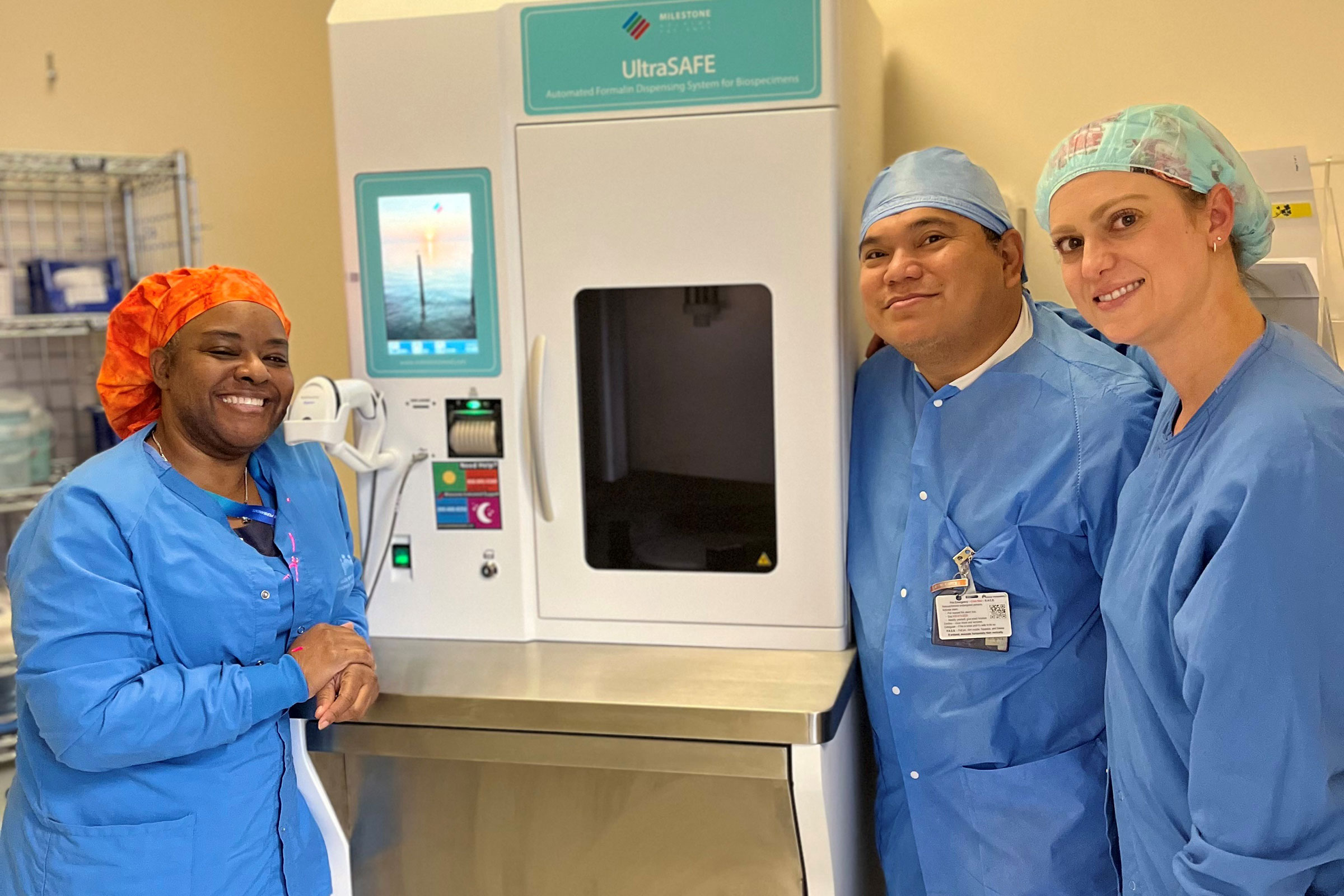
In the operating room (OR), formalin is commonly used as a preservative for biological specimens, such as tissues removed during surgery, which must be stored for pathological examination. However, traditional manual formalin dispensing methods increased the staff’s exposure risk to fumes. Formaldehyde fumes can cause respiratory irritation, allergic reactions, and long-term health issues, so proper handling and safety precautions are essential.
A baseline assessment was conducted to measure the frequency and severity of formalin spills and staff exposure to formalin fumes. Chemical exposure (e.g., respiratory exposure through inhalation) is one of the top five incidents in Sacramento’s Main OR from October 2023 to July 2024. Out of twenty-two incidents, 13% were reported as chemical exposure. Staff feedback highlighted concerns and areas for improvement, shaping the implementation strategy.
To address this concern, a multidisciplinary team, including nurses Ian Tumulak, BSN, RN, SNII- Safety Lead, Johnjay Roque, BSN, RN, SN IV-Safety Co-Lead, Jennice Singh, MSN, RN, CNOR, ANM, Chris Cooley, ADN, RN, ANM, Amelia Dayucos, MSN, RN, CNOR, Nursing Professional Development Specialists, perioperative leaders and pathologists collaborated to review safety procedures and advocate for resources to minimize or prevent staff exposure to formalin in the OR.
The initiative began with a comprehensive review of existing formalin handling procedures, identifying areas where spills and fume exposure were most likely. A cost-benefit analysis and vendor evaluation led to the selection and installation of an automatic dispensing machine in the OR. A training program for staff related to device use and workflow changes was also implemented.
Following the implementation in May 2024, a significant reduction in formalin exposure levels and spills was observed. The incidence of formalin spills has decreased to zero, and staff reported that the air quality in the specimen management area had improved. Staff also reported increased confidence in handling specimens and a higher perception of safety. Additionally, the precision of formalin dispensing was enhanced, ensuring optimal conditions for specimen preservation.