Skip to content
19.-Switch-to-multi-use-eye-drops-reduces-costs-and-waste-without-impacting-patient-outcomes

Switch to multi-use eyedrops reduces cost and waste without impacting patient outcomes

In the September 2024 issue of the Outpatient Surgery Magazine, OR Excellence Awards Edition, the Racho Cordova- Eye Surgery Center received an Honorable Mention to recognize their impactful work.  

The Rancho Cordova Eye Surgery Center, a two-room facility specializing in cataract surgery, practice change by switching from single-use to multi-use eye drops, dramatically reducing waste and costs—all without compromising patient outcomes. 

Previously, the facility used single-use eye drop vials to dilate patients’ pupils in the preoperative area. However, only a fraction of the medication—an average of three drops per bottle—was used before the remainder was discarded. To mitigate this practice’s cost and environmental impact, leaders and staff began exploring alternatives. Unnecessary waste of perioperative eye drops inflates the cost of ophthalmic surgeries, increases the carbon footprint, and worsens periodic drug shortages. 

In June 2023, the center transitioned to multi-use vials, a move that has proven successful. Before the switch, the facility used an average of 132 single-use vials weekly. By October 2023, that number had dropped to just 47 multi-use vials per week, a reduction of 85. 

“After implementing our multi-use drops policy and evaluating data over four months, we found that bottle ordering decreased by 63% and costs decreased by 53.3%,” says Haley Murphy, BSN, RN, Assistant Nurse Manager. “Most importantly, we did not observe any significant spike in infections or complications during this period.” 

The benefits extended beyond cost savings and waste reduction. When patients must dilate their pupils at home before surgery, they often face added costs for purchasing full bottles of eye drops at the pharmacy. Additionally, arriving at the facility with dilated pupils can create safety concerns, such as difficulty reading consent forms. By using multi-use drops onsite, the center ensures patient safety while addressing the national shortage of dilation drops and reducing the large amount of plastic waste generated by single-use vials. 

“This initiative highlights the importance of nurse involvement in cost-saving decisions within health care to maintain the highest quality standards in the clinical setting,” says Murphy. She adds that the highly skilled nursing team at Rancho Cordova has been instrumental in refining this process and other innovative programs. The team’s efforts, led by nurses, benefitted the facility and served as a model for other local health care facilities seeking to implement similar strategies. 

By sharing its protocols and results with local leaders, Rancho Cordova Eye Surgery Center demonstrated how operational changes driven by frontline staff can lead to impactful, sustainable improvements in patient care and resource management. 

2025-02-20 215714CROPPED

Improving endovascular stroke treatment times for better patient outcomes 

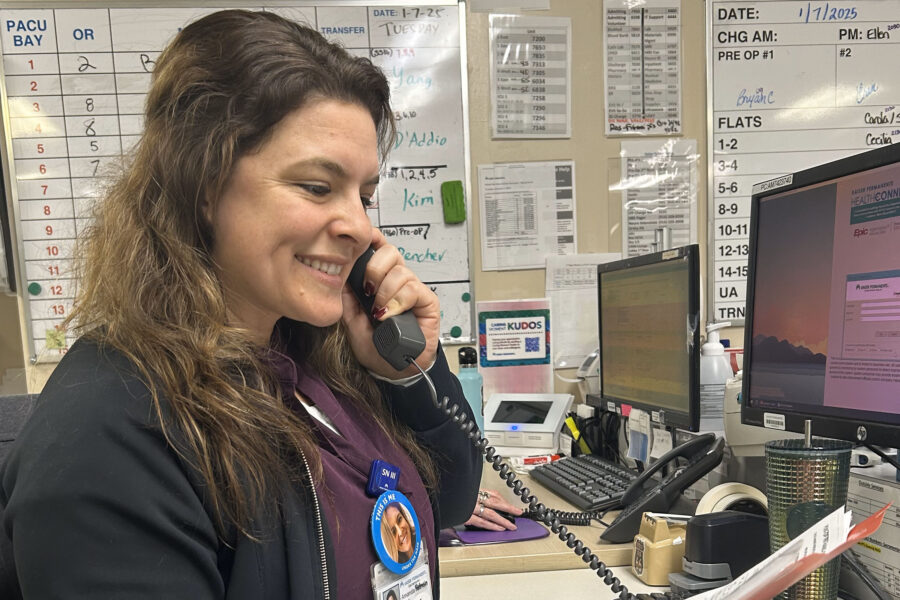
During an ischemic stroke, every minute untreated results in the loss of 1.9 million neurons. This makes timely treatment essential, particularly for patients who qualify for Endovascular Stroke Treatment (EST), which aims to restore blood flow to the brain. A team of nurses, physicians, technicians, and other ancillary members worked together on a quality improvement project in the Sacramento Emergency Department (ED) focused on reducing the time between patient arrival and Neurointerventional Radiology (NIR) treatment by redesigning the flow and processes.  

As a Comprehensive Stroke Center, the hospital must have efficient processes and systems in place to support the needs of patients seeking advanced neurologic care due to stroke. The project’s goal was to decrease the Door-In-Door-In (DIDI) time, the interval from ED arrival to NIR, to under 65 minutes for at least 35% of qualified patients. Previously, this target was not being met, and barriers to faster treatment were identified.  

“One major adjustment we made was keeping patients in the CT suite to assess for large vessel occlusion rather than sending them back to the ED. This simple change allowed staff to remain with the patient, reducing delays and ensuring a seamless transfer to NIR,” shares Christine Swanson, BS, ADN, RN, Staff Nurse II, Emergency Department. “We also implemented direct access to the EST phone line, which significantly improved communication and speeded up report handoffs for faster patient transport.  We educated ED staff on the locations of Neuro IR supplies and streamlined workflows for both business and after-hours operations. These changes have made a meaningful impact on efficiency and patient outcomes.” The project has reduced delays and ensured more efficient care, helping to meet the <65-minute DIDI goal and faster EST times.  

Nurse on the phone

Optimizing hospital throughput  

Hospital throughput is the movement of patients from admission to discharge, ensuring they receive timely, appropriate care at every stage of their hospital stay. An efficient throughput process affects clinical outcomes and many other aspects of care, such as care experience and cost of care, as documented in numerous studies.  

“When a patient transfer is delayed within the hospital, it creates a ripple effect. For example, a backlog in the Emergency Department (ED) leads to longer wait times for community members seeking emergency care. Delayed discharges result in fewer available beds for incoming patients. Holding patients in the Operating Room (OR) because the Post-Anesthesia Care Unit (PACU) bed is not ready can also affect the patient’s recovery from anesthesia,” explains Carri Carson, BSN, RN, Assistant Director, Sacramento Emergency Department. “Hospital throughput is a complex process requiring close collaboration across multiple departments.”   

The hospital has prioritized initiatives to optimize the throughput process. Sacramento’s throughput core team is at the forefront of leading this work. The team is composed of interdisciplinary leaders who work together to identify barriers, implement strategies, and monitor outcomes. The throughput team’s leadership has positioned the hospital as a benchmark for throughput efficiency. Dorothy Vergel MSN, RN, CCRN, Nurse Manager, Post Anesthesia Care Unit shared an example of improvement led by clinical nurses, “when we started our PACU to Floor process improvement, clinical nurses from PACU and the inpatient units collaborated that led to a streamline in the hand-off and escalation process to reduce delays in patient transfers. It did not only reduce delays but also increased staff satisfaction.” 

In 2024, key metrics have consistently outperformed regional and local benchmarks, including ED-to-Floor, OR-to-PACU, and PACU-to-Floor times. “Our success highlights the strong culture of interdisciplinary collaboration in our hospital,” says Kristin Davis, MSN, RN, House Supervisor. “My role in coordinating bed placement relies on the efficient work of every team member—clinical nurses, physicians, pharmacy staff, lab personnel, bed control staff, house supervisors, Patient Care Coordinators, nurse leaders, transport, and housekeeping. Everyone contributes to the process, and our results reflect that teamwork.”   

Key Throughput Achievements in 2024:   

  • ED to Floor: The percentage of patients admitted in less than 60 minutes rose from 9% in 2023 to 32% in 2024. The average time patients spent waiting to be moved to a hospital room was 178 minutes in 2023. In 2024, this average wait time decreased to 110 minutes, representing a 38% reduction. 
  • OR to PACU: Achieved less than 15 minutes from “time zero,” with only three total holds in 2024, (total of 25 minutes).  
  • PACU to Floor: Reduced the time from inpatient order release to bed placement by 45% compared to 2023, moving closer to the goal of 60 minutes.  

Nurses have been instrumental in optimizing workflows and ensuring efficient systems. Tim Hutchinson, MSN, RN, Hospital Operations Director, underscores this impact: “The leadership and advocacy of clinical nurses at the bedside is helping drive these processes efficiently while keeping our patients safe.” By leveraging their expertise and collaboration, nurses continue to lead meaningful change that enhances patient care and strengthens operational excellence. 

16.1-From-bedside-to-podium-illuminating-nursing-excellence-poster

From bedside to podium: Illuminating nursing excellence 

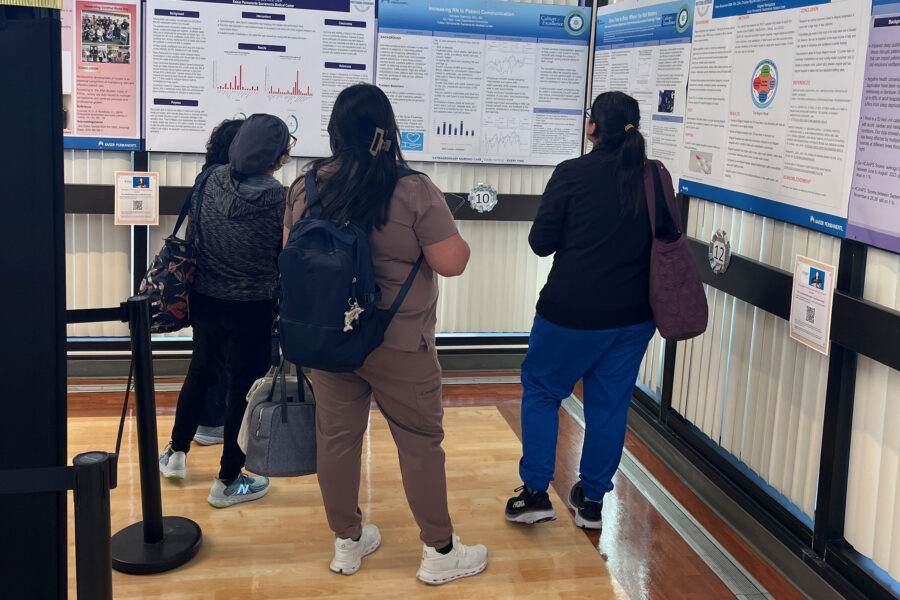
Congratulations to clinical nurses who have presented their work in local and national professional conferences and meetings, which highlight evidence-based practices, quality improvement initiatives, and patient-centered care strategies. Their work reflects a commitment to advancing nursing excellence and sharing impactful solutions with the broader health care community. 

Vanessa Stammler, BSN, RN. Increasing RN to Patient Communication. Presented at: KP Sacramento Medical Center Exemplary Professional Practice Poster Exhibit, Sacramento, CA. May 6-10, 2020 (Poster) and KP 2024 National Nursing Conference: Commit to Extraordinary, Virtual, September 19-20, 2024 (Podium). 

Ace Delos Santos, BSN, RN, MEDSURG-BC. Ambulation (Get Up Moving). Presented at: KP Sacramento Medical Center Exemplary Professional Practice Poster Exhibit, Sacramento, CA. May 6-10, 2020 (Poster) and KP 2024 National Nursing Conference: Commit to Extraordinary, Virtual, September 19-20, 2024 (Poster). 

Kristen Terwillinger, MSN, RN; Christine Swanson, ADN, RN. When Time is Brain, Where You Wait Matters. Presented at: KP Sacramento Medical Center Exemplary Professional Practice Poster Exhibit, Sacramento, CA. May 6-10, 2020 (Poster) and KP 2024 National Nursing Conference: Commit to Extraordinary, Virtual, September 19-20, 2024 (Poster). 

Ella Silchenko, BSN, RN, GERO-BC; Rosanne Manzo, BSN, RN; Julie Telenten, BSN, RN; Jolly Varghese, MSN, RN, GERO-BC; Fanny Burgess, BSN, RN; Edoardo Morlet, MSN, RN. Delirium Toolkit. Presented at: KP Sacramento Medical Center Exemplary Professional Practice Poster Exhibit, Sacramento, CA. May 6-10, 2020 (Poster) and KP 2024 National Nursing Conference: Commit to Extraordinary, Virtual, September 19-20, 2024 (Poster). 

Dulce Meneses, BSN, RN; Zach Julian, BSN, RN; Inna Shumska, BSN, RN; Roy Pinca, BSN, RN, MEDSURG-BC; Lance Reem, BSN, RN. Counting Sheep-Sleep Disturbance PI. Presented at: KP Sacramento Medical Center Exemplary Professional Practice Poster Exhibit, Sacramento, CA. May 6-10, 2020 (Poster) and KP 2024 National Nursing Conference: Commit to Extraordinary, Virtual, September 19-20, 2024 (Poster). 

Arlyn Weber, BSN, RN; Gerald Williams, MSN, RN, CNOR; Mary Jane Talento, MSN, RN, CNOR. Combating burnout in nursing practice: The vital role of wellness teams. Presented at: KP Sacramento Medical Center Exemplary Professional Practice Poster Exhibit, Sacramento, CA. May 6-10, 2020 (Poster). 

Jolly Varghese, MSN, RN. Hands up for safety. Presented at: KP Sacramento Medical Center Exemplary Professional Practice Poster Exhibit, Sacramento, CA. May 6-10, 2020 (Poster). 

Roy Pinca, BSN, RN; Alyssa Gonzales, ADN, RN. Professional Development: Turning mirrors into windows. Presented at: KP Sacramento Medical Center Exemplary Professional Practice Poster Exhibit, Sacramento, CA. May 6-10, 2020 (Poster). 

Franco Balitaan, MSN, RN, CPAN; Christine Swanson, BS, ADN, RN; Elisaden Samier, BSN, RN; Olga Bodnar, BSN, RN; Elizabeth West, MSN, RN, CCRN; Monica Mudron, BSN, RN; Minako Felder, ADN, RN. Got Evidence? Presented at: KP Sacramento Medical Center Exemplary Professional Practice Poster Exhibit, Sacramento, CA. May 6-10, 2020 (Poster). 

Mary Boardman, BSN, RN, CEN; Christine Nguyen, BSN, RN; Javier Sanchez, BSN, RN; Laura Aiello, BSN, RN, CCRN, CNRN. Staff Satisfaction in Magnet vs. Non-Magnet Hospitals. Presented at: KP Sacramento Medical Center Exemplary Professional Practice Poster Exhibit, Sacramento, CA. May 6-10, 2020 (Poster). 

Jemary Salonga, BSN, RN, CCRN; Heechul Kim, BSN, RN, CCRN, CSC; Jupree Lamson, BSN, RN, CNRN, Central Line Associated Bloodstream Infection (CLABSI). Presented at: KP Sacramento Medical Center Exemplary Professional Practice Poster Exhibit, Sacramento, CA. May 6-10, 2020 (Poster). 

Raquel Mercado, BSN, RN, CNOR; Susan Parker, BSN, RN, CNOR. Prevention of Sharp Injuries during Microscopic Procedures at the Eye Surgery Center. Presented at: KP Sacramento Medical Center Exemplary Professional Practice Poster Exhibit, Sacramento, CA. May 6-10, 2020 (Poster). 

Nancy Nguyen BSN, RN; Franco Balitaan MSN, RN, CPAN; Erin Joy Uniza, BSN, RN. Improvement of Home Care Instructions and Perceptions of ASU Patients. Presented at: KP Sacramento Medical Center Exemplary Professional Practice Poster Exhibit, Sacramento, CA. May 6-10, 2020 (Poster). 

Amanda Bates, BS, ADN, RN. Improving Nursing Care of S/P Whipple Procedure Patients. Presented at: KP Sacramento Medical Center Exemplary Professional Practice Poster Exhibit, Sacramento, CA. May 6-10, 2020 (Poster). 

15.-Wellness-Class-for-Stroke-Prevention

Wellness class for stroke prevention  

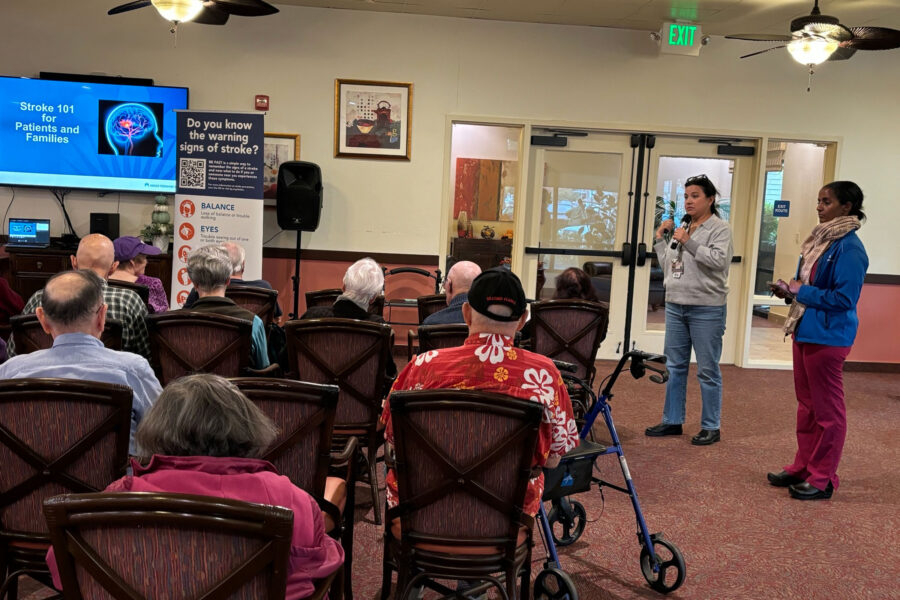
As a local leader in advanced neuro care, Sacramento Medical Center expanded the Wellness to Prevent Stroke and Wellness After Stroke educational programs. These free educational programs are open to both members and non-members. It focuses on community education regarding stroke prevention, lifestyle modification, rehabilitation, social services and spiritual care, and recovery after stroke. The participants learn to recognize stroke signs and symptoms, make lifestyle modifications—diet, exercise, and stress management—and adhere to prescribed medications.  

Taught by a multidisciplinary team of clinical nurses, dietitians, and other health professionals specializing in stroke care and prevention, the program has been warmly received, and classes are now being held in assisted living facilities, where patients are usually placed while recovering after a stroke, bringing needed education to stroke patients, caregivers, and the community. 

Almaz Haile, MSN, RN, CCNS, a Neuro Clinical Nurse Specialist who facilitates the program, shared: “It’s rewarding to see patients and their caregivers learn about stroke prevention through lifestyle changes and to witness stroke survivors and their families regain confidence in their recovery. This program equips participants with valuable knowledge, empowering them to make informed health decisions to make lifestyle changes and promote overall health and wellness.” 

Patient D. Gomez suffered an ischemic stroke and attended the Wellness After-Stroke class; he shared: “I didn’t realize how much my diet could impact my health. Learning about the foods by reading the food labels helps me watch what I eat, and it’s important because I have high blood pressure. I now understand how to avoid food high is salt. I highly recommend this class to other patients.” 

14.-Enhancing-Staff-Safety-in-the-Operating-Room-(OR)

Enhancing staff safety in the operating room

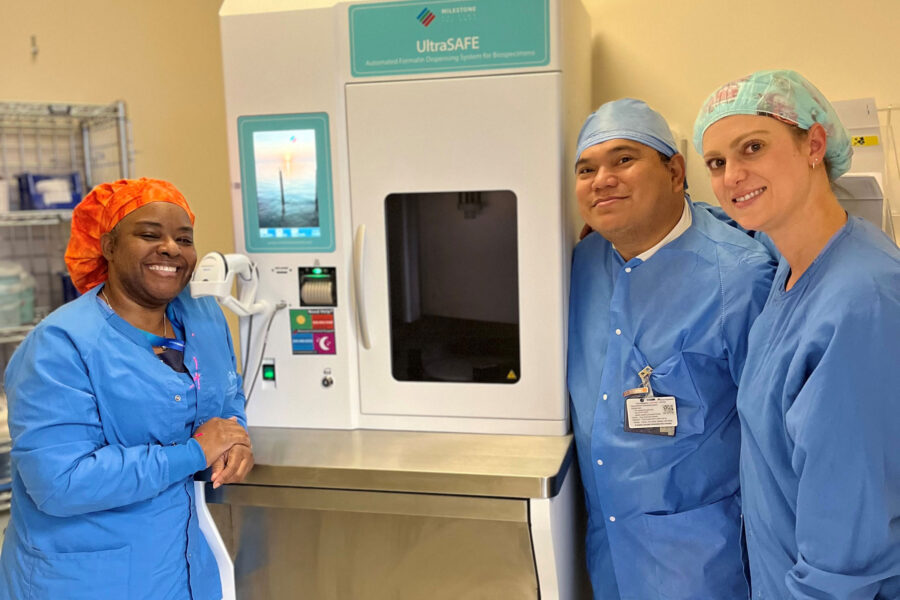
In the operating room (OR), formalin is commonly used as a preservative for biological specimens, such as tissues removed during surgery, which must be stored for pathological examination. However, traditional manual formalin dispensing methods increased the staff’s exposure risk to fumes. Formaldehyde fumes can cause respiratory irritation, allergic reactions, and long-term health issues, so proper handling and safety precautions are essential.  

A baseline assessment was conducted to measure the frequency and severity of formalin spills and staff exposure to formalin fumes. Chemical exposure (e.g., respiratory exposure through inhalation) is one of the top five incidents in Sacramento’s Main OR from October 2023 to July 2024. Out of twenty-two incidents, 13% were reported as chemical exposure. Staff feedback highlighted concerns and areas for improvement, shaping the implementation strategy. 

To address this concern, a multidisciplinary team, including nurses Ian Tumulak, BSN, RN, SNII- Safety Lead, Johnjay Roque, BSN, RN, SN IV-Safety Co-Lead, Jennice Singh, MSN, RN, CNOR, ANM, Chris Cooley, ADN, RN, ANM, Amelia Dayucos, MSN, RN, CNOR, Nursing Professional Development Specialists, perioperative leaders and pathologists collaborated to review safety procedures and advocate for resources to minimize or prevent staff exposure to formalin in the OR. 

The initiative began with a comprehensive review of existing formalin handling procedures, identifying areas where spills and fume exposure were most likely. A cost-benefit analysis and vendor evaluation led to the selection and installation of an automatic dispensing machine in the OR. A training program for staff related to device use and workflow changes was also implemented. 

Following the implementation in May 2024, a significant reduction in formalin exposure levels and spills was observed. The incidence of formalin spills has decreased to zero, and staff reported that the air quality in the specimen management area had improved. Staff also reported increased confidence in handling specimens and a higher perception of safety. Additionally, the precision of formalin dispensing was enhanced, ensuring optimal conditions for specimen preservation. 

13.0 Deep Brain stimulation program implemented at SacramentoCROPPED

Deep Brain Stimulation program implemented at Sacramento Medical Center

Deep Brain Stimulation (DBS), an advanced treatment for movement disorders like Parkinson’s disease, essential tremor, and dystonia, is now available at Kaiser Permanente in Sacramento. This procedure involves implanting electrodes in targeted brain regions to regulate abnormal activity through electrical impulses, offering patients improved quality of life and restored independence. 

Implementing the DBS surgery program required strong interdisciplinary collaboration among physicians, nurses, surgical technicians, specialists, and department leaders. The outcome relies not only on surgical expertise but also on pre-and post-operative care, workflow optimization, and robust training. 

Clinical nurses, nurse leaders, and Nursing Professional Development Specialists (NPDS) played a key role in implementing the DBS program. Amelia Dayucos, MSN, RN, CNOR, a Perioperative NPDS, led efforts to prepare staff for this new service. “When I first learned that this program was coming to Sacramento, I knew staff preparation would be critical. Our team worked on developing a comprehensive education program tailored to our staff’s learning needs,” she explained. She emphasized the importance of engaging clinical nurses in the process, noting, “Clinical nurses must be part of workflow design as experts in nursing care because they will use and execute the processes.”  

Nurses, alongside their interdisciplinary partners, were instrumental in designing workflows, creating educational resources, and ensuring the best patient care. In the Operating Room, neurology nursing lead clinical nurses Earl Penalosa, BSN, RN, co-lead, Nancy Nguyen, BSN, RN, Surgical Tech Trevor Williams, OR Neuro Specialist Dustin Leyden, and Larry Bodden, MD, epilepsy neurosurgeon, conducted mock trial runs to optimize workflow, created detailed preference cards, visual board, and equipment use guides. 

To guide post-operative care, Post Anesthesia Care Unit (PACU) clinical nurse Olga Bodnar, BSN, RN, and nursing team worked with Dr. Bodden, MD, to create pre- and post-operative workflows tailored to the procedure. The team also developed a checklist to guide the PACU nurses and streamline post-op care. In addition, the PACU education committee also led and implemented staff training sessions about DBS. 

The interdisciplinary perioperative team’s work at Sacramento Medical Center has expanded Kaiser members’ access to DBS treatment. It also highlighted the critical role of nurses, from clinical to leadership, as leaders and change agents. 

12.1-A-culture-of-continous-listening-group-picture

A culture of continuous listening

Employee feedback shapes organizational priorities, work culture, and staff satisfaction. Voluntary and anonymous surveys and direct report rounding are some of the mechanisms for capturing and addressing staff input. Sacramento Medical Center embraces a culture of continuous listening, ensuring employees have multiple avenues to share their feedback.  

The People Pulse Survey 

Conducted biannually in the Spring and Fall through Glint, the People Pulse Survey is available to all hospital employees except physicians. The survey focuses on engagement, speaking up, team effectiveness, workplace and patient safety, inclusion, culture of health, talent development, organizational performance, integrity and ethics.  

The RN Excellence Survey 

A prerequisite for the Magnet application, the RN Excellence Survey, administered by Press Ganey, captures nurses’ feedback on seven domains of excellence, including nursing autonomy, adequacy of resources and staff, interdisciplinary collaboration, teamwork and collaboration, nursing leadership access and responsiveness, and nursing professional development. 

Employee Feedback 

In 2024, Sacramento’s staff feedback survey results indicate a positive employee engagement and satisfaction trend. The People Pulse engagement index, which measures overall staff engagement, has improved compared to previous survey years. Similarly, the RN Excellence survey also reflected a significantly improved nurses’ satisfaction and engagement, outperforming national benchmarks in five domains (adequacy of resources and staffing, interprofessional relationships, leadership access and responsiveness, and professional development) in most units surveyed. 

Sacramento had a 98% response rate in the third quarter of the People Pulse survey and 75% in the RN Excellence Survey, placing the medical center among the top performers regionally. Esperanza Chaves, MSA, BSN, RN, Chief Nurse Executive, noted, “The fact that many staff members participated in the surveys means that our staff trust the process and their commitment to the organization’s growth. They want to be part of the solution and have confidence in the organization’s commitment to taking meaningful action. We cannot enhance employee engagement without the staff’s feedback. It is an ongoing process, and actions to improve it must evolve with the dynamic changes in the work environment and culture.”  

12.2-A-culture-of-continous-listening-picture-3Wellness Councils  

In 2022, Sacramento Medical Center established Wellness Committees within nursing units and a hospital-wide Wellness Council under the Nursing Professional Governance Council structure. This initiative was launched in response to staff feedback from the People Pulse Survey, which highlighted challenges such as low staff engagement, burnout, and low morale. The overarching goals are to improve morale, strengthen team dynamics, reduce burnout, and enhance staff engagement. 

The clinical nurses lead the unit-level committees and the hospital-wide Wellness Council, which have been implementing initiatives and promoting staff well-being and team-building-related activities at work. In addition to workplace-focused efforts, the committees also organized out-of-work activities designed to build personal connections and deepen relationships among team members.  

Maureen Coloma, BSN, RN, Wellness Committee lead in the ICU, shared her perspective: “Out-of-work activities help me learn more about my colleagues outside of their work roles. Connecting in a relaxed setting and having fun is important to recharge. Our unit staff looks forward to these events because they create a sense of camaraderie. Even when some events require out-of-pocket costs, staff eagerly participate, often bringing their families to share in the fun.” 


Operations featured image placeholder

Nursing Professional Development Specialists gatekeepers of nursing practice 

Nursing Professional Development Specialists (NPDS) and Clinical Nurse Specialists (CNS) are the backbone of nursing excellence, driving professional growth, and fostering a culture of continuous learning. By guiding nurses to reach their full potential, the NPDS and CNS of the Kaiser Permanente Nursing Professional Development Department advances professional nursing and elevate the overall quality of patient care, creating a ripple effect of excellence throughout the hospital.

Nurse Transition programs

Professional development specialists are dedicated to nurturing the next generation of nurses. Students acquire real-world learning through placement in clinical facilities. In partnership with local Schools of Nursing, the hospital’s Nursing Professional Department facilitated over 50 student nurses to obtain hands-on training and other opportunities, such as senior preceptorship.

As a Kaiser Permanente NCAL Practice Transition Accreditation Program (PTAP) site, Sacramento Medical Center successfully transitioned 34 Nurse Residents across five cohorts into staff nurse roles thanks to the NPDS’s dedication to skill-building, preceptorship, and mentorship.

Two Sacramento Medical Center nurses proudly celebrated their successful transition from Med-Surg to Critical Care nursing practice. Both completed a six-month course of intensive training using modular education, instructor-led classes, equipment return demonstrations and simulation exercises.

Enhancing nursing practice

Nursing Professional Development Days (PDD) were restructured and offered monthly and featured gamification and hands-on scenario-based training. Facilitated by clinical nurses and NPDS, learning stations support peer-to-peer education, which allows staff to contribute and share their expertise. In 2024, about 130 staff members attended the PDD as part of their ongoing skills enhancement.

To enhance staff readiness when faced with clinical emergencies, NPDS and Clinical Nurse Specialists facilitated mock drills in various clinical units, including Code Blue, massive transfusion protocols, and stroke alert drills.

In 2024, the following in-services and classes were offered to the staff as part of their initial or ongoing continuing education.:

  • Tele and beyond: designed for Clinical Nurses in telemetry units that cater to chronic vents, infusion of cardiac drips, and SQ DKA protocol.
  • Neuro Care Nursing:
    • The Neuro Essentials class, offered to new staff in neuro units, covers care of neuro and spine surgeries, and equipment such as External Ventricular Drains and rapid EEG monitoring.
    • Stroke Classes: The Stoke 101, Annual Stoke Updates, and Annual Stroke Symposium are courses and continuing educational activities that focus on basic to advanced concepts in stroke care.
    • Rapid Response Team (RRT) and Code Class were offered to non-ICU nurses to enhance their confidence and skills in responding to an RRT call or Code Blue.
    • Continuous Renal Replacement Therapy (CRRT) is a quarterly course for ICU staff caring for patients who require CRRT.
  • After completing the American Organization of Nurse Leaders (AONL) competency for leaders, the NPDD restructured the quarterly PCS Day Away for nurse leaders tailored to address identified gaps in leadership competencies and integrate more interactive elements such as role-playing, presentations, and team-building activities.
  • Facilitating Change and Quality Improvement
  • Supported the department-specific recognition programs such as Beacon Award, Peri-op Go-Clear, and Surgical Safety- Retained Surgical Items by coordinating the gap analysis, project direction, data gathering, and exemplar writing.
  • Led staff training on initiatives, product roll-out, and new clinical programs in Sacramento, such as the automatic formalin machine and needle stick prevention plan, Robotics Integration in surgeries, and Deep Brain Stimulation surgery implementation.
Health and wellness caring science featured image placeholder

Kaiser Permanente brings free cataract surgeries to Sacramento’s uninsured 

For 28 years, Kaiser Permanente Sacramento Eye Surgery Center has championed access to life-changing care by participating in Mission Cataract USA. This program offers free cataract surgeries to non-members/uninsured individuals who qualify and cannot afford the procedure.

An estimated 38.5 million individuals in the United States will have cataracts by 2032. Cataract is the leading cause of blindness (51%) and low vision (33%) worldwide. Mission Cataract USA is a national initiative that restores the best vision to hundreds of people yearly, with medical professionals volunteering their time and skills. Kaiser Permanente Sacramento’s Eye Surgery Center staff is proud to support the program and serving as one of the surgical sites, running it from start to finish at no cost to patients.

“The surgeries are performed on a Saturday when the facility is closed. Kaiser Permanente employees and providers volunteer to make this community outreach event possible, with many choosing to dedicate their time to help others,” says Ericka Osborn, BSN, RN, Nurse Manager, Eye Surgery Center/ Ambulatory Surgery Unit. Additionally, nursing students and adult children of staff members volunteer their time to assist patients and their families.

Back To Top