


March 19 is Certified Nurses Day, a day to honor nurses who take on the challenge of earning national board certification.
When most people think of nursing credentials, they recognize the classics — RN, BSN, or NP.
Behind the scenes, many nurses take their education further by earning national board certification.
To become board certified, nurses must complete practice and education requirements and pass a national exam to show advanced knowledge in their specialty. Kaiser Permanente offers prep courses and financial resources to support nurses in pursuing certification.
Across Kaiser Permanente Northern California, 18% of nurses hold a board certification.
“These specialty credentials reflect deeper expertise and a strong commitment to delivering the safest, highest‑quality care,” said Meghan Kielty‑Swinford, PhD, MSN, RN, CENP, interim Northern California chief nurse executive and vice president of Clinical Integration, who is certified in executive nursing practice. “Their commitment to ongoing learning helps raise the standard of care for everyone.”
Meet a few of our certified nurses and hear what inspired them to pursue certification — and how it’s made a difference in their daily work.
 Arline Cacho Bocaling, BSN, RN, CCRN, PCCN
Staff Nurse IV, Critical Care Float Nurse, South San Francisco
For Arline Bocaling, certification was a personal and professional mission. She earned her critical care registered nurse certification (CCRN) to reflect the high level of care required in the intensive care unit (ICU) and to hold herself to the highest standard.
“Critical care demands vigilance and advanced clinical judgment,” she said. “Earning my CCRN shows I am committed to mastering this specialty and delivering the very best care possible.”
As a float nurse who often works in units outside the ICU, Bocaling later earned certification as a progressive care registered nurse to strengthen her skills for caring for acutely ill adults in various settings.
Bocaling said certification strengthened her clinical reasoning, improved her ability to anticipate patient deterioration, and increased her confidence. “Certification is about commitment — to my patients, my profession, and my peers.”
The credentials also bolstered her desire to lift up others.
Once certified, she led study groups and advocated for prep resources, so every nurse could access certification support.
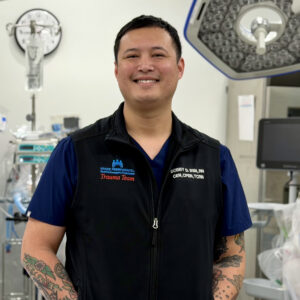
Bobby Domingo, BSN, RN, CEN, CPEN, TCRN, CFRN
Staff Nurse III, Emergency Department, Vacaville
Emergency nurse Bobby Domingo holds four certifications covering adult emergency care, pediatric emergency care, trauma, and as a flight nurse.
“I pursued national board certification not once, but four times, to challenge myself and validate my expertise,” he said. “It reflects my commitment to providing the highest standard of care to every patient.”
Domingo’s certification journey began with a Kaiser Permanente–sponsored review course that inspired him to study further. He completed virtual lectures and hundreds of practice questions before each exam.
“The process was rigorous but incredibly rewarding,” he said. “Eventually, you take that leap of faith that you’ve prepared hard enough.”
Certification has strengthened his patient assessments, increased his confidence during high-risk situations, and empowered him to mentor others. “My knowledge helps me act quickly, anticipate complications, and advocate for my patients,” he said.
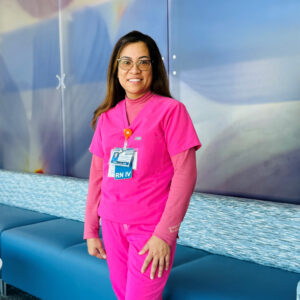 Gilda Santos, BSN, CMSRN, GERO-BC
Staff Nurse IV, Medical Telemetry, Redwood City
Certification is about pride, empowerment, and professional credibility for Gilda Santos. It also reinforces evidence‑based practice and her lifelong commitment to nursing excellence, she said.
She has been nationally board certified as a medical surgical nurse for 19 years and recently earned her gerontological board certification, validating her expertise in caring for older adults.
“I became nationally board certified to elevate my professional credibility, confidence, and sense of accomplishment,” she said.
Certification strengthened her clinical judgment and validated her expertise at the bedside. “It helps patients feel more comfortable and trusting of my care because they know I’m well‑prepared and skilled,” she added.
She has also watched Kaiser Permanente’s support for certification grow significantly over her career. “Now, KP provides information sessions, vouchers for first‑time applicants, and even free review classes,” she said.
For nurses interested in pursuing certification, check out the Nurse Scholars Academy.