

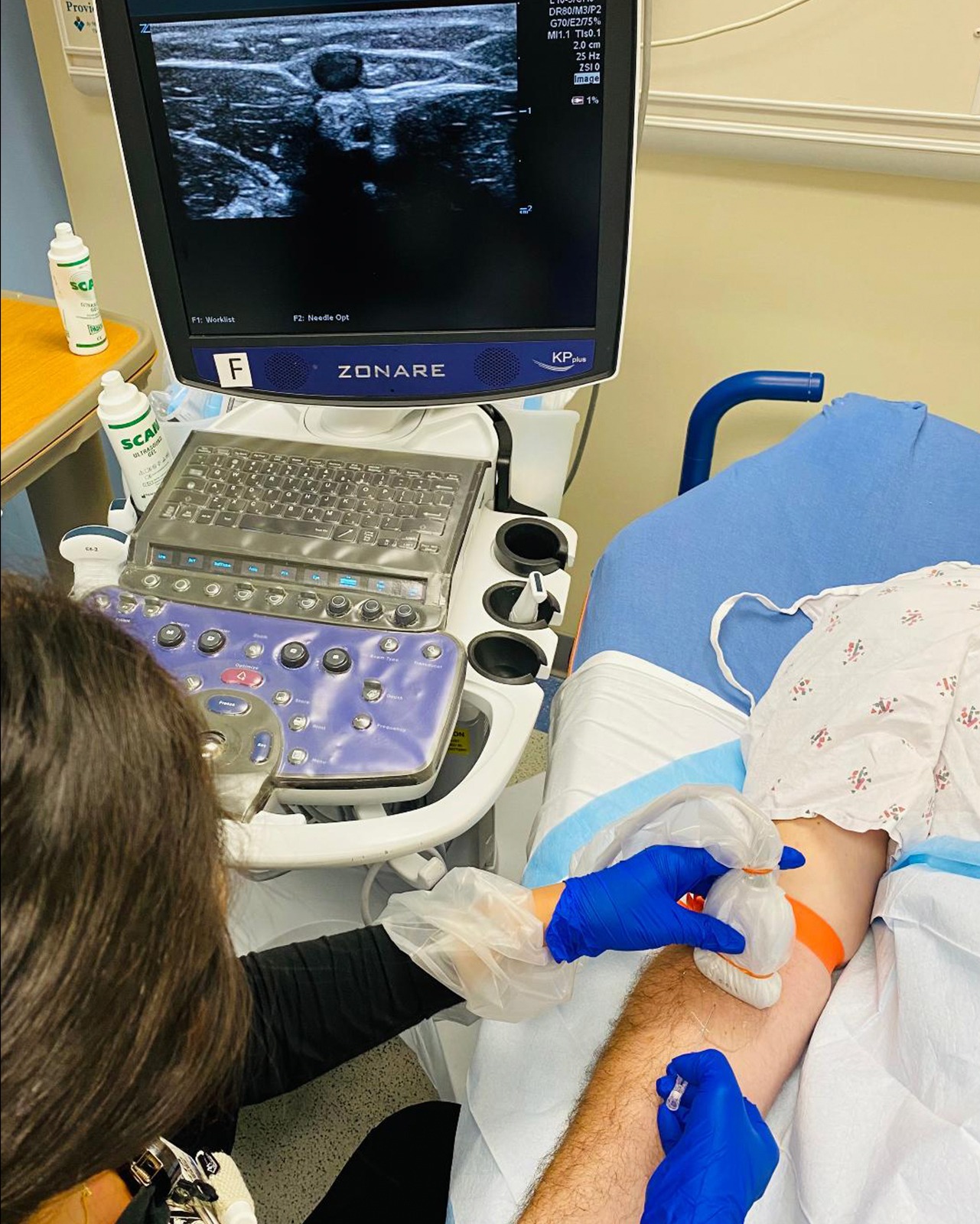
The Ultrasound-Guided Intravenous (USGIV) Access Program, a nurse-driven initiative in the Emergency Department (ED), has revolutionized care for hard-stick patients by reducing delays in treatment and improving patient satisfaction. Previously, only 14% of ED nurses were trained in USGIV access, leading to multiple unsuccessful attempts that delayed care and caused discomfort for patients. Research shows that USGIV training significantly decreases delays while boosting satisfaction—a challenge embraced by the ED team.
 This innovative program is the brainchild of Marta Suarez, BSN, RN, and Vanessa Alvillar, BSN, RN, who collaborated with Jonathan Chen, MD, Supervisor of Medicine, and Ruben Quitoriano, BSN, RN, Clinical Nurse Educator, ANM, to bring it to life. Their goals included training ED nurses in USGIV, standardizing the practice with evidence-based guidelines, implementing a department-wide policy, and ensuring proper supplies for safe and effective IV placement.
Since its inception, 15 ED nurses have been trained, with plans to expand the program in 2025. A comprehensive policy now guides the practice, ensuring safe and consistent application. All USGIV-performing nurses have been signed off following rigorous training, and they assist during night shifts when the Recuperative Skills team is unavailable. Nurses with prior experience were also proctored and signed off, expanding the pool of super-users in the department. Additionally, new supplies, including a variety of catheters and sterile covers, have enhanced safety and efficiency.
Testimonials from nurses and patients underscore the program’s success. Patients express gratitude for fewer pokes and faster care, while nurses share how the skill has boosted their confidence and efficiency. “Many things in emergency care hinge on IV access. USGIV saves time, reduces patient discomfort, and prevents delays,” shared Josh, ED RN.