Skip to content
3.-Professional-Governance-Council-nurturing-the-next-#2

Professional Governance Councils: Nurturing the next generation of nurse leaders

Leadership succession planning is imperative for organizational stability and serves as a structure for staff development and career advancement. The 2024 U.S. Bureau of Labor Statistics RN Occupational Outlook report states that an average of 194,500 annual openings for nurses will be projected by 2033. This increase in nursing job demands may also imply the need to prepare nurses to fill vacancies from retirement and turnover in leadership roles.   

 Nursing Professional Governance Councils (PGC) at Kaiser Permanente Sacramento are unit-based and hospital-wide structures that empower clinical nurses with oversight and autonomy over nursing practice. The structure also serves as a platform for clinical nurses to build leadership skills in key areas, such as communication, problem-solving, decision-making, facilitation, and relationship-building. In their role as chairpersons, committee leads or members, clinical nurses learn how to navigate challenges that affect their practice at the bedside, leading quality initiatives, engaging their peers, and making impactful decisions.   

 “At Kaiser Permanente Sacramento, we support our PGC chairs and committee leads as they assume their roles by offering workshops and mentorship,” explains Joel Mallari, DNP, RN, ACNS-BC, NEA-BC, Magnet Program Director. “The PGC workshops teach them foundational skills on meeting facilitation, structured problem solving, data appreciation, and decision making. We also included leadership development presentations on our monthly PGC Day agenda to supplement learning and skill building. In addition to structured training, every council is mentored by a nurse leader. Council chairs have touch-based meetings with their council mentors to review meeting agenda, seek feedback, or consultations about projects until they are more confident to be independent.”    

While not all clinical nurses involved in council work aspire to formal leadership roles, some discovered new career paths. Recently appointed Assistant Nurse Managers credited their experiences leading council work on their professional growth. 

Elisaden Samier, BSN, RN, CCRN, now an Assistant Nurse Manager (ANM) in the Intensive Care Unit (ICU), related her leadership growth to her role as the ICU Unit Practice Council Chair. “Leading committees, driving quality initiatives, and applying evidence-based practice prepared me for the challenges of my new role,” she shared. In her former role, Elisaden was engaged in council decision-making, team collaboration, and communication, which are essential skills as she transitioned to her ANM role. 

Similarly, Aileen Icmat, MSN, RN, CCRN, ANM of the Post Anesthesia Care Unit, highlights her leadership development journey. While chairing the ICU’s HAPI Committee, she was exposed to work related to cross-department collaboration, resource management, and project implementation. “These experiences shaped my ability to lead effectively as an ANM,” Aileen explains. She also emphasizes the value of tools used in the council work like A3 and KATA in identifying root causes, engaging staff, and fostering a culture of problem-solving. 

Structures such as Professional Governance Councils and mentorship programs help to build leadership skills and open career growth opportunities for clinical nurses. Supporting leadership development at all levels of nursing practice is essential for elevating the profession, improving outcomes, and ensuring organizational stability.  

Korean mature woman leads meeting of multiracial work colleagues discussing ideas and business together sitting at table in modern creative office interior daytime

Improving care experience with interdisciplinary daily leader rounding

Patient experience is an essential aspect of measuring quality care. To enhance this part of care delivery at the Sacramento Medical Center, Esperanza Chavez, MSA, BSN, RN, Chief Nurse Executive led the implementation of interdisciplinary daily leader rounding—an initiative designed to build meaningful connections among leaders, patients, families, and staff.  

Leaders from nursing, ancillary services, and administrative departments conducted daily patient visits to engage with patients, families, and frontline staff. A rounding debrief follows, enabling leaders to escalate concerns, implement quick solutions, celebrate successes, and address barriers, such as service delays or communication gaps. This process also promotes accountability, real-time problem-solving, and a culture of meaningful actions.  

“We are receiving feedback from patients that they feel heard and valued, with many highlighting exceptional staff efforts,” Keith Weaver, MSN, RN, NEA-BC, Area Care Experience Leader, noted, “This process also gives us a chance to hear directly from patients not only about their concerns for service improvement but also the incredible work of our staff—they deserve the recognition.”  

Reflecting on the program’s impact, Chief Nurse Chavez emphasized, “Interdisciplinary rounding isn’t about checking in—it’s about showing up, breaking down barriers, and celebrating the extraordinary people behind our care. It is also about engaging all leaders whose work may not be in direct patient care, but making things happen for clinicians to do their work effectively. Over time, this initiative will help us drive improvements in the patient experience, strengthen interdisciplinary collaboration, and enrich the hospital’s mission to provide high-quality care.” 

Sharon Hampton, PhD, MSN, RN, NEA-BC, WCSI Caritas Coach®, Chief Nurse Executive at the San Leandro Medical Center (left); and Elizabeth Scruth, PhD, MPH, RN, CNS, CCRN, CCNS, FCCM, FCNS CPHQ, Northern California Executive Director of Clinical Quality Programs, Data Analytics and Tele-Critical Care (right).

Accomplished nurse leaders named fellows of the American Academy of Nursing

Two Kaiser Permanente Northern California nurse leaders were inducted in the 2024 Class of Fellows of The American Academy of Nursing at the Academy’s annual Health Policy Conference held recently in Washington, DC.

Among the group of a distinguished nurse leaders being inducted for their substantial and sustained impact on health and health care were Sharon Hampton, PhD, MSN, RN, NEA-BC, WCSI Caritas Coach®, Chief Nurse Executive at the San Leandro Medical Center (pictured left above); and Elizabeth Scruth, PhD, MPH, RN, CNS, CCRN, CCNS, FCCM, FCNS CPHQ, Northern California Executive Director of Clinical Quality Programs, Data Analytics and Tele-Critical Care (pictured right above).

Fellows of the American Academy of Nursing (FAAN) represent nursing’s most accomplished leaders in policy, research, administration, practice, and academia.

Hampton is recognized for her lifelong dedication to advancing equity, inclusion, diversity, and belonging (EIDB) principles in health care, and her unwavering commitment to being a voice and advocate for historically excluded populations. Her research exploring how nurses contribute to inequities has garnered national and internal recognition.

As a nurse leader, Hampton is committed to transformational and inclusive leadership. Her work embedding EIDB principles and the Watson Caring Science Theory into nursing education/practice, provide nurses the common language to achieve their higher purpose and transform their practice from knowing and doing to providing the caring-healing environment.

“My life’s work, rooted in my PhD research, is centered on ameliorating health inequities,” said Hampton. “The FAAN nomination and induction represents the culmination of my efforts to address the complex challenges within our health systems and to co-create a more equitable and caring future in health care.”

Scruth, who has been with Kaiser Permanente for over 30 years, said the designation as a FAAN is humbling. “I am very honored to have been recognized and acknowledged for my contributions to nursing and the scientific community,” she said. “The accomplishments, outcomes and level of impact required to have demonstrated to be inducted is significant and takes many years to achieve.”

Scruth’s career as a nurse began at the bedside in the ICU. She became a Critical Care Clinical Nurse Specialist and served in various leadership roles within the organization before joining the Northern California Quality team. She has also served on the Certification Board of the American Association of Critical Care Nurses for 8 years.

Throughout her nursing career spanning 2 continents, Scruth has continued to focus on research, including co-authoring published international guidelines for family-centered care in the neonatal, pediatric, and adult ICU, and best practices in tele-critical care.

Congratulations Drs. Hampton and Scruth!

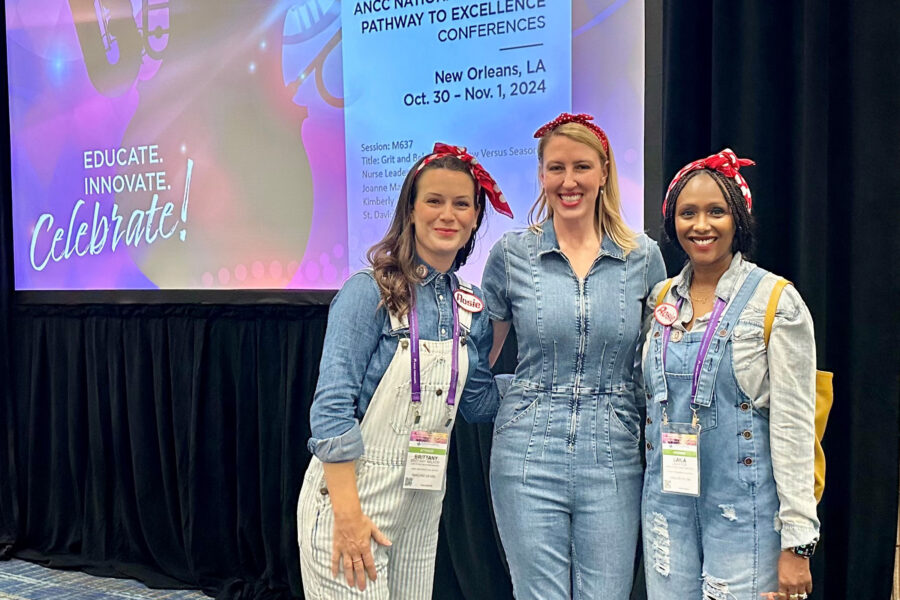
3 nurses dressed as Rosie the Riveter

“Richmond Can Do It!” Magnet journey theme draws inspiration from the community’s history 

Kaiser Permanente Richmond’s journey toward Magnet® recognition draws strength and inspiration from a proud history rooted in resilience, diversity, and teamwork. Our theme, “Richmond Can Do It!”, echoes the spirit of the Rosie the Riveter WWII Home Front—a time when people from all walks of life united to achieve extraordinary things. 

During World War II, Richmond was home to the Kaiser Shipyards and the Ford Assembly Plant, pivotal sites for wartime production. To support the health and well-being of these workers, Kaiser Permanente opened its first field hospital, laying the foundation for the healthcare system we know today. The workers—men and women from diverse backgrounds—embodied collaboration, adaptability, and determination, values that continue to inspire our nurses. 

Today, our nurses honor that legacy by leading innovative, patient-centered care that reflects the strength of the community we serve. The Magnet® Journey exemplifies this commitment, celebrating our nurses’ dedication to evidence-based practice, professional growth, and exceptional outcomes. 

Just as Richmond workers united during WWII to build ships and support the war effort, our nursing team comes together with the same “can do” spirit to provide outstanding care. Through this journey, we’re proving that the same drive and unity that defined Richmond’s past continue to shape its future. 

Leadership featured image placeholder

Advancing workplace safety for our team 

Richmond’s nursing leaders championed workplace safety through impactful initiatives. In July and December, Tia Newell, MSN, RN, NEA-BC, Interim Assistant Chief Nursing Executive, collaborated with the hospital’s security team to provide nurses with talks on safety and situational awareness, equipping staff with tools to feel confident and prepared in their environment. 

Additionally, Judelyn P. Cadavona-Bala, MSN, RN, 3 South Department Manager, worked with the Safety Team to implement the Green Blanket Protocol for inpatient units—a visual cue signaling patients with a history of violence during their visit. These efforts reflect Kaiser Permanente Richmond’s commitment to fostering a safe and supportive environment for all. 

Leadership featured image placeholder

Murals that bring calm to breakrooms 

Angela Davis, RN, manager of the 3 North unit at Richmond advocated for murals in the breakrooms. They were each successfully installed in floor-to-ceiling beach and other relaxing scenes in 2024. 

Health and wellness caring science featured image placeholder

Affirmation cards for nurse well-being 

Tia Newell, MSN, BSN, RN, NEA-BC, Interim Associate Chief Nurse Executive at Kaiser Permanente Richmond Medical Center, applied for and received a grant from KP Region to support an affirmation cards initiative for nurses’ well-being. 

3 nurses in front of stroke awareness banners

World Stroke Day outreach event

On World Stroke Day, Stroke Coordinator, Sheryn Shahwan-Solorzano, PhD (c), MSN, RN, CPHQ, and quality nurse consultant, Marsha Belen, MSN, RN, went into the community at the Caltrain station to share life-saving knowledge about the signs and symptoms of stroke. Together, we’re raising awareness and empowering everyone to act FAST.

4 individuals wearing Asian attire

Celebrating Asian American and Pacific Islander heritage month  

Kaiser Permanente Redwood City launched Asian American and Pacific Islander Heritage Month with a vibrant fashion show, inviting attendees to showcase traditional attire and dance representing their cultural heritage. A highlight of the celebration was a Continuing Medical Education event, Advancing Diverse Leadership Through Opportunity in Healthcare: Asian American Communities. Esteemed panelists included Josephine Jorge-Reyes, PhD, RN, NEA-BC, NPD-BC, NI-BC, Yinghua Zhou, MSN, RN, Dr. Charles Lim, Angie Jin, and Jeff Lim, who shared insights on leadership and equity in healthcare. 

Back To Top