Skip to content
Innovation featured image placeholder

Implementation of the Nasal Bridal Securement Device

In our Modesto Medical Center, Intensive Care Unit (ICU), nurses faced challenges in securing nasogastric tubes (NGTs) with adhesive tape. While tape was a common method, it often resulted in unintended NGT removal, slippage, skin irritation, or pressure injuries. Recognizing the need for a safer, more effective solution, our team embarked on a journey to improve patient care through evidence-based practice.

A thorough literature review highlighted the Nasal Bridal Securement Device as a promising alternative. This device has shown to securely stabilize NGTs, reducing the risk of dislodgement while also improving patient comfort. To validate its efficacy, a pilot study was conducted within our ICU, where the device proved to be safe, effective, and well-received by both patients and staff. In fact, the success rate in our pilot unit was 100%, with no instances of inadvertent NGT removal or associated complications.

Encouraged by these results, the findings were presented to the nursing Professional Governance Councils and the Chief Nurse Executive. After a thorough review, both groups approved the widespread implementation of the Nasal Bridal Securement Device across our facility. This project became the first evidence-based practice change to successfully complete the full process—from literature review, evaluation of the evidence, pilot study, committee presentation and review to final approval for system-wide adoption.

The implementation of this device marked a significant milestone in our hospital’s commitment to enhancing patient safety and comfort. It also set the stage for future evidence-based practice initiatives, empowering nurses to continue improving care through research and innovation. The Nasal Bridal Securement Device not only addressed an immediate need but also demonstrated the power of collaboration and data-driven decision-making in nursing practice.
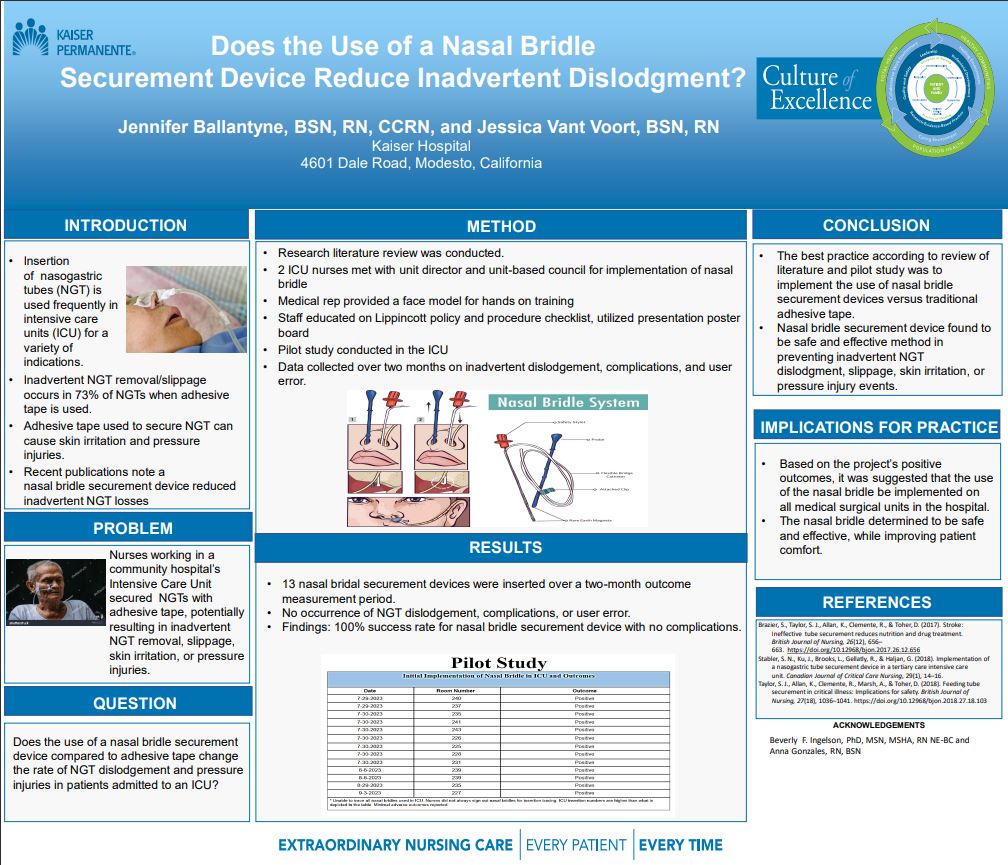
Poster of implementation of the Nasal Bridle Device
Epic-Wound-Rover

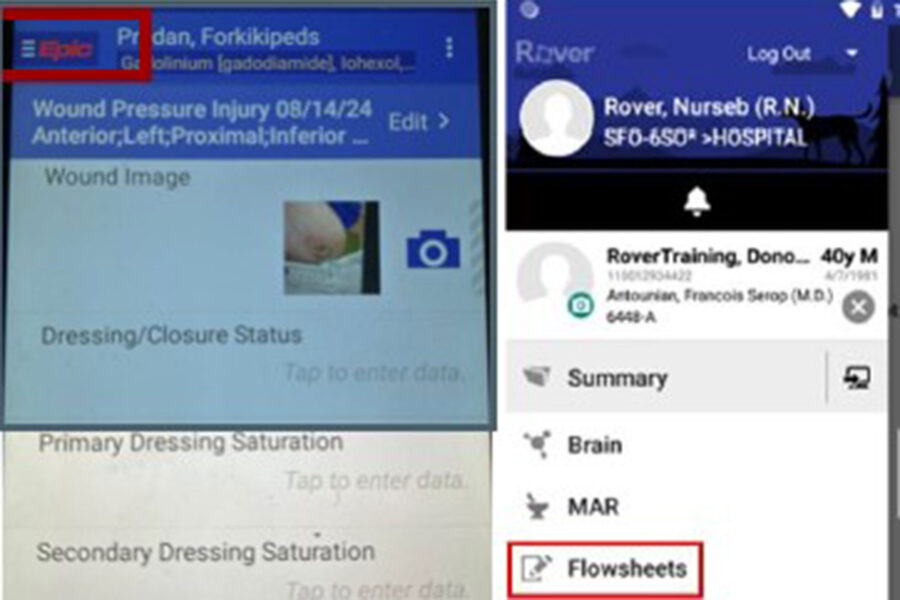
Mobile application interface to improve skin assessment

Epic Rover presents a unique ability to document and track wounds via photos directly on a mobile device. The app features advantages including consistent, real time, and accurate wound documentation with measurements, spans the continuum throughout the health system, the integration into the flowsheet and chart to attach photos in health care provider’s notes, and a quick glance at the LDA Avatar for easy visualization of wound location’s on a patient’s body.

“The Rover App is very promising and convenient for nurses to assess and document wounds in the health record while providing patient care,” said Carolina Melendez, BSN, RN, CWOCN, a certified wound care and ostomy expert.

Innovation featured image placeholder

TrackCore improves efficiency

Kaiser Permanente Fremont Perioperative Services implemented TrackCore tissue implant tracking system in June 2024 for tissue implant tracking from loading dock receipt to implantation and follow-up activities post implantation.

TrackCore tissue implant tracking system is a significant step forward in improving efficiency and compliance. It provides automated tracking and inventory control of tissue implants in the Operating Room to help efficiency and cost control. This software is compliant with FDA and Joint Commission standards ensuring that the Fremont Medical Center Operating Room meets regulatory requirements for tracking biologic and non-biologic implants.

This transition enables Intraoperative Nurses to document in one location. KP Health Connect (KPHC) and KPHC documentation are uploaded to TrackCore, eliminating the need for nurse documentation in two systems. This software also has advance features like real time shipment notifications, advanced analytics and integrated RFID tracking to enhance inventory management and patient safety.

Shiny-and-Winchell

KP Cares 2.0

The Kaiser Permanente Fremont Medical Center continues to participate in the KP CARES: Kaiser Permanente Caring Attributes and Resilience to Stress in 2024. The purpose of this study is to 1) assess the effectiveness of the “Enhancing Our Culture of Caring” initiative and its enhanced experiential learning module series by analyzing staff and leaders’ self-assessments of self-care behaviors, evaluating the organization’s caring culture, and measuring the prevalence of compassion fatigue before and after the intervention, and 2) investigate the lived experiences of clinical nursing staff, including leaders.

This study has two primary goals. The first goal is to evaluate self-care, leadership caring behaviors, organizational practices, burnout, secondary traumatic stress, compassion satisfaction, bias awareness, bias mitigation self-efficacy, and bias mitigation practices at baseline, immediately after, and six months post-intervention. This evaluation is based on participation in an experiential education program grounded in Dr. Jean Watson’s Human Caring Theory and the 10 Caritas Processes. The second goal is to gain insight into the lived experiences of clinical staff who have been actively practicing and leading at the bedside during the COVID-19 pandemic.

Winchell Kuttner, DNP, RN, CPHQ and Shiny Thomas, RN, are co-investigators of this qualitative study exploring a curriculum designed to cultivate healthcare professionals educated in resiliency through the Caring Science framework. The study aims to enhance resilience in healthcare ambassadors, preparing them as leaders in Caring Science, HeartMath, and Equity, Inclusion, and Diversity. Key themes identified include self-compassion, mindfulness, burnout, mutual respect, and bias awareness.

Heated-&-humidified-gases

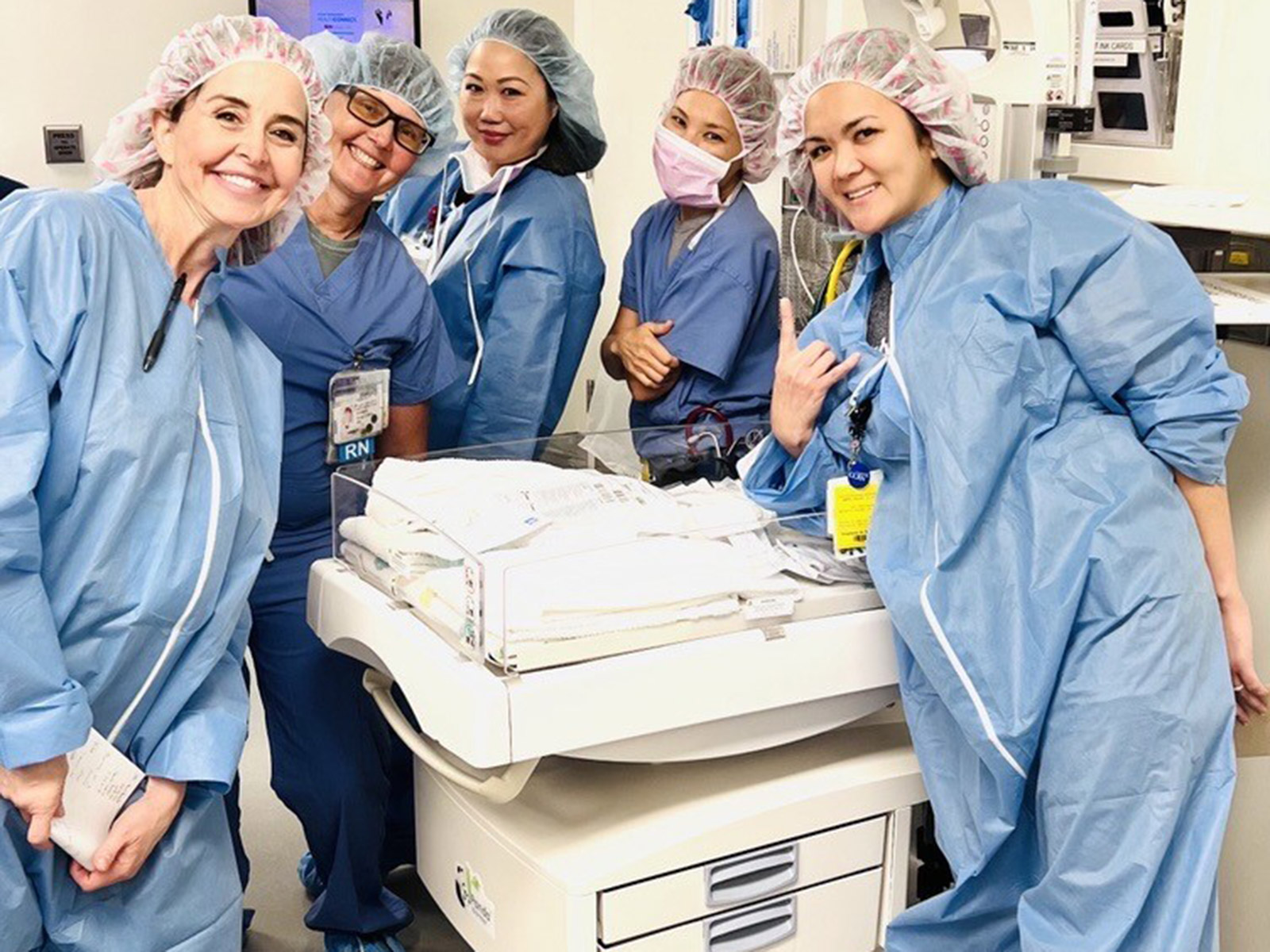
NICU implements heated and humidified gases for thermoregulation

Maintaining normothermia in very low birth weight (VLBW) infants during their initial hours in the Neonatal Intensive Care Unit (NICU) is crucial to preventing long-term health complications.

In 2023, despite best efforts with preheated incubators, thermal mattresses, and polyethylene wraps, over 30% of VLBW babies arrived at the NICU with abnormal temperatures. To address this, NICU nurse Carrie Capansky, BSN, RN, and the Newborn Delivery Attendance Committee launched an initiative in July 2023 to provide heated and humidified gases during resuscitation and transfer to the NICU for babies under 32 weeks gestation or weighing less than 1500 grams. Education on this new approach was provided to neonatologists, registered nurses, and respiratory therapists. Since the implementation of this protocol in January 2024, only 2 VLBW infants have arrived hypothermic in the NICU, significantly improving patient outcomes and promoting better thermoregulation from the moment of birth.

a keyboard and stethiscope

Informatics Council enhances patient armbands for improved care

In 2023, the Informatics Council at Kaiser Permanente Roseville raised concerns about the challenges posed by patient armbands featuring only a single QR code, which made scanning difficult if a patient was lying flat or if the armband was too tight to reposition. In response, Chief Nurse Executive Debbie Reitter, DNP, MSN, RN, CNS, NEA-BC escalated the issue to regional partners. By Summer 2024, the Informatics team collaborated with the region to design and implement enhanced armbands. The new armbands feature larger medical record numbers (MRNs), a second MRN, 13 QR codes for improved scanning, a second ID barcode, and spaces for a patient’s preferred name and gender pronouns. Registered Nurses on the Informatics Council provided valuable real-time feedback, resulting in further modifications to the prototype. In October 2024, the upgraded armbands were officially rolled out across the Kaiser Roseville campus. The addition of multiple QR codes ensures more efficient scanning, regardless of a patient’s position, while the inclusion of preferred names and gender pronouns has led to increased patient satisfaction. Plans are in place to extend the enhanced armbands to other Kaiser sites across Northern California in the near future.

LMA

NICU implements latest neonatal resuscitation guidelines

In September 2024, the Kaiser Roseville Women and Children’s Hospital became one of the first in the nation to implement the updated 2023 NRP guidelines from the American Heart Association and American Academy of Pediatrics regarding the use of supraglottic airways during neonatal resuscitation. Led by Stephanie De Ocampo, MSN, RN, CCRN, and Carrie Ann Capansky, BSN, RN, the multidisciplinary Newborn Delivery Attendance Committee’s Supraglottic Airway subgroup developed a clinical decision support tool to assist the NICU Resuscitation Team in selecting infants for positive pressure ventilation using a supraglottic airway instead of a face mask. The NICU Delivery Team provided comprehensive education and simulation training on the new guideline, including hands-on practice with supraglottic airways for physicians and nearly 100 NICU registered nurses and respiratory therapists. All neonatal sizes of supraglottic airways were stocked in every neonatal crash cart on campus, and supraglottic airway kits were placed next to all newborn resuscitation warmers in Labor and Delivery, including the OR spaces. Since implementation, 57 babies at this medical center have safely received positive pressure ventilation via supraglottic airway, marking a significant advancement in neonatal care.

PAC-RN-team
Innovation featured image placeholder

Nurse-led research enhances evidence-based practice knowledge and competencies

In January 2024, following Institutional Review Board approval, Kaiser Permanente Roseville launched a nurse-led research study to assess the organization’s evidence-based culture and readiness, and to evaluate the effects of an evidence-based practice (EBP) immersion on EBP knowledge and competencies among registered nurses (RNs) participating in hospital-level professional governance councils, regardless of their prior EBP experience.

The study aimed to increase EBP knowledge and competency among participants in these councils, locally known as the Voice of Nursing (VON). The EBP immersion program included 2 hours of EBP instruction, combining didactic and workshop activities, during monthly VON days over a 6-month period. Validated pre- and post-surveys were administered. Results demonstrated a significant increase in EBP competency and a large effect on EBP knowledge. Participants in VON generally perceived an improvement in Kaiser Roseville’s organizational culture and readiness for EBP after the immersion, further advancing the hospital’s commitment to fostering a culture of evidence-based care. 

6 professionals on screen in a virtual meeting

Community Health and Workforce of the Future

Supplementing Kaiser Permanente’s mission to improve the health and wellness of our members and the communities we serve, the Allied Health Scholars Academy’s mission is to build and sustain a diverse and thriving nursing, mental health, and allied health care workforce of the future through academic and community partnerships.

Supplementing Kaiser Permanente’s mission to improve the health and wellness of our members and the communities we serve, the Community Health and Workforce of the Future’s mission is to build and sustain a diverse and thriving nursing, mental health and allied health care workforce for the future through academic and community partnerships.

2024 accomplishments include:

  • Funding 73 summer student nurse interns
  • Exposure opportunities for 24 perioperative immersion nursing students
  • Providing over 1,000 middle and high school students exposure to the Exploring Careers in Health Care Webinar
  • Delivering 285 student grants
  • 136 Deloras Jones Scholarship to nursing students in NCAL

The Allied Health Scholars Academy is creating a pilot summer student internship program for Respiratory Care Practitioner students with a target start date of summer 2025. The Academy also offers events throughout the year. Click here to learn more.

Nurses celebrating

Multi-site studies inform nursing practice across region

Kaiser Permanente nurses at all practice levels are encouraged to engage in practice scholarship such as utilizing Evidence-Based Practice (EBP) and research scholarship to improve the delivery and quality of care.

One way to be encourage our nurses is to have them be involved in a multi-site study. Multi-site studies across the region use the same study protocol simultaneously providing Kaiser Permanente nurses to collect data from a wider and more diverse population. Multisite studies involve having a lead site (PI or Co PI) to help manage the project. In 2024, we had two major multi-site studies:

The Re Brilliancy study was to assess whether the Re Brilliancy workshop centered on Jean Watson’s Caring Science Theory helps provide authentic connection by:

  • increasing compassion satisfaction and self-compassion in bedside nurses and nurse leaders.
  • Decreasing burnout and secondary traumatic stress in this population group.

The conclusion of this study showed participants reported a sense of belongingness and a non-judgmental environment, with quantitative results showing significant improvements in compassion satisfaction, self-kindness and common humanity.

KP Cares 2.0 was another multi-site study. Healthcare workers’ careers are both physically and emotionally demanding. High rates of burnout were recognized before the global health crisis, and the pandemic has only added additional stressors, daily disruptions, and upended routine hospital care practices.

The research objective was to determine the impact of a new program to enhance resiliency by combining three approaches Caring Science (CS), HeartMath (HM), and Equity, Inclusion, and Diversity (EID). The review of the resiliency and “burnout” literature indicated that there is limited evidence with low validity and quality addressing the mental health of nurses, particularly for those working the frontline during infectious disease outbreaks. A systematic review of resilience and behavioral health interventions found limited evidence to support specific interventions aimed at enhancing the mental health nurses, thus research was needed.

This is a unique approach combining several powerful interventions into a single program. The preliminary results indicate a promising direction to address common stressors in the healthcare provider’s work environment. Limitations include convenience sampling. Advantages include in-person sessions taught by certified trainers. This program will continue to be tested and expanded within other hospitals in the Northern California region. Approval has been granted for the CSA to be implemented in Kaiser Permanente facilities nationwide. Satisfaction with the program will be tracked and reported to ensure sustainability.

Back To Top