Skip to content
Pediatric_crash_cart

Improving care of pediatric surgery patients

Pediatric surgery patients are a sensitive population requiring specialized care. The Post Anesthesia Care Unit (PACU) team recognized a need for enhanced pediatric education and initiated a quality improvement project to strengthen care for this population. Focused education included airway management, code blue scenarios, malignant hyperthermia, and overall post-surgical care for pediatric patients.

Anesthesia Dr. Serena Ng, MD and Head and Neck Surgery Dr. Jonathan Law, MD partnered with Nursing Professional Development Practitioner Jessica Battenburg, BSN, RN, NPD-BC, CNOR to include education in their specialties specific to pediatric care. As a result of this training, staff reported increased confidence in managing patients, improved safety and quality of care, and strengthened collaboration between nursing and physician teams.

Goal milestone featured image placeholder

Manteca Enhanced Recovery Medicine

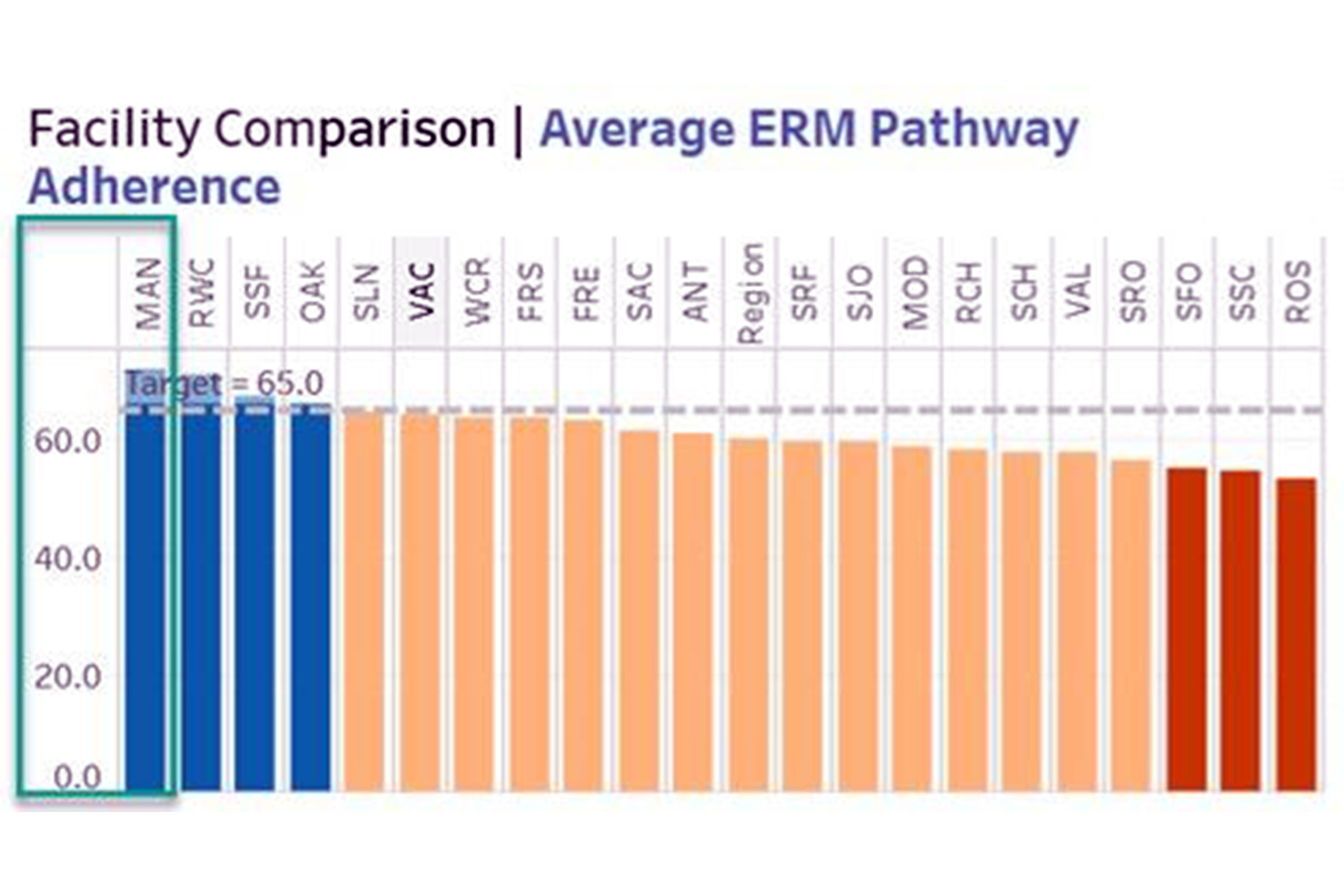
In 2024, Manteca’s Enhanced Recovery Medicine (ERM) team reached an extraordinary milestone by becoming the number one performer in the Kaiser Permanente, Northern California region, setting a new benchmark for excellence in patient care. This achievement reflects the dedication of the Manteca ERM team, guided by the strategic leadership of Jasleen Sandhu, MSN, RN, Department Manager of the ICU, Medical/Surgical/Telemetry and Float Pool, and Sameer Khullar, DNP, MSN-FNP, RN, CPH, Lead Quality Nurse Consultant. Together with the frontline nursing team leading the way, they fostered a culture of continuous improvement, leveraging data-driven strategies to enhance outcomes and operational efficiency. By tackling critical areas such as length of stay (LOS), readmission rates, and ERM assessment bundle compliance, the team transformed challenges into opportunities. Among their standout accomplishments was the consistent reduction of Average Length of Stay (LOS). They achieved this by streamlining discharge processes, improving communication across care teams, and refining workflows using real-time data. These interventions optimized patient flow and significantly improved the care experience for patients and staff alike.

Another significant success was maintaining Assessment Bundle Compliance, where the team consistently exceeded the regional target of 90%. This was accomplished through rigorous training, interdisciplinary collaboration, and strict adherence to evidence-based protocols, ensuring thorough and timely patient assessments. These improvements strengthened care quality and earned Manteca’s ERM team its leadership position. The accompanying graphs vividly illustrate these achievements, highlighting steady declines in LOS and sustained success in bundle compliance. Manteca ERM’s teams’ commitment to excellence demonstrates the power of collaboration, innovation, and a shared vision. Their success sets a new standard for patient care, serving as an inspiration for future initiatives. By combining teamwork, data-driven strategies, and visionary leadership, the Manteca ERM team proved that transformational change in health care is not only possible but also sustainable.

2024 CVA Annual Nursing Report Exemplary Professional Practice Manteca Enhanced Recovery Medicine Graph (Photo)(2)
Graph of ERM
Central Valley periop nurses

Guided imagery: An evidence-based, nurse-driven complimentary intervention

Surgery typically leads to acute postoperative pain, which physicians manage with pharmacologic interventions to alleviate discomfort. However, fear of pain and potential outcomes can intensify a patient’s perception of pain. Effective pain management plays a crucial role in ensuring both short- and long-term positive patient outcomes. In some cases, pharmacologic interventions alone do not address the unique needs of each patient. To meet these needs, one nurse began integrating a distraction technique by guiding patients to visualize their favorite place, finding a compatible soundscape on the internet, and assisting with purposeful breathing. This approach proved effective, prompting the nurse to seek out literature to understand the underlying reasons behind its success.

Through clinical inquiry, the nurse discovered evidence linking preoperative anxiety with increased postoperative pain, as well as supporting the use of guided imagery to reduce preoperative pain. After obtaining approval from the Kaiser Permanente, Research and Development Office (RDO), an evidence-based practice study was conducted in the Ambulatory Surgery Unit in Stockton. The study compared pre-intervention pain levels, length of stay, and opioid consumption in patients who received guided imagery. Additionally, patients who participated in guided imagery were assessed for anxiety both before and after the intervention, and they engaged in a follow-up discussion about their experience.

Key findings from the study included:

  • Guided imagery reduced preoperative anxiety by an average of 54%.
  • There was a 7-minute reduction in discharge readiness time from the first pain report when guided imagery was used.
  • For patients presenting with preoperative pain, guided imagery led to a 13-minute reduction in discharge readiness time.
  • Opioid consumption decreased by nearly 4 points on average when guided imagery was used with patients experiencing preoperative pain.
  • Patients reported an average satisfaction rating of 80% with their guided imagery experience.
  • Guided imagery, as a nurse-driven complementary intervention, has been shown to effectively reduce preoperative anxiety, improve postoperative pain management, and enhance the overall patient experience.
Recovery pack contents

Empowering recovery: Optimizing postoperative care for mastectomy and lumpectomy patients

As the demographic of breast cancer patients continues to get younger, they face not only physical challenges from surgery but also significant emotional distress. Same-day surgeries, such as lumpectomies and mastectomies, can leave patients grappling with feelings of anxiety, fear, and body image concerns. Navigating the uncertainty of recovery, combined with emotional and physical healing, can be overwhelming for both patients and their families.

In response to these challenges, the Pre and Postoperative Unit-Based Council (UBC) developed the “Breast Pack” (BP) Program, designed to provide holistic, compassionate care throughout the recovery process. Developed by the UBC committee, this initiative aims to offer both practical and emotional support to patients after surgery, helping them feel comforted and cared for during their recovery journey.

The BP is filled with items that address both the physical and emotional needs of patients. It includes a specialty-made breast pillow with pockets to hold the drain tube(s) and bulb(s), ensuring comfort while in a vehicle and at home. Other items include cozy socks, lip balm, a limb alert bracelet to prevent complications, and aromatherapy to soothe postoperative nausea. The pack also provides educational materials and resources for breast cancer support groups, offering patients a sense of connection and emotional reassurance during this difficult time.

To further enhance care, nurses make a follow-up post-operative phone call to each patient, checking in to answer any questions, discuss pain management, and provide additional resources. This compassionate outreach ensures that patients feel supported throughout their recovery, fostering trust and confidence in the care they are receiving.

By combining evidence-based practices with compassionate care, the BP program offers a comprehensive, patient-centered approach that not only improves physical recovery but also supports emotional well-being. Nurses are central to this initiative, helping to reduce anxiety, enhance recovery, and ensure a positive overall patient experience.


Exemlary-Professional-Practice-Discharge-Lounge

Discharge Lounge

We are thrilled to share the success of the Discharge Lounge at KP Modesto, which officially opened on August 12, 2024. This initiative has been a game-changer in enhancing patient flow and optimizing care delivery.

At the start of the year, our average discharge time from the inpatient area was 170 minutes. Thanks to the Discharge Lounge, we are now approaching our target of 120 minutes, with October averaging just 129 minutes. Month by month, we’ve seen significant progress. This improvement has enabled us to alleviate pressure on the inpatient areas, creating more capacity for patients awaiting admission from the Emergency Department or recovery room. The current process is interdependent on the availability of light duty RNs which has allowed the staff to have a valuable role in helping our members. Some key items that they have been able to provide to members and their families are important readmission prevention strategies such as going to obtain their prescribed medications and the education that goes along with those medications. The key factor that these nurses can provide is a more thorough discharge teaching to allow the primary RN to assist with other throughput strategies with their patient assignments.

The Discharge Lounge is designed to offer a welcoming hospitality area for patients who are ready for discharge but delayed for “simple” reasons, such as waiting for transportation. With comfortable seating, TV, books, crossword puzzles, and light refreshments, the space ensures patients are cared for in a comfortable environment until they can leave the medical center safely.

Our dedicated staff have been equipped with tailored communication tools to explain the lounge’s purpose effectively, and we’ve developed a comprehensive Playbook to support other facilities interested in adopting this best practice.  Thank you to our fellow NCAL facilities that have pioneered this process.  We are excited to see what our future average minutes will be as we continue to apply the PDSA process.  Stay tuned!

Nurses smiling from the Modesto Medical Center

Celebrating the Golden Hour success in our NICU: A year of achievement

As we reflect on 2024, we are filled with immense pride and gratitude for the incredible achievements we’ve made in our NICU. One of the most significant milestones this year has been the success of the Golden Hour program, a direct result of the unwavering leadership and dedication of our NICU leadership team.

Thanks to their visionary approach and commitment to improving care from the very first moments of life, our team has delivered exceptional results for our smallest patients and their families. By championing evidence-based practices and fostering a culture of collaboration, we have not only enhanced patient outcomes but also strengthened the bond within our team.

Our leadership team’s commitment to building a Magnet culture has been instrumental in this success. Through continuous professional development, fostering an inclusive environment, and empowering every member of our team, we’ve created a place where excellence thrives. This year’s achievements are a testament to the power of strong leadership, innovation, and a shared passion for improving the lives of those we care for.

A sincere thank you to our NICU leadership team and every member of our NICU family for the dedication and perseverance that made this success possible. Together, we’ve made a lasting impact, and we look forward to continuing our journey toward excellence in 2025 and beyond.

My hospital visit folder

Nursing contributions to the Care Experience

At our Fremont Medical Center, Nursing Communication is the area of focus for patient experience as measured by the HCAHPS patient experience survey. The Nursing Communication composite includes Nurses Listen Carefully, Nurses Treated Me with Courtesy and Respect, and Nurses Explained Things to Me in a Way That I Can Understand.

In March 2024, Christopher Neilson, BSN, RN, NE-BC, Chief Operating Officer and Chief Nurse Executive introduced a daily “Golden Hour” from 10-11 a.m. for leader rounding, allowing leaders to connect with patients and demonstrate active listening using Commit to Sit stools in patient rooms. After rounding, the interdisciplinary leadership team holds a debrief to address care concerns and select an exceptional recognition for weekly celebration. The Magnet Care Experience team focused on improving communication tools, including adding patient education handouts to the My Hospital Visit folder. These handouts featured an updated Welcome Letter, detailing what to expect during a hospital stay, and medication information. Additional tools such as pocket amplifiers for hearing-impaired patients and ASL interpreters for deaf patients (with ASL being the sixth most prevalent language) were also implemented. As 11% of patients speak a primary language other than English, visual identification of patients needing interpreters has enhanced care team communication. These efforts contributed to meeting the Nursing Communication organizational goal for the year, with a 9 percentile increase in the benchmark score.

ICU-HAP-Group-Photo

Preventing hospital-acquired pneumonia in ICU

Left to right: Shaun Noronha, MD, Intensivist, Arveena Balu, MSN, RN, ICU Nurse Manager, Lupita Posos, BSN, RN, Arlene Acosta, BSN, RN, Grace Cacacho, BSN, RN, Roshini Sharma, Respiratory Therapist

Hospital-Acquired Pneumonia (HAP) remains one of the most common and serious infections in the ICU, contributing to prolonged hospital stays, increased health care costs and higher mortality rates. However, evidence shows that proactive strategies, including early assessment, patient mobilization and enhanced nurse education, can significantly reduce the incidence of HAP and improve patient outcomes.


Mobilization: A key strategy in HAP prevention

One of the most effective, yet often underutilized, interventions in ICU settings is early and progressive mobilization. Recent studies indicate that even short bursts of early mobilization in critically ill patients can reduce the likelihood of developing HAP. Physiologically, movement helps in preventing Ventilator-Associated Pneumonia (VAP) by enhancing airway clearance and improving overall respiratory mechanics. Importantly, early mobilization has also been shown to decrease ICU length of stay, reduce delirium and improve long-term recovery.

Sedation Assessment and Titration (SAT) and Spontaneous Breathing Trials (SBT) : A key strategy in HAP prevention

At the Fremont Medical Center ICU, reducing HAP has been a key focus, with Sedation Assessment and Titration (SAT) and Spontaneous Breathing Trials (SBT) playing a crucial role. By regularly assessing and minimizing sedation through SAT, we encourage patient alertness and improve respiratory function, which helps prevent complications like atelectasis and aspiration. Additionally, implementing SBTs allows us to evaluate a patient’s ability to breathe independently, improving lung function and reducing reliance on mechanical ventilation. Together, these strategies not only reduce the risk of HAP but also promote quicker recovery, shorter ICU stays, and better overall patient outcomes.


Nurses outside smiling by a tree

Workplace Violence Program achieves key successes

Kaiser Roseville’s Workplace Violence Program (WPV), led by Thuy Ho, RN, Tera Mitts, RN, Renee Stalker, RN, and Natalie Rommel, RN, has made significant strides in improving safety for staff through increased utilization of the Threat Management Response Team (TMRT).

Formed in 2016, the TMRT provides guidance for staff on how to access resources when dealing with threatening or intimidating behaviors. The goal of the WPV Program was to reduce Code Gray calls by increasing TMRT engagement. To support this initiative, the WPV team developed a comprehensive 4-hour training course covering TMRT procedures, the difference between Code TMRT and Code Gray, workplace violence regulations, reporting, and documentation. Approved by nursing leadership in March 2024, the training launched in April and has successfully trained nearly 600 RNs by the end of 2024. This education has led to a reduction in Code Gray calls and an increase in TMRT usage. Additionally, physical contact workplace injuries have significantly decreased, with 39 reported in 2024 compared to 49 in 2023. The WPV Program is committed to continuing this important training to further enhance the safety and well-being of all staff at Kaiser Roseville.

NICU reunion 2

NICU reunion brings joyful celebration

Kaiser Permanente Roseville Medical Center hosted a heartwarming reunion in Fall 2024, welcoming back 300 families whose babies had spent their early days in the neonatal intensive care unit (NICU) in 2020 and 2021.

This was the first NICU reunion since 2018, following a hiatus due to the pandemic. For many parents, their NICU experience was a challenging and emotional time, but the reunion offered a joyful opportunity to celebrate their children’s health and growth. Nurses, physicians, and staff who played a vital role in the babies’ early care were thrilled to reconnect with families. The event featured fun activities for the NICU graduates and their siblings, including games, face painting, bounce houses, and even a pumpkin patch in the medical center courtyard. The success of the event was made possible by over 100 dedicated volunteers, ensuring a memorable day of celebration and community for our littlest members.

Back To Top