Skip to content
Group of nurses holding an award

Enhancing patient experience through My Medication Matters 

Vivian Ochiagha, MSN, CMSRN, led a revamp of Kaiser Richmond’s My Medication Matters initiative, ensuring patients receive clear, accessible information about their medications, including usage, side effects, and safety. This quality improvement effort empowers patients to make informed decisions, enhancing their experience and fostering better health outcomes. The medication-related patient experiences question scores on the HCAHPS survey have improved since this work began, at the unit level and across the hospital. 

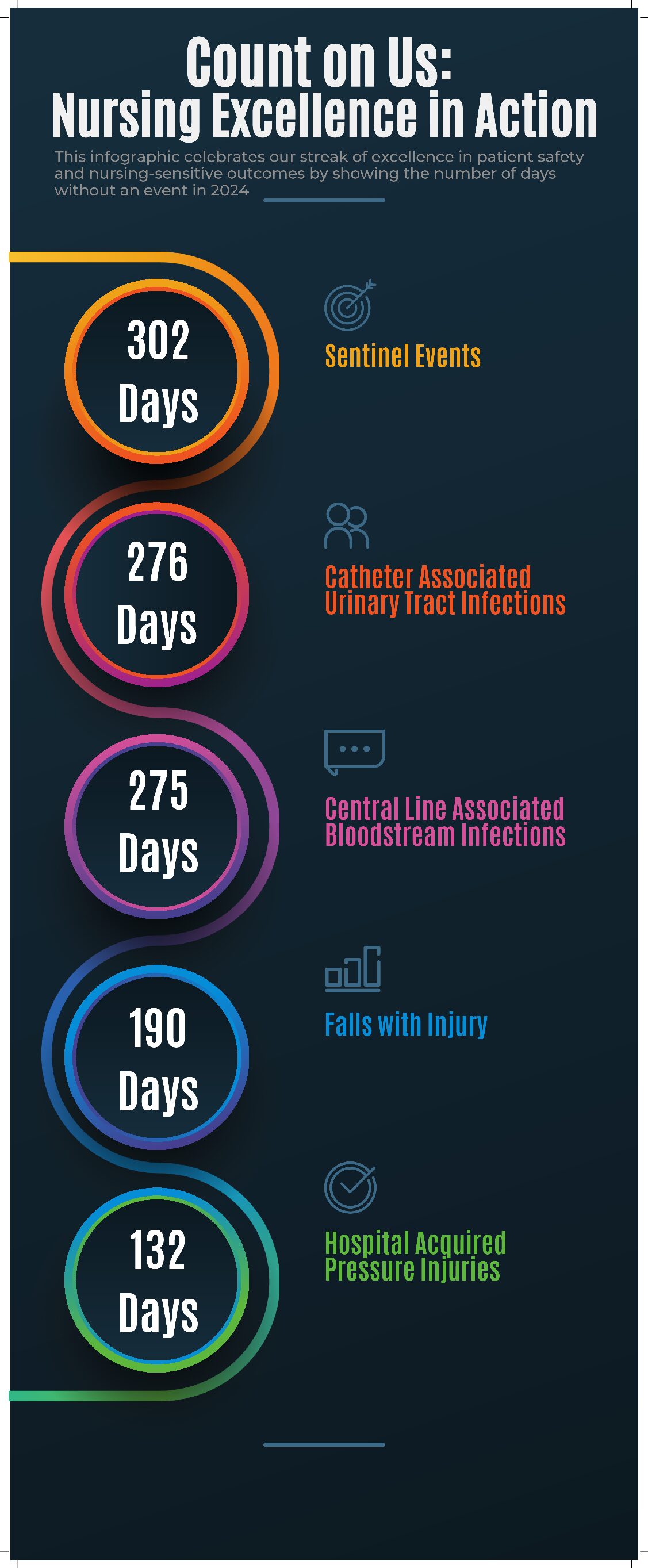
Count on us: Nursing excellence in action 

Kaiser Permanente Richmond’s Medical Center has an exceptional report card for nursing sensitive indicators in 2024, exceeding the national benchmark in all units over half the time.

EO_Leading-the-way-in-high-quality-maternity-care

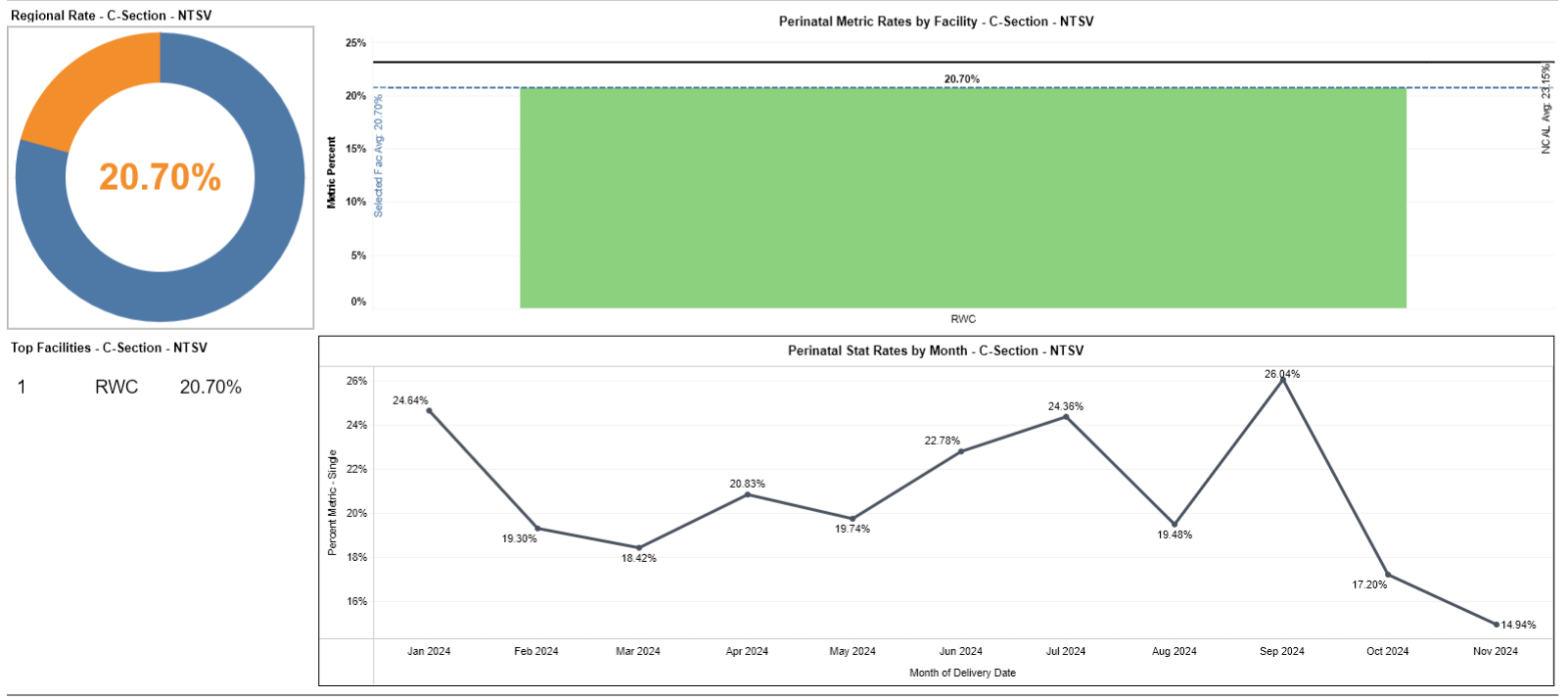
Leading the way in high quality maternity care 

Low Nulliparous, Term, Singleton, Vertex (NTSV) cesarean delivery rates are considered an indicator of high-quality maternity care. Redwood City proudly maintains the 3rd lowest NTSV rate in the region, a testament to our nurses’ dedication and empowerment in driving exceptional care and outcomes for our patients!

To celebrate collaboration among units, the mother-baby unit, labor and delivery, and the special care nursery held a joint year-end celebration recognizing their teamwork and accomplishments throughout the year.

graphic
a group of nurses at a happy halloween table

Peer-to-peer engagement drives quality care in Redwood City 

In the spirit of maintaining one of the lowest Safety Priority Index (SPI) scores across all Kaiser Permanente Northern California medical centers, the Redwood City Quality & Safety Council is taking action to help reduce patient harm, including preventative measures for falls, HAPI, HAP, CLABSI, and CAUTI.  

Redwood City Quality Nurse Liaison, Sherie May Domingo, BSN, RN, partners with the quality and safety champions on each hospital unit to assess and understand opportunities and challenges and uses a roving education cart to engage 1-on-1 with nurses. “To get the nurse’s attention, we decorate the cart in holiday themes and give away KP swag and snacks,” said Domingo.

One recent peer-to-peer outreach was around improving HAPI and rover documentation. “We took our cart to the units showing best practices for HAPI,” added Domingo.

Nurses provide feedback and share any opportunities they see around quality and safety during the 1-on-1s and in follow up surveys. Based on their feedback, the Council, in partnership with nurse leaders, develops initiatives that aim to support nurses and improve the safety and well-being of patients.

“We want to have buy-in from nurses, and their input is valuable for every project,” said Domingo.  

EO_Streamlining-Door-to-EKG-Times-in-the-ED

Streamlining door-to-EKG times in the ED  

The Emergency Department identified a need to improve compliance with door-to-EKG times in their 2023 data. Data revealed that 28% of patients with chest pain and 30% of patients with STEMI did not receive an EKG within 10 minutes of arrival. A quality improvement project aimed to establish a consistent practice for promptly recognizing patients requiring EKGs and to streamline the door-to-EKG process.

As a result of this project, for the 4 months following implementation, compliance with door-to-EKG time of less than 10 minutes for chest pain patients increased to 86% and for STEMI patients, compliance reached 100%! Consequently, KP-RWC improved their ranking from 13th to 7th place among the facilities.

Graphic on EKG to Door compliance
4 care team members smiling

Innovating for safety: The medical-surgical CUSP team’s Safety Stop-Sign initiative

In July 2024, the Medical-Surgical CUSP team, led by Chair Carlyna Deragish, BSN, RN, and Chair of Operations Aleta Ross-Ku, Unit Assistant, launched the “Safety Stop-Sign” initiative. This program aimed to improve the identification of patients with safety risks by using color-coded stop signs placed outside patient rooms. The signs enable all staff members, regardless of role, to quickly recognize specific safety precautions required when entering a patient’s room. 

This initiative was a collaborative effort with the Kaiser Permanente Santa Rosa (KP SRO) Security team, including the Health Protection Officers, who play a critical role in addressing patient safety needs within the hospital. 

The “Safety Stop-Sign” initiative is part of a broader Prevention of Workplace Violence Program at KP SRO, which has evolved significantly since the COVID-19 pandemic. The program incorporates multiple components: 

  • APPIH Training (Assessment and Prevention of Patient-Initiated Harm): Tailored for clinical staff to recognize and mitigate potential harm. 
  • Threat Management Team (TMT): Utilizes a close watch list and Health Connect advisory engagements to monitor high-risk situations. 
  • Enhanced Safety Stop Signs: Nurse-driven visual cues for patients at risk of elopement, suicide, behavioral concerns, or violence. 
  • Physical Security Enhancements: Includes Armed Protection Officers, Healthcare Protection Officers, and Emergency Department Weapons Screening. 

Since implementing these safety measures, KP SRO has observed improved safety metrics shown by sustained decrease in employee injury rates. Positive Staff Feedback as evidenced by an 8-point increase in staff reporting that their department takes necessary steps to ensure employee and physician safety and a 7-point increase in nursing staff feeling safe working in their department, as measured by People Pulse surveys. 

The success of the “Safety Stop-Sign” program has been met with widespread approval from clinical staff. As a testament to their leadership and dedication, Deragish and Ross-Ku were awarded the prestigious Safety Angel” award for their outstanding contributions to creating a safer environment for staff, patients, and visitors. 

Hospital featured image placeholder

Implementation of purposeful hourly rounding in adult services  

In an effort to enhance patient care experience scores, KP SRO launched the Purposeful Hourly Rounding (PHR) project in May 2024. 

The COVID-19 pandemic significantly limited interactions with our patients, creating challenges in maintaining high levels of engagement and communication. To address this, we developed a simulation to reinforce the principles of purposeful hourly rounding using the 5 P’s: 

  • Pain 
  • Position 
  • Personal Needs 
  • Periphery/Pump 
  • Plan 

Evidence-based research has demonstrated that purposeful hourly rounding minimizes call bell use, reduces patient falls, decreases HAPIs (hospital-acquired pressure injuries), improves care team efficiency, and enhances overall patient experience. While hourly rounding is ideal, the emphasis is on purposefulness, acknowledging the constraints of real-world healthcare environments. 

This simulation allows care team members to practice narrating care as it is performed. Actions that seem routine to staff can often be misinterpreted by patients, so clear communication is vital. Studies show that 80% of patients may not voice their needs or concerns unless prompted, making proactive and purposeful rounding critical. 

The project focused on staff training and simulations to ensure that all members of the care team were confident in their rounding skills. Practicing with colleagues in a safe environment prepared staff to effectively implement these practices with patients. 

Since the launch of PHR, Adult Services units have surpassed the goal of 80% PHR documentation in both October and November. Additionally, there has been a significant correlation between the implementation of PHR and improved care experience scores, specifically in the “Likelihood to Recommend Hospital” and “RN Listened Carefully” metrics. 

Nurses smile in the emergency department

Nurses drive to reduce door‑to‑EKG time

Under the leadership of Damian Gulbransen, DNP, MBA, RN, NEA‑BC, Director of Emergency Services, the Kaiser Permanente Santa Rosa Emergency Department implemented a groundbreaking workflow to reduce door-to-EKG times, significantly improving care for ST Elevation Myocardial Infarction (STEMI) patients. 

The key initiatives of this project included the creation of a dedicated EKG Technician role, an additional Emergency Department (ED) technician was assigned solely to performing EKGs, ensuring rapid response and efficiency. Additionally, the team created a standardized Rapid Cardiac Assessment Workflow streamlining the process from patient arrival to EKG completion and transfer, enabling faster identification and treatment of STEMI cases. 

The measurable outcomes included:  

  • Reduced Door-to-Transfer Times: The time required to transfer STEMI patients to specialized receiving centers decreased by nearly 10 minutes. 
  • Shorter Door-to-EKG Times: The new workflow demonstrated a significant reduction in the time required to perform EKGs upon patient arrival. 
  • Decreased Length of Stay: STEMI patients experienced shorter stays in the ED, allowing for faster access to specialized care. 
  • Prior to the project, in 2023, 28% of chest pain patients and 30% of STEMI patients did not receive an EKG within 10 minutes of arrival. Following implementation, compliance with door-to-EKG times under 10 minutes increased to 86% for chest pain patients and 100% for STEMI patients over four months. 

The KP SRO ED team exemplifies Kaiser Permanente’s commitment to improving outcomes through innovation, teamwork, and evidence-based practice. Their efforts set a new standard for prompt cardiac care and highlight the importance of multidisciplinary collaboration in achieving best-in-class patient outcomes. 

Hospital featured image placeholder

Kaiser Permanente Santa Rosa focuses on catheter-associated urinary tract infection prevention through CUSP Committee initiatives

In 2022, the ICU CUSP (Comprehensive Unit-based Safety Program) Committee conducted a meeting centered on addressing the 2022 catheter-associated urinary tract infection (CAUTI) rate and analyzing a CAUTI case identified in July 2022. The team conducted a thorough chart review to identify gaps and opportunities for improvement. Key findings included: 

  • Inconsistent Documentation: Daily necessity documentation for the catheter was incomplete. 
  • Missed Care Opportunity: One instance of missed catheter care was noted. 

These insights informed the development of an action plan designed to enhance CAUTI prevention practices. The CUSP team established a comprehensive strategy, emphasizing the reinforcement of existing practices and introducing targeted improvements: 

  • Multidisciplinary Rounds: 
  • Morning rounds include the interprofessional care team: ICU physician, primary nurse, respiratory therapist (RT), occupational therapist (OT), and physical therapist (PT). 
  • The primary nurse reviews patient lines, prompting discussion of necessity, including for indwelling urinary catheters. 
  • The team prioritized daily assessments and timely removal of Foley catheters. 
  • High-Risk Patient Review Process: 
  • Introduction of a practice change to identify high-risk patients for hospital-related infections, including CAUTI. 
  • Criteria included: indwelling lines/catheters, ICU length of stay, and comorbidities. 
  • Assistant nurse managers reviewed these criteria daily to identify prevention opportunities, with findings communicated to the clinical nursing team. 

In late 2022, the CAUTI reduction action plan was presented to the ICU department highlighting the reduction strategies developed collaboratively by the interprofessional team. The practices have been maintained since and following the introduction of the CUSP-driven strategies, the KP SRO ICU has not had a CAUTI for over 857 days (as of December 1st, 2024).  

The initiatives demonstrate KP SRO’s dedication to improving patient outcomes through evidence-based practice, multidisciplinary collaboration, and continuous learning. These efforts reflect a proactive approach to enhancing patient safety and quality of care. 

5 nurses smiling

Reducing hospital-acquired pressure injury on a high-risk unit 

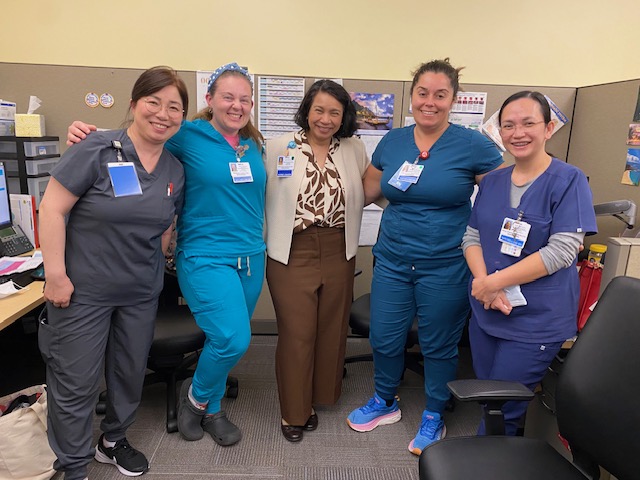
Jeniffer Naycalo, DNP, RN, CNS, CCRN conducted an evidence-based project on 7N, a high-risk telemetry, stroke unit to determine the effects of using a sacral protective dressing along with standard practice to reduce the incidence of hospital-acquired pressure injuries (HAPIs). She identified clinical nurse champions on the unit to participate in patient data collection along with the wound care team to assist in staff education. There were zero HAPIs for 8 weeks following this intervention. Staff knowledge regarding pressure ulcers was significantly increased after receiving education on HAPI prevention.  

Pictured above: Kisun Mamon, BSN, RN, CWON; Brittany Lewis BSN, Wound & Ostomy RN; Jeniffer Naycalo, DNP, RN, CNS, CCRN; Crystal Roncancio BSN, RN, CWON;  and Anne Charmaine Danila Lim, BSN, RN, WCC. 

Back To Top