Skip to content
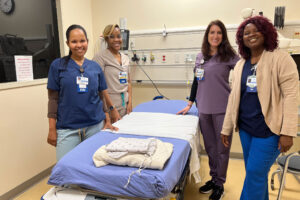
4 nurses at the Stroke conference.

Enhancing door-in-door-out times for ischemic stroke patients

Patients arriving at a primary stroke center with acute ischemic stroke due to large vessel occlusion and eligible for endovascular stroke therapy (EVT) require rapid transfer to a hospital equipped to perform EVT. The Door-In-Door-Out (DIDO) metric measures the time from patient arrival to transfer out of the initial facility.

The “Get with the Guidelines” (GWTG) program recommends that 50% of DIDOs should occur within 90 minutes. However, GWTG data from 2023 showed that only 20% of DIDOs met this timeframe.

At Kaiser Permanente Roseville Emergency Department (ED), a multi-disciplinary team has been working to improve care for this patient population through bundled interventions. In collaboration with regional leadership, the Roseville ED set a more stringent DIDO goal of 75 minutes or less for 50% of cases. Despite using 911 services, the ED only met this target 33% of the time in 2021.

Throughout 2022, the ED conducted improvement events, which included placing a registered nurse (RN) as the first point of contact to initiate the BEFAST protocol for quick stroke alert activation, standardizing documentation, refining communication within the integrated stroke response team, providing robust stroke education, and ensuring the Stroke RN responded regardless of patient ED placement. In 2023, ED Assistant Nurse Managers coordinated 911 calls and completed debriefs for timely follow-up.

Benchmarked against national performance metrics, these improvements resulted in the ED ranking in the top third percentile for the Joint Commission DIDO metric in the first quarter of 2024. Their success continued, and by the end of 2024, the Roseville ED achieved 76% compliance.

Nurses from 5East in Vallejo

5East nurses turn engagement into action

A powerhouse team of seven medical-surgical nurses from 5East spearheaded their Unit Practice Council, achieving an incredible 100% RN Excellence Survey response rate in just five days! Their innovative approach turned nurse engagement into a dynamic and spirited challenge, showcasing the true impact of collaboration and leadership on their unit’s culture. 

Nurses at the Magnet Conference

Magnet milestone luncheon, celebrating excellence together

Kaiser Permanente Vallejo proudly joined fellow Magnet-designated hospitals at an exclusive Kaiser Permanente luncheon, hosted by Janet Liang, during the 2024 Magnet Conference in New Orleans. As one of just two Magnet designated hospitals in Northern California, and part of the elite ten across 37 KP facilities statewide, Vallejo nurses shared their frontline perspectives on the Magnet journey, reflecting on the culture of excellence, teamwork, and transformational change that defines their commitment to nursing and patient care. 

Nurse residents in the Sim Lab.

Training for real-life events 

The Nurse Residency Cohort 10 sharpened their critical thinking and response skills through hands-on training with the new SimMan during code blue and rapid response simulations. Immersed in realistic scenarios, these future leaders gained invaluable experience, preparing them to handle high-stakes situations with confidence and precision. Their training aims to positively impact rapid response effectiveness and code blue outcomes, enhancing patient safety and elevating care standards across the hospital.  

Participants (left to right): Leila Young, Mickaela Estep, Mac Abat, Marley Lester, and Angelie Soriano. 

Nurses in the CDA

Critical Decision Area a vital bridge of care

Established in early 2024, the Clinical Decision Area (CDA) was created to improve patient throughput and address the growing needs of the community.

Nurses in a patient room Marie Berrette, BSN, RN; Leslie Eze, FNP, MSN, RN; Valerie Canela, BSN, RN; and Lou Tra, BSN, RN (pictured) embody the collaborative efforts to optimize patient flow especially during high census challenges.

With structured workflows and targeted discharges, the CDA serves as a vital bridge—delivering timely care for patients requiring under 24-hour therapies while alleviating ED crowding and expediting inpatient admissions. 

Nurse Melanie Baccay in front of a poster

Nurse pioneers TIMERS wound care assessment framework

Melanie Baccay BSN, RN, PHN pioneers TIMERS wound assessment framework integration, highlighting the crucial intersection of clinical care and social determinants in wound healing. Her evidence-based approach transforms traditional wound care by incorporating social factors, setting new standards for comprehensive patient assessment. 

Hospital featured image placeholder

Measure-vention: Creating a program of formalized real-time peer to peer coaching to improve nurse sensitive outcomes

The ICU team introduced a new approach called Measure-vention in Kaiser Permanente Vacaville’s Intensive Care Unit (ICU). This method involves measuring care quality and providing real-time feedback between staff members to ensure high standards are maintained using evidence-based practice guidelines.

Measurement at the point of care, combined with real-time intervention (Measure-vention [MV]) can promote reliability and adherence to quality bundles. Implementation of peer-to-peer feedback using Measure-vention will improve staff engagement, increase receptiveness to feedback, and decrease HAP, HAPI, CAUTI, CLABSI, and falls in 2024.

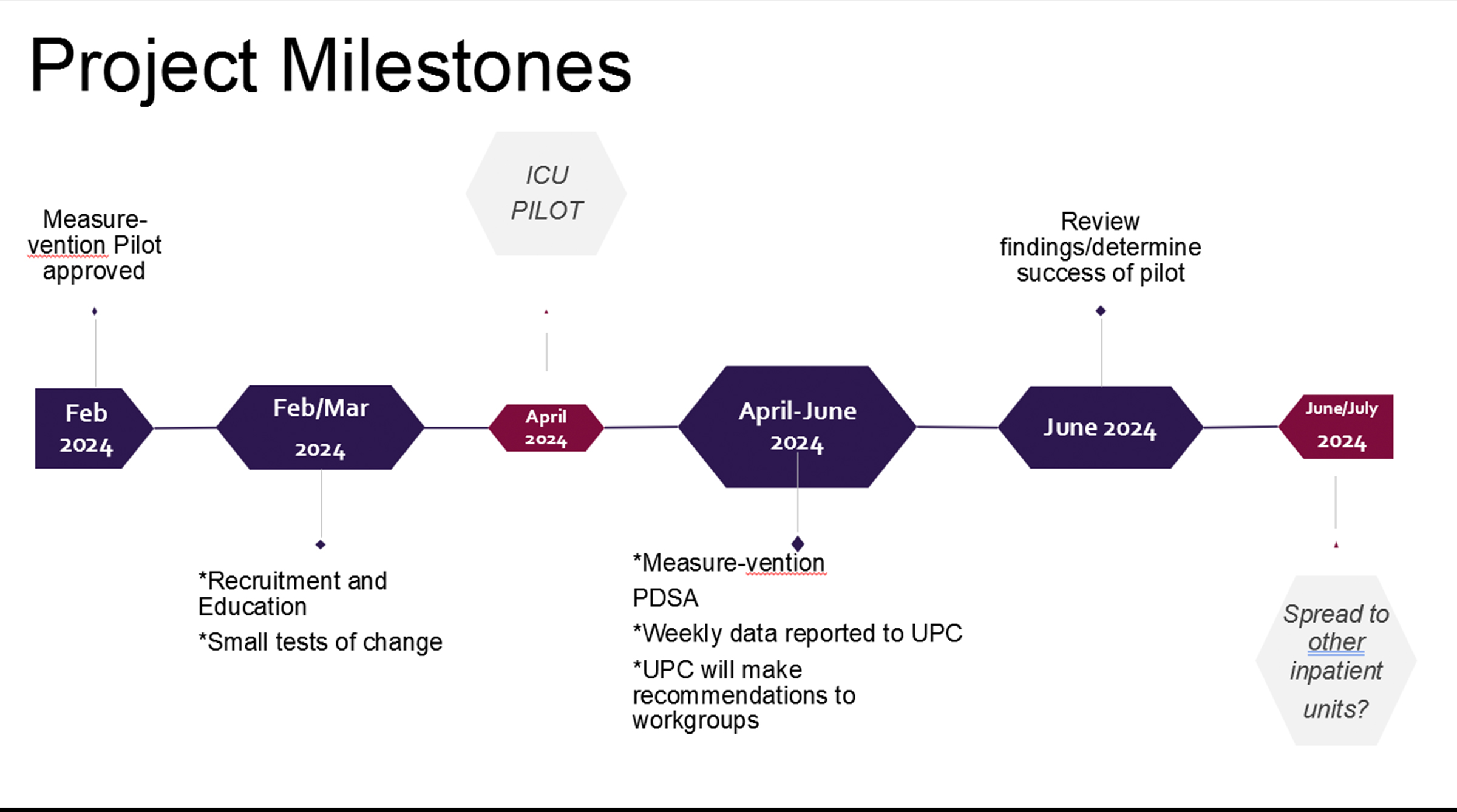
The ICU conducted a pilot program from April to June 2024 in our 20-bed ICU Trauma unit in the hospital. During this time, 15 nurses used QR codes to answer questions about patient care practices. If any part of the care process was found to need intervention, immediate peer feedback helped address the issues.

The team saw great improvements during the pilot. Nurses became more engaged and open to feedback, and we noticed a significant drop in hospital-associated infections like pneumonia and urinary tract infections. The need for feedback interventions decreased from 60 to 39 per week, and the number of adverse events was cut in half from our target.

We learned the importance of team alignment and staff accountability. We recommend integrating Measure-vention into regular performance improvement efforts to enhance patient care quality.

Hospital featured image placeholder

A tiny life, a critical task: Improving newborn screening compliance in the Neonatal Intensive Care Unit

Imagine the excitement of welcoming a brand-new baby into the world. Every tiny newborn arrives brimming with hope and endless possibilities. One of the most important things we do to protect their future is the Newborn Screen (NBS) blood test. It’s a simple prick, but it can uncover important information that helps keep babies healthy.

However, behind this simple test lies a bit of paperwork that needs to be filled out correctly. We worked together with the health care team to create a special guide to help our amazing nurses navigate those forms with ease. This guide makes it super easy to complete the paperwork accurately, which is crucial for ensuring every baby gets the best possible care.

We’re so proud of our team for embracing this new tool and making it a part of their everyday routine. Our goal is 100% accuracy every single time, and we’re well on our way.

Thank you to the following nurses for supporting this important body of work.

Longmire, Tenisha, BSN, RN
Julie Lucero MSN, RN, RNC-NIC
Rivera, Theresa, MS, BSN, RN
Stavropoulos, Arlene, BSN, RN
Storace, Maura, BSN, RN
Toma, Alexandra BSN, RN
Tracy, Marquitta, MSN, RN
Vega-Baraan, Joice, BSN, RN

Ayra Dee

Emergency department nurse presents fall prevention success at 2024 Kaiser Permanente National Nursing Conference  

At the 2024 KP National Nursing Conference, Emergency Department (ED) nurse Ayra Dee, BSN, RN, CPEN, CEN, showcased her team’s innovative approach to reducing falls with injury in the ED. Ayra presented the impactful results of a comprehensive fall prevention bundle implemented in her department, which targeted high-risk patients and emphasized patient and staff education. The bundle included a multifaceted Fall Risk Protocol featuring visible yellow indicators such as wristbands, socks, gowns, and door signage to identify at-risk patients immediately. It also provided patient and family education to ensure understanding and participation in fall prevention efforts. 

Ayra’s presentation highlighted the program’s success in significantly reducing falls with injury and the critical role of nursing in leading patient safety initiatives. By sharing her team’s achievements at a national forum, Ayra demonstrated the impact of nurses as innovators and educators in advancing evidence-based practices. The opportunity to present externally reflects the organization’s commitment to fostering a culture of excellence and collaboration, where nurses are empowered to share their expertise and inspire improvements in care delivery across the healthcare system. Ayra’s dedication and her team’s success exemplify the transformative role of nurses in creating safer, more effective care environments. 

Back To Top