Skip to content
Nurses at the launch event for CRRT.

Advancing critical care: Launching Continuous Renal Replacement Therapy and TeleCritical Care in the ICU  

In 2024, our Intensive Care Unit (ICU) achieved a significant milestone by launching two innovative programs—Continuous Renal Replacement Therapy (CRRT) and a Telecritical (TCC) Care Program. These initiatives enhanced the care provided to critically ill patients, offering advanced treatment options and expanding access to expert critical care support. The introduction of CRRT, a specialized dialysis treatment for patients with acute kidney injury, has empowered ICU nurses to deliver life-saving therapy with precision and flexibility, ensuring the best possible outcomes for patients experiencing severe renal complications. 

The TCC Program has revolutionized how we approach critical care by connecting our ICU with a network of remote critical care specialists. This program enables real-time virtual consultations, providing nurses and physicians immediate access to expert guidance for managing complex cases. During overnight shifts, TCC ensures our team can deliver consistent, high-quality care around the clock. This program’s integration has improved clinical decision-making and strengthened collaboration within our interdisciplinary teams. 

These dual advancements reflect our ICU’s commitment to leveraging technology and expertise to meet the evolving needs of our patients. The successful implementation of both programs was made possible by the dedication and leadership of Nurse Manager Baby Lyn Abadilla, MSN, MBA, RN, and Critical Care Clinical Nurse Specialist Doanh Ly, NDP, RN, APRN-CNS, CCRN, SCRN. Their efforts in training staff, standardizing workflows, and championing patient safety have been instrumental in the programs’ success. Together, CRRT and TCC have positioned our ICU to deliver cutting-edge care, ensuring our most vulnerable patients receive the support they need to recover and thrive. 

2 nurses at a display for wound care

Leveraging technology to improve patient outcomes

In 2024, our nursing team embraced innovative technology by integrating the Epic Rover App into daily workflows for documenting skin conditions and wounds. This initiative, spearheaded by nurses Zabrina Fong, RN, BSN, CWON, and Sherie Domingo, BSN, RN, and Wound and Ostomy Clinical Nurse Specialist (CNS) Jan Parks, RN, CNS, CWCN, COCN, empowers nurses to capture clear, standardized photos directly linked to the patient’s electronic health record (EHR).

By ensuring accurate, real-time documentation of wounds, nurses can better track skin integrity, enabling timely interventions and promoting collaborative decision-making among care teams. This proactive approach is instrumental in preventing complications such as hospital-acquired pressure injuries (HAPIs).

By seamlessly adopting the Epic Rover App, our nurses have enhanced consistency and precision in wound care practices, directly improving patient safety and outcomes. The app’s integration has standardized documentation processes, strengthened interdisciplinary communication, and reinforced nurses’ role as critical observers of skin health. These efforts, championed by our dedicated clinical nurses and CNS leaders, demonstrate our commitment to leveraging technology to optimize care quality and achieve better results for our patients.

KP PPM

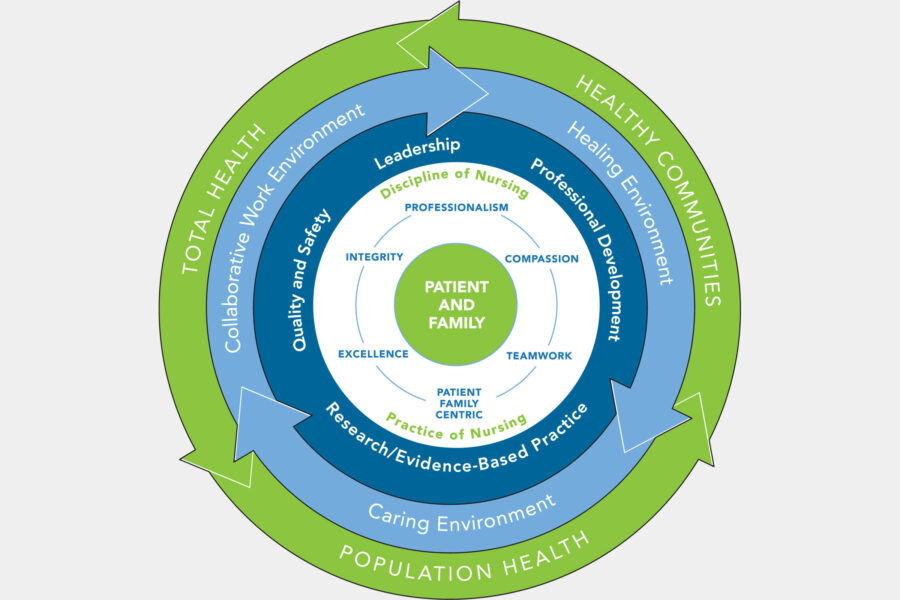
Our Professional Practice Model: The foundation of nursing excellence

At Kaiser Permanente South San Francisco, our Professional Practice Model (PPM) is more than a framework—it is the foundation of how our nurses deliver exceptional, patient-centered care every day. This dynamic model reflects our commitment to evidence-based practice, collaboration, and continuous innovation. Rooted in our hospital’s mission and values, the PPM empowers our nurses to lead with clinical expertise, uphold the highest standards of quality and safety, and advocate for the well-being of every patient and their family. 

This year, we saw remarkable examples of our nurses embodying the principles of the PPM. Through shared decision-making councils, nursing teams were critical in implementing new protocols and innovations to improve nursing quality indicators (e.g., Hospital Acquired Pressure Injuries, Falls, etc.) and patient satisfaction scores. Interdisciplinary collaboration flourished as nurses partnered with physicians, therapists, and social workers to ensure seamless care transitions. Our mentorship initiatives also thrived, fostering professional growth and supporting our newer nurses in developing critical skills and confidence to succeed in today’s complex healthcare environment. 

The adaptability of our PPM continues to shine as we face the ever-evolving challenges of healthcare. Whether adopting cutting-edge technologies or spearheading community outreach programs, our nurses exemplify resilience and a commitment to excellence. This year’s accomplishments reaffirm the PPM’s role as a guiding light, ensuring patient outcomes remain at the heart of everything we do. As we celebrate these successes, we look forward to new opportunities to innovate, lead, and provide unparalleled care for our patients and community. 

Periop nurse smiling

Elevating care in the OR with Association of periOperative Registered Nurses guidelines  

OR nurses Josie Mangarin, BSN, RN and Miranda Wyatt, RN, CNOR are active members of the Association of periOperative Registered Nurses (AORN). Their commitment to ongoing education and evidence-based practice directly enhances patient care and safety.

Mangarin demonstrated leadership in maintaining normothermia to prevent Surgical Site Infections (SSIs). By implementing and reinforcing AORN guidelines on active warming devices and prewarming techniques, she ensured that patients at risk of hypothermia were effectively managed throughout the perioperative period. Her collaborative approach with the surgical team and multi-modal warming strategies, including warming blankets and fluid warmers, played a key role in reducing infection risks and improving patient outcomes. 

Wyatt successfully implemented AORN’s Sterile Technique Guidelines to reduce environmental contamination in the operating room. Recognizing the impact of door openings on room pressurization and airflow, she encouraged the team to open the door when necessary and minimize movement around the sterile field. Additionally, she worked with perioperative leadership to install door swing counters, which tracked door openings and helped raise awareness about their potential effect on maintaining a sterile environment. This initiative improved infection control and fostered a culture of vigilance and adherence to sterile technique. 

These examples highlight nurses’ vital role in ensuring high-quality, evidence-based care. Their involvement in professional organizations enables them to stay informed on best practices, advocate for patient safety, and lead improvements in clinical outcomes, further solidifying their indispensable contribution to the healthcare team. 

Nurse with an educational table about delirium

Innovative approaches to delirium prevention

We are proud to highlight Sherie Domingo, BSN, RN, for her continued leadership in preventing and reducing the duration of delirium in patients. Last year, Domingo developed the Delirium Prevention and Care Cart, which was introduced across SSF. This innovative initiative provides nurses with non-pharmacological tools to help reduce delirium in at-risk patients. 

The cart includes a range of evidence-based items designed to support cognitive and sensory needs, such as sensory aids (eyeglasses, hearing amplifiers), cognitive stimulation tools (puzzles, drawing materials), fidget devices, music therapy tools (headsets for calming music), and occupational therapy aids (finger exercises, adaptive devices). 

In addition to the cart, Domingo has continued to lead education efforts on the Confusion Assessment Method (CAM), ensuring nurses are equipped to diagnose delirium and implement effective interventions. Her ongoing training has empowered nurses to apply non-pharmacological strategies, confidently promoting high-quality, evidence-based care. 

Domingo’s work has made a lasting impact on both patient outcomes and nursing practice. As she continues to lead this initiative in 2024 and beyond, her dedication ensures that clinical nurses are equipped with the resources and knowledge necessary to deliver the best possible care to patients at risk for delirium. 

Nurses at a presentation table.

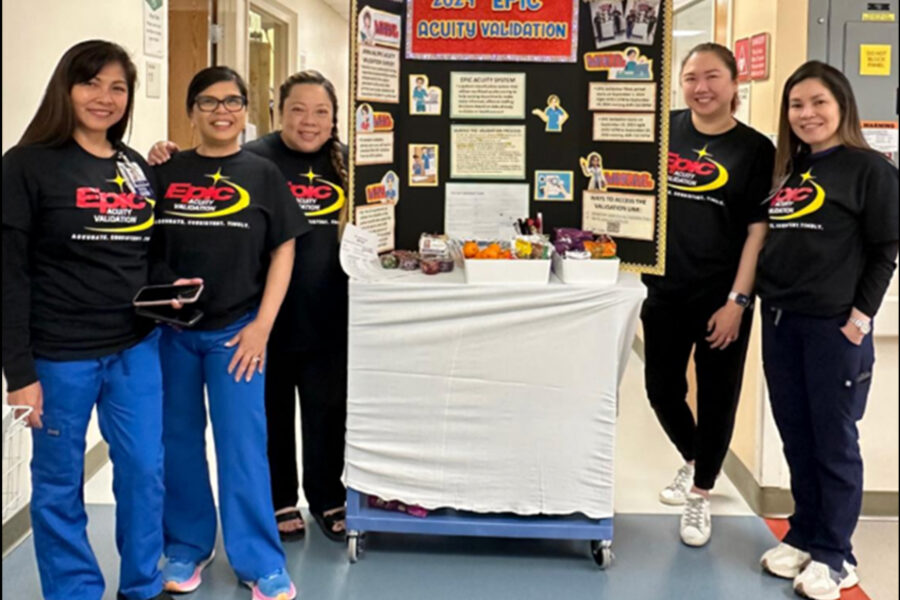
Enhancing care precision with EPIC Validation leadership

Debbie Conner, BSN, RN, and Eunice Balancio, MSN, RN, PCCN, played a key leadership role in the annual EPIC Validation Tool trial, driving efforts to improve system functionality and ensure accurate, data-driven care. The Epic acuity system, a patient classification tool, uses workload acuity scoring to guide staffing decisions based on real-time data in HealthConnect. This system helps nursing departments align staffing levels with the varying needs of patients, ensuring that care is both efficient and responsive. 

During the 2024 annual validation process, nurses in the Central East, 4 South, North West, and South East units validate three patients per shift, selected from their patient assignments. In the ICU, nurses validate two patients per shift. They choose a mix of patients with Low, Medium, and High acuity levels, relying on their professional nursing experience, assessments, and clinical judgment. 

This validation process supports Title 22 requirements, ensuring the reliability of the patient classification system for each unit and shift. By validating the tool’s accuracy, nurses contribute to optimal staffing decisions, enhancing patient care and operational efficiency. Through their leadership, nurses ensure that the acuity system remains accurate and effective, reinforcing the commitment to high-quality, responsive care across the hospital. 

ED nurses outside

Socially sensitive care: Empowering patients against opioid overdose

The Emergency Department (ED) is actively combating opioid overdoses through the California Naloxone Distribution Project, providing naloxone kits to patients at risk of overdose. This life-saving medication quickly reverses the effects of an opioid overdose and, along with the kits, comes education on recognizing overdose symptoms and using naloxone effectively. 

ED nurses play a critical role in patient education, discussing opioid safety, risks of misuse, and the importance of having naloxone on hand. Through this approach, the ED helps reduce the risk of opioid-related fatalities and fosters a more informed, supportive community.   

Nurses also ensure that care is delivered in a socially sensitive, non-judgmental way. Recognizing the complexities of addiction, they provide compassionate care that goes beyond bias, helping to build trust and encouraging patients to seek the support they need without fear of stigma. 

Nurses promoting quiet at night.

Improving rest with the Quiet at Night initiative

The Quiet at Night (QAN) Committee is dedicated to improving patient care by addressing nighttime noise, which is crucial for recovery. The committee, consisting of clinical nurses Guillermo Umali, BSN, RN, Clarissa Ritoc, RN, Eugene Krasnojon, MSN, RN, Eunice Balancio, BSN, RN, PCCN, Shellane Raymundo, RN, Miguel Ignacio, BSN, RN, and Cecilia Pereda, BSN, RN, is supported by advisors Victor Blardony, MSN, RN, CCRN, Scott Brown, MPH, RD, and Gregory Burns, MS, CPXP, CPHQ. Their mission is to improve HCAHPS scores, specifically the QAN score, which tracks the quietness of the hospital at night. 

In response to patient feedback, the QAN Committee created a sleep menu tool, offering non-pharmacological interventions like eye masks, ear plugs, white noise machines, and lavender aromatherapy. Environmental adjustments such as turning off lights and closing doors were also included to enhance the sleep environment. 

Since the introduction of the sleep menu in March 2024, patient satisfaction has significantly improved. The QAN score for the unit increased from 41.3% in March to 61.5% in October 2024, with the specific question, “During this hospital stay, how often was the area around your room kept quiet at night?” showing a notable increase. Patients have provided positive feedback, noting the benefits of the calming interventions for better sleep. This initiative underscores the committee’s commitment to improving the hospital environment and supporting patient recovery through evidence-based strategies. 

Nurses at a community event

Volunteering to serve the community

Nurses at South San Francisco have demonstrated exceptional dedication to serving underserved communities through their participation in health initiatives like the Pisitahan Festival and Operation Access. 

At the Pisitahan Festival, South San Francisco nurses including Marilyn Castillo, BSN, RN, Sherie Domingo, BSN, RN, Maria Cruz, BSN, RN, Eunice Balancio, BSN, RN, PCCN, Connie Maghirang, BSN, RN, CCRN, Rex Untiveros, BSN, RN, Sharlyn Guterres, RN, and Clinical Nurse Specialist Doanh Ly, DNP, RN, APRN-CNS, CCRN, SCRN volunteered their time and expertise to offer preventive healthcare services. They provided vital blood pressure and diabetes screenings and shared important education on stroke prevention and treatment. By actively engaging with the community, the nurses helped identify potential health issues early, empowering individuals with the knowledge to seek further care and improve their well-being. 

In partnership with Operation Access, South San Francisco nurses also contributed to providing free medical procedures to uninsured and underinsured individuals. This collaboration helped bridge gaps in healthcare access by offering surgeries and procedures that patients may not have otherwise been able to afford. Nurses played a vital role in these procedures, ensuring patients received compassionate care and support. 

PaCU nurses with a cake

Certifying excellence in post-anesthesia nursing

PACU Nurse Manager Rowena Guarino, BSN, RN, has been instrumental in encouraging and supporting her PreOp/PACU nurses in obtaining their CPAN (Certified Post-Anesthesia Nurse) and Certified Ambulatory Perianesthesia Nurse (CAPA) certifications. This certification, recognized as a mark of excellence in the post-anesthesia care nursing field, benefits both nurses and patients by ensuring that nurses possess the advanced knowledge and skills required to provide high-quality care.

Under the guidance of Guarino, the nurses were provided with resources, mentorship, and encouragement throughout the certification process. Guarino created a supportive environment where nurses felt motivated to pursue this professional milestone.

As a result of this support, the following nurses proudly achieved their CPAN certification: Serta Sandhu,  BSN, RN, CPAN, Maureen Crehan, RN, CPAN, CAPA, Leslie Devincenzi, RN, CPAN, May Dela Rueda, BSN, RN, CPAN, Bernadette Reyes, BSN, RN, CPAN, Stefanie Nastari, BSN, RN, CPAN, CAPA, Loann Lau, BSN, RN, CPAN, CAPA, Sheen Portales, RN, CPAN, and Garry Murphy, BSN, RN, CPAN. This achievement reflects their dedication to advancing their expertise and providing the highest standard of care to patients in the post-anesthesia care unit. 

Back To Top