Skip to content
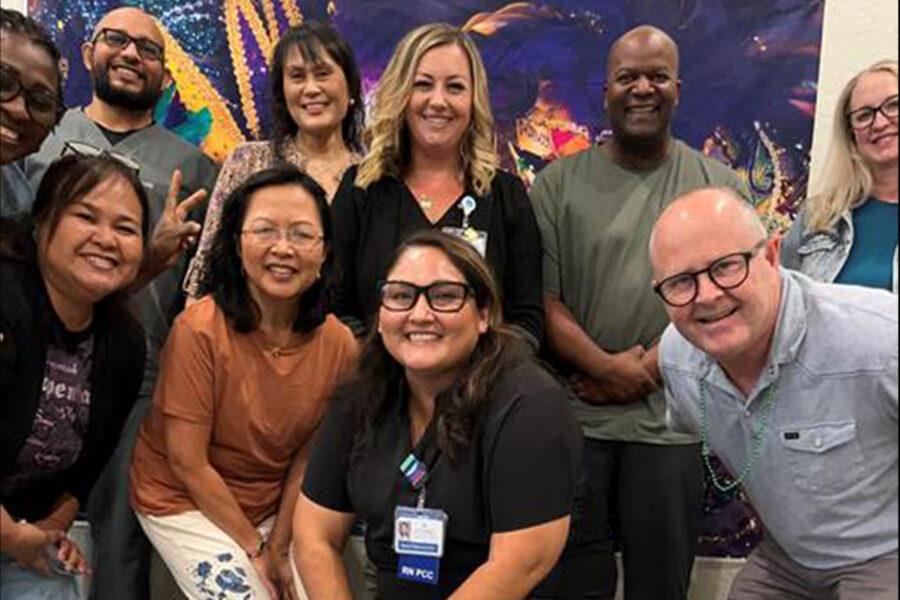
4 nurses at the Stroke conference.

Enhancing door-in-door-out times for ischemic stroke patients

Patients arriving at a primary stroke center with acute ischemic stroke due to large vessel occlusion and eligible for endovascular stroke therapy (EVT) require rapid transfer to a hospital equipped to perform EVT. The Door-In-Door-Out (DIDO) metric measures the time from patient arrival to transfer out of the initial facility.

The “Get with the Guidelines” (GWTG) program recommends that 50% of DIDOs should occur within 90 minutes. However, GWTG data from 2023 showed that only 20% of DIDOs met this timeframe.

At Kaiser Permanente Roseville Emergency Department (ED), a multi-disciplinary team has been working to improve care for this patient population through bundled interventions. In collaboration with regional leadership, the Roseville ED set a more stringent DIDO goal of 75 minutes or less for 50% of cases. Despite using 911 services, the ED only met this target 33% of the time in 2021.

Throughout 2022, the ED conducted improvement events, which included placing a registered nurse (RN) as the first point of contact to initiate the BEFAST protocol for quick stroke alert activation, standardizing documentation, refining communication within the integrated stroke response team, providing robust stroke education, and ensuring the Stroke RN responded regardless of patient ED placement. In 2023, ED Assistant Nurse Managers coordinated 911 calls and completed debriefs for timely follow-up.

Benchmarked against national performance metrics, these improvements resulted in the ED ranking in the top third percentile for the Joint Commission DIDO metric in the first quarter of 2024. Their success continued, and by the end of 2024, the Roseville ED achieved 76% compliance.

Two ambulances

Emergency department significantly reduces ambulance offboarding time

In January 2024, Assembly Bill 40 was passed, mandating hospitals to reduce ambulance patient offload time (APOT) to under 30 minutes 90% of the time. APOT is the interval between an ambulance patient’s arrival at the emergency department (ED) and the transfer of the patient to an ED gurney, bed, or chair, at which point the ED assumes full responsibility for the patient’s care.

At the time of AB 40’s passage, Kaiser Permanente’s ED had an APOT time of 88 minutes. In February 2024, an APOT summit was held to discuss the impact on the community, emergency medical services (EMS), the fire department, and local emergency departments.

An ED task force, consisting of frontline nursing staff, an EMS liaison, an EMS medical director, and the ED service line nursing director, collaborated to reduce APOT time to a target of 30 minutes. The group developed a model called Ambi ROAD (Rapid Offloading of Ambulances into the Department) to achieve this goal.

The initiative’s three objectives are to reduce APOT to 30 minutes or less, facilitate the transfer of care to return EMS personnel to the community, and obtain EKGs within 10 minutes of arrival for high-risk patients requiring immediate care. By May 2024, Roseville’s APOT time had dropped below 30 minutes and has been sustained.

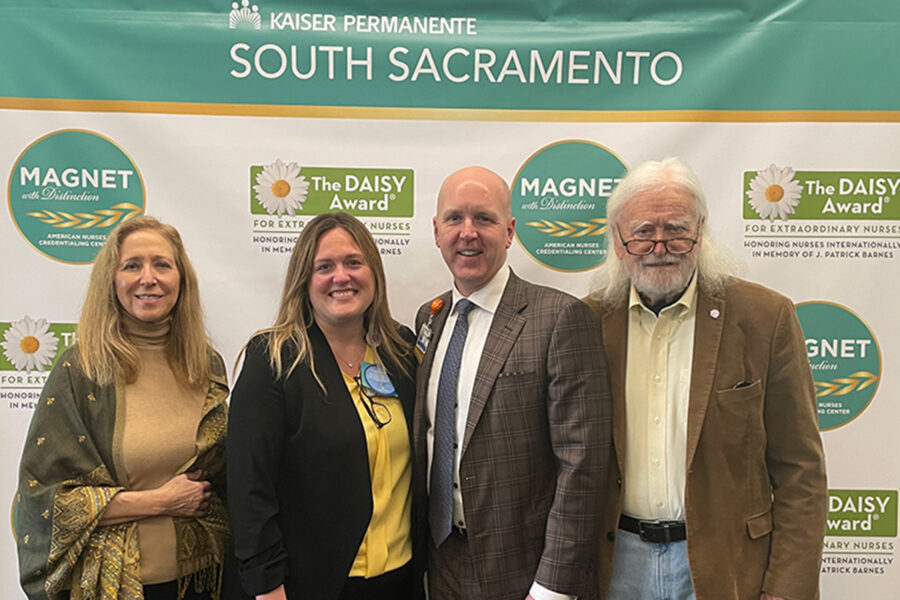
DAISY Founders, Bonnie and Mark Barnes with Toby Marsh and Rachel Wyatt.

DAISY Award founders honor nurses during visit to South Sacramento 

After a brief tour of our medical center, led by Chief Nurse Executive Rachel Wyatt, DNP, MHA, RN, NEA-BC, and Regional Chief Nurse Executive Toby Marsh, MSN, RN, NEA-BC, FACHE (pictured above between Bonnie and Mark), the creators of The DAISY Award spoke to a live audience of South Sacramento nurses during a presentation that was streamed live to other medical centers across Northern California. 

The presentation, titled “Shining the Light on All the Right – Elevating Nurses Through Meaningful Recognition,” covered how and why the couple created The DAISY Award, the long-felt impacts for recipients, and the couple’s strong relationship with Kaiser Permanente. 

“We work with most all of your regions around the country, and we are deeply proud of our partnership with Kaiser Permanente,” Bonnie said. “Kaiser has long been a leader in innovating health care and never more than now.  We watch with wonder at the way you are transforming care for patients and that the significant role nursing serves.  Having lived in Northern California for decades, we have numerous friends, including DAISY’s CFO, who share with us their outstanding experiences with you, not only your clinical excellence but also the compassion and humanity you bring to the way you tend to your members.” 

Following the death of their 33-year-old son, Patrick, in 1999, the couple created The DAISY Award in recognition of the exceptional nursing care their son received during his 8-week stay in a Washington hospital. Today, over 6,500 health care facilities and schools of nursing participate in The DAISY Award program, more than 220,000 nurses have been honored, and more than 2.5 million nominations written. 

One of those nominations from a South Sacramento patient — awarded to Austin Stoker, MSN, RN, in September 2023 — was read aloud by Bonnie: “Austin knew how to improve my emotions. He showed me on the O2 monitors how I was improving. He noticed that the 20th was my birthday and brought me a slice of chocolate cake and a slice of cheesecake! Thankfully, there were no candles because I did not yet have the lung capacity to blow one out. It was a birthday that I will remember in a positive light, which without Austin’s superior dedication to patient care could have easily been negative.” 

“Bonnie and Mark gave an outstanding presentation that whisked us all back to the moment when we decided to be a nurse, remembering our purpose, and the extreme privilege we have as nurses,” Wyatt said.  “Few dry eyes in the room as Mark closed out with exactly why nurses are indeed heroes.” 

The presentation concluded with Mark reading some of his all-time favorite DAISY Award nominations, including excerpts from the thank you note he and Bonnie wrote more than 23 years ago to the nursing staff who cared for their son. Watch and listen here. 

In addition to South Sacramento, the Barnes also visited our Roseville, Sacramento, Vacaville, Santa Rosa, San Francisco, Oakland, and San Leandro medical centers. 

Innovation featured image placeholder

South Sacramento nurses show dedication to continuous improvement

South Sacramento nurses show dedication to continuous improvement through multiple RDO submissions and ongoing research. 

Ongoing research study 

A research team led by Shavinderpal Sanga, MSN, RN, CNS, ACCNS-AG, GERO-BC, is currently reviewing retroactive data to evaluate the effects of patients using the enclosure bed. This study will be completed in 2025 and will provide important information regarding patient outcomes associated with this particular bed’s usage. 

Current Improvement Projects & Project Leads: 

  • Implementation of Family Integrated Care in the Special Care Nursery, Lisa Rael, MSN, RN 
  • Utilizing a One-Day Shared Governance Model to Increase Engagement and Operational Sustainability, Christen Straw, DNP, RN, CNL, CENP, NEA-BC 
  • Evidence-Based Practice Immersion Program for Nurse Leaders, Reid Hirsch, BSN, RN, CCRN (previously Kendal Bailey, MSN, RN) 
  • Facility Level Nursing Mentoring Program, Kendal Bailey, MSN, RN 
  • Pilot of the Broset Violence Checklist (BVC) within a Community Hospital Emergency Department, Rachel Wyatt, DNP, MHA, RN, NEA-BC 
  • Implementing AGS Co-Care: HELP on Medical-Surgical Unit, Shavinderpal Sanga, MSN, RN, CNS, ACCNS-AG, GERO-BC 
  • Feeling Tipsy? Preventing Falls in the ICU Using the Tailored Intervention for Patient Safety (TIPS) Goals, Amber Glukhenkiy, MSN, RN, APRN-CNS, ACCNS-AG, CCRN 
  • 2024 Implementation of a Professional Development Day for Acute Care Patient Care Coordinators, Emily Melville, BSN, RN 
  • Reinforcing Evidence Based Practices to Reduce Falls, Chanae Joi Haylock, MSN, RN, PCCN, PMHNP-BC 
  • HAPI Hour 2.0, Andrew Bilog, BSN, RN, and Amber Glukhenkiy, MSN, RN, APRN-CNS, ACCNS-AG, CCRN 
Innovation featured image placeholder

Utilizing play to reduce fear, anxiety and pain

Desiree M. Peterson, RN and Ambulatory Surgery Unit nurse implemented the project “Utilizing Play and Fantasy to Effectively Reduce Pediatric and Parental/Guardian Perioperative Fear, Anxiety, and Pain” in South Sacramento.


Pirate project poster
COC department photo

First Coordination of Care Nursing Professional Development practitioner welcomed

Addition of a dedicated Nursing Professional Development Practitioner for Coordination of Care department sees early benefits as team works to provide professional development opportunities specific to the Case Manager role.

Kaiser Permanente South Sacramento welcomed the first Nursing Professional Development Practitioner for the Coordination of Care Department in the Northern California Region, Emily Melville, BSN RN ACM-RN. In her new role, Emily completed a Resource Development Opportunity (RDO) to create the department’s inaugural Professional Development Day for Patient Care Coordinators.  

This evidence-based project featured interactive learning activities that were well-received by staff, with participants expressing high engagement and enjoyment. Several staff members (Chet Nazareno, Mona Roque, & Sylvia Placencia), also stepped up to instruct in key areas, sharing their expertise and enhancing the learning experience. The initiative was designed to enhance skills and knowledge, focusing on improving confidence in their abilities and supporting ongoing professional growth. 

Pictured: Fanta Barrie, BSN, RN, Sajeev Singh, BSN, RN, Emily Melville, BSN, RN, Orlando Benjamin, BSN, RN, Laura Levin, BSN, RN, Mary Rose Andres, MSN, RN, Lillian De Los Santos, MSN, RN, Sylvia Placensia, BSN, RN, and Daniel Paterson, RN 

Innovation featured image placeholder

NK Interventional Radiology nurses aim to optimize patient outcomes 

Initiation of Jardiance/Ozempic holds for procedural and General Anesthesia cases to optimize patient clinical outcomes.  This project was led by Nursing staff to clarify preparation instructions and provide medication safety in patient populations utilizing this growing class of medications.  This includes education surrounding use of the medication and dose adjustments that may be required pre procedurally. 

 Standardization of HCG testing workflow was developed and implemented by Nursing Staff to ensure safe patient outcomes. 

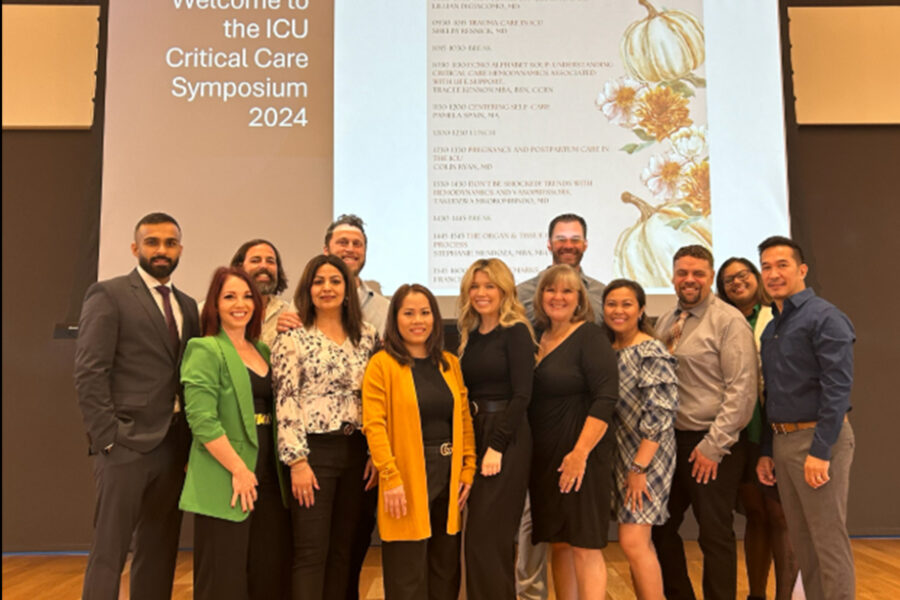
Group of nurses at the ICU Critical Care Symposium

ICU education council holds 2nd annual ICU critical care symposium 

The ICU Education Council, a group of dedicated clinical nurses, plays a crucial role in the success of all educational training events. In October 2024, the ICU Education Council hosted its 2nd annual symposium, which was a huge success. The dedication and leadership of the ICU nurses are shown in their work.

The symposium focused on various topics relevant not only to critical care nursing but also to other nursing areas, such as the emergency department and PACU. Based on post-symposium feedback, more than half of the participants rated their knowledge as substantial or very substantial for the topics that were presented at the symposium.

Their commitment to excellence and hands-on approach to facilitating these events have been instrumental in the success of the ICU Symposium and other educational initiatives. 

Pictured above: Navroop Dhillon, BSN, RN, CCRN, Amber Glukhenkiy, MSN, RN, APRN-CNS, ACCNS-AG, CCRN, Jeffrey Murto, BSN, RN, Kanwalpreet Gill, BSN, RN, CCRN, Paul Affron, BSN, RN, Thanh Dieu “Jenny” Nguyen, MSN, RN, CCRN, Lisa Miller, BSN, RN, CCRN, Joel Schaefer, BSN, RN, CCRN, Lisa Prillwitz, BSN, RN, Anne Laroco, RN, Nathan Campbell, BSN, RN, Lisa Kendall, Benny Tabingo , BSN, RN, CCRN 

Innovation featured image placeholder

Gastrointestinal/endoscopy team develop inpatient procedure preparation optimization workflow 

This project was developed by Nursing staff in the gastrointestinal (GI) department. The project included collaboration with inpatient teams to optimize procedure preparation with education to the inpatient staff for best pre procedural workflow and procedure success. 

Standardization procedures for G-tube patients: Standardized Procedures (RNx) are authorized in the Business and Profession Code, Nursing Practice Act (NPA) Section 2725 and further clarified in California Code of Regulation (CCR 1480). Standardized procedures are the legal mechanism for registered nurses, nurse practitioners to perform functions which would otherwise be considered the practice of medicine. Standardized procedures must be developed collaboratively by nursing, medicine, and administration in the organized health care system where they will be utilized.  

Because of this interdisciplinary collaboration for the development and approval, there is accountability on several levels for the activities to be performed by the registered nurse. By utilizing this standardized procedure, this project expands scope and provides autonomy for nurses as they work with G-tube patients on optimization of device placement, replacement, handling, and ongoing follow up for G-tube care. 

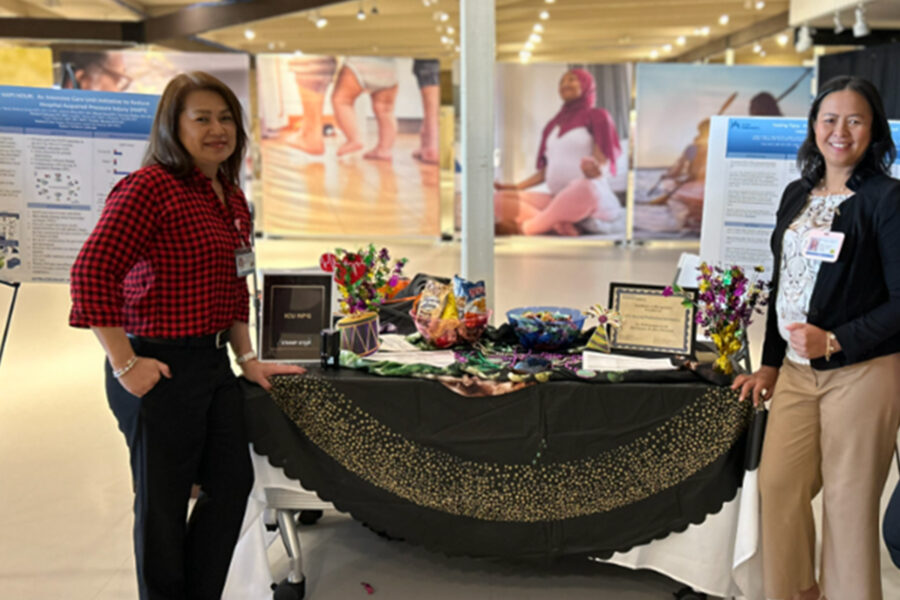
Nurses posing at a table

ICU nurses showcase their commitment to quality in reducing falls and HAPIs 

The ICU Unit Practice Council Team’s efforts in Falls and HAPI prevention/reduction were recognized at the local Simply the Best Showcase. Their posters won the award for “Most Spreadable,” a testament to the widespread impact of their work. This award not only acknowledges their dedication but also highlights the importance of their initiatives in the health care community.  

Pictured above: Amalia Ramos, BSN, RN, and Sheila Kadel, BSN, RN 


Back To Top