Skip to content
Nurse with a young patient

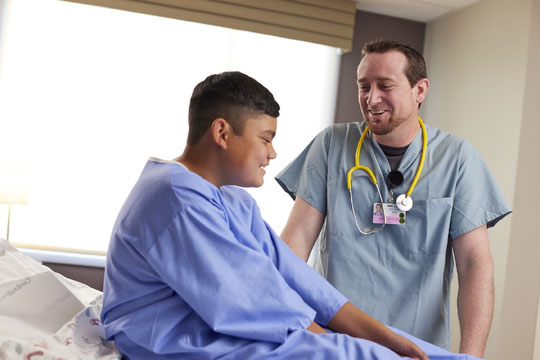
Championing pediatric safety: Uncovering the hidden challenges of ED triage

In a pivotal study, San Rafael Emergency Department (ED) leaders Tina J. Vitale‑ McDowell, MSN, RN, CPEN, PECC, and Dana Sax, MD, have brought to light critical insights into the accuracy of triaging pediatric patients in the ED.

Their research, published in JAMA Pediatrics, reveals a troubling trend: nearly 60% of pediatric ED visits are overtriaged, and 7% are undertriaged, leading to significant consequences for patient safety, throughput, and the quality of care. Through their collaborative efforts, Vitale‑McDowell and Sax are championing improvements in pediatric care that are essential for protecting our young patients.

“This work is vital to support pediatric readiness and care in our EDs,” said Vitale‑McDowell. “It underscores our ethical responsibility to improve pediatric triage and ensure the safety of our most vulnerable population.”

A collaborative effort is now underway involving Regional Quality, Maternal Child Health, Pediatric Emergency Medicine, and the Division of Research to further examine the impacts of mistriage.

To understand the challenges faced during triage, front‑line staff from all 21 NCAL ED facilities are providing their insights.

“Emergency department triage is inherently a very challenging job. Triage nurses are asked to make triage assignments with limited time to take a history or review a chart, while simultaneously managing a busy waiting room and acting as the liaison between the waiting room and the back of the ED,” explained Sax. “We are learning more about how triage is currently done, how it impacts patient outcomes and ED operations, and we can better support our front‑line triage nurses in this difficult but critically important task of sorting patients on ED arrival.”

The focus ahead will be on refining triage processes to better safeguard patient safety and reduce health care disparities. The insights gained from these initiatives are instrumental in supporting our triage nurses, enhancing the care we provide to pediatric patients.

“This collaborative work is paving the way for more accurate and equitable care in our emergency departments, ensuring that every child receives the attention they need when they need it most,” said Vitale‑McDowell.

Caritas Graduation Dec 2024CROPPED

Caring Science Academy expands programs in 2024

Kaiser Permanente Northern California launched the inaugural session of the Caritas Coach Education Program (CCEP) Faculty Development, a cornerstone of the Regional Caring Science Academy. This pioneering initiative marks a significant milestone in our commitment to embedding Caring Science as the foundational theory within our Professional Practice Model and the Discipline of Nursing. Developed in partnership with the Watson Caring Science Institute (WCSI), the program commenced with a transformative 3-day training in January 2024, bringing together Caritas leaders from our medical centers and regional offices to deepen their expertise in Caring Science.

As of December 2024, the Regional Caring Science Academy has achieved remarkable milestones. We now have 20 CCEP faculty members and one faculty intern, with 32 new CCEP coach students beginning their training in June and 28 set to complete the program this month. Additionally, 38 students successfully completed HeartMath certification between June and October. Our commitment to immersive learning was further demonstrated through four Equine sessions and four ReBrilliancy sessions, each receiving outstanding reviews.

Further advancing Caring Science integration, we developed and piloted Caring Science and HeartMath modules for PCSO across select medical centers, with a full rollout planned for 2025. Additionally, we launched a Caring Science Dashboard for CNEs, providing key insights to support nursing leadership.

Looking ahead, our goal is to train 100 Caritas Coaches annually, reinforcing our unwavering commitment to a Caring Culture at Kaiser Permanente. These accomplishments underscore our dedication to fostering compassionate, patient-centered care and ensuring Caring Science remains at the heart of nursing practice throughout our organization and beyond. 

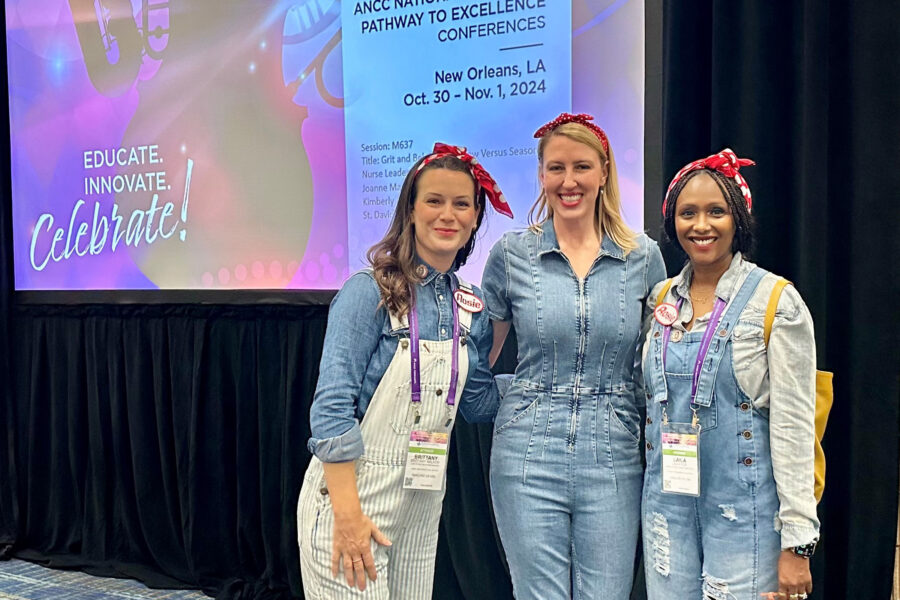
3 nurses dressed as Rosie the Riveter

“Richmond Can Do It!” Magnet journey theme draws inspiration from the community’s history 

Kaiser Permanente Richmond’s journey toward Magnet® recognition draws strength and inspiration from a proud history rooted in resilience, diversity, and teamwork. Our theme, “Richmond Can Do It!”, echoes the spirit of the Rosie the Riveter WWII Home Front—a time when people from all walks of life united to achieve extraordinary things. 

During World War II, Richmond was home to the Kaiser Shipyards and the Ford Assembly Plant, pivotal sites for wartime production. To support the health and well-being of these workers, Kaiser Permanente opened its first field hospital, laying the foundation for the healthcare system we know today. The workers—men and women from diverse backgrounds—embodied collaboration, adaptability, and determination, values that continue to inspire our nurses. 

Today, our nurses honor that legacy by leading innovative, patient-centered care that reflects the strength of the community we serve. The Magnet® Journey exemplifies this commitment, celebrating our nurses’ dedication to evidence-based practice, professional growth, and exceptional outcomes. 

Just as Richmond workers united during WWII to build ships and support the war effort, our nursing team comes together with the same “can do” spirit to provide outstanding care. Through this journey, we’re proving that the same drive and unity that defined Richmond’s past continue to shape its future. 

Group of nurses holding an award

Enhancing patient experience through My Medication Matters 

Vivian Ochiagha, MSN, CMSRN, led a revamp of Kaiser Richmond’s My Medication Matters initiative, ensuring patients receive clear, accessible information about their medications, including usage, side effects, and safety. This quality improvement effort empowers patients to make informed decisions, enhancing their experience and fostering better health outcomes. The medication-related patient experiences question scores on the HCAHPS survey have improved since this work began, at the unit level and across the hospital. 

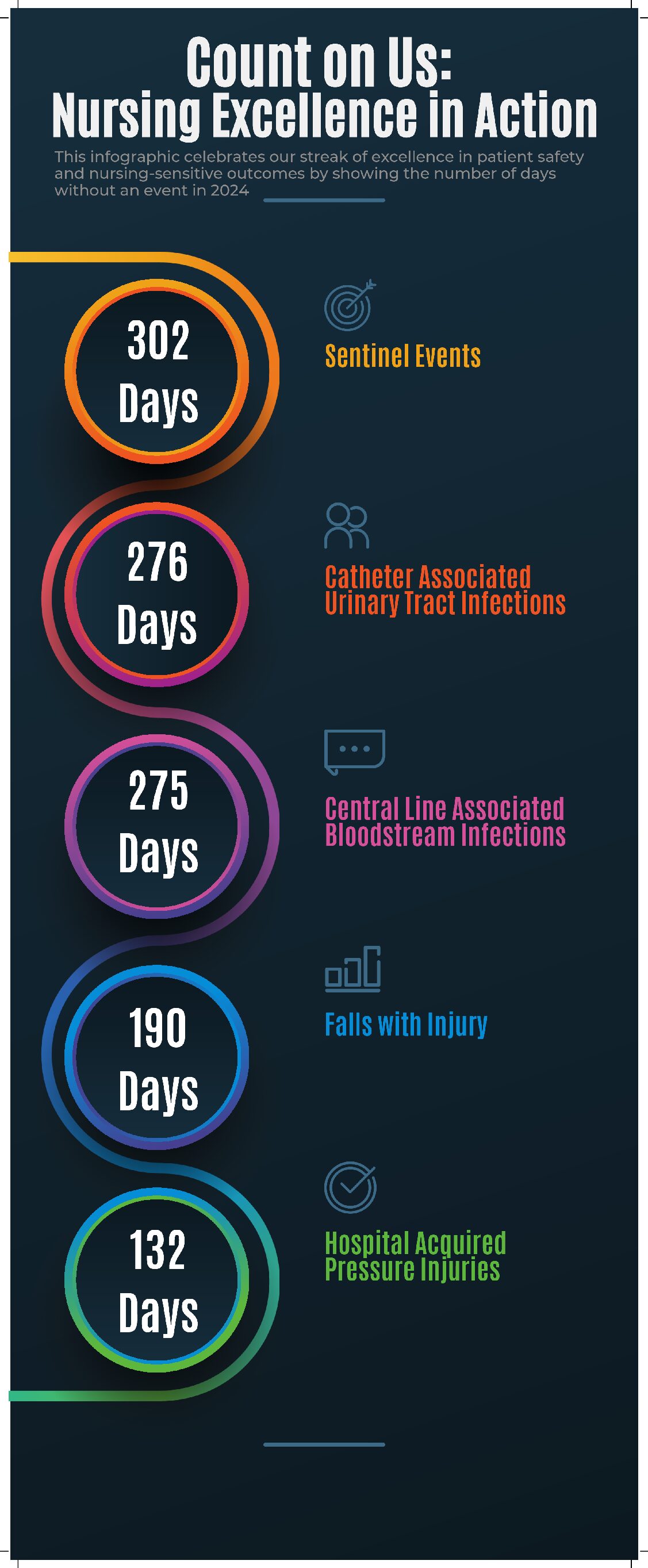
Count on us: Nursing excellence in action 

Kaiser Permanente Richmond’s Medical Center has an exceptional report card for nursing sensitive indicators in 2024, exceeding the national benchmark in all units over half the time.

Innovation featured image placeholder

Nursing-related technology innovations    

Jovie Jabla, MSN, RN, CCRN, VA-BC, acting as interim nursing professional development specialist, implemented mobile vital signs and B-Braun technology to improve accuracy in documentation, eliminate inefficiencies, and improve medication safety. 

Innovation featured image placeholder

Nurses involved in innovating care spaces in Richmond’s emergency department 

Faced with the constant challenge of an overflowing emergency department, Kaiser Permanente Richmond’s emergency nurses took the lead in redesigning workflows to maximize space and efficiency. Initially, the team creatively repurposed the nearby mammography waiting room, transforming it into an extension of the emergency department to see and treat patients quickly. 

Building on this innovation, the nurses also collaborated to implement a mobile unit for rapid care, offering a more efficient and patient-centered solution compared to the previous use of emergency tents in the yard in front of the hospital. This forward-thinking approach improved patient flow, reduced wait times, and ensured patients received timely care—all while maintaining the high standards of quality and safety that define Kaiser Permanente Richmond. 

large group of nurses at a conference

Kaiser Permanente Richmond nurses shine at the Magnet® Conference 2024 

Kaiser Permanente Richmond nurses swapped trick-or-treating for transformative learning as they joined over 14,000 nursing professionals in New Orleans for the 2024 Magnet Conference. The team attended impactful sessions, networked with industry leaders, and brought back fresh ideas to elevate patient care. 

Kaiser Permanente’s senior nursing leadership proudly sponsored a breakfast event, underscoring their dedication to nursing excellence. Later in the conference, Richmond’s Magnet Director Kimberly A. Lewis, PhD, RN, captivated an audience of approximately 400 attendees with her presentation on mentorship and belonging among new and experienced nurse leaders. Her research offered innovative insights into fostering connection and sparked meaningful dialogue about supporting leadership growth in nursing. 

The conference was a testament to Kaiser Permanente’s leadership in advancing nursing practice and our nurses’ commitment to continuous improvement—both on and off the unit. 

3 nurses with a sign

Advancing nurse excellence through research and evidence-based practice 

Jovie Jabla, MSN, RN, CCRN, VA-BC, exemplifies a commitment to nursing research and evidence-based practice. From leading innovative projects like the creation of a vascular access team and ultrasound guided IV training to publishing on patient safety and mentorship, Jovie’s work empowers nurses, improves outcomes, and strengthens Kaiser Richmond’s culture of excellence. 

Kimberly A. Lewis, PhD, RN, Magnet® Program Director at Richmond, presented her research about nurse leader mentorship, grit, and organizational belonging to an audience of over 400 nurses at the Magnet Conference. 


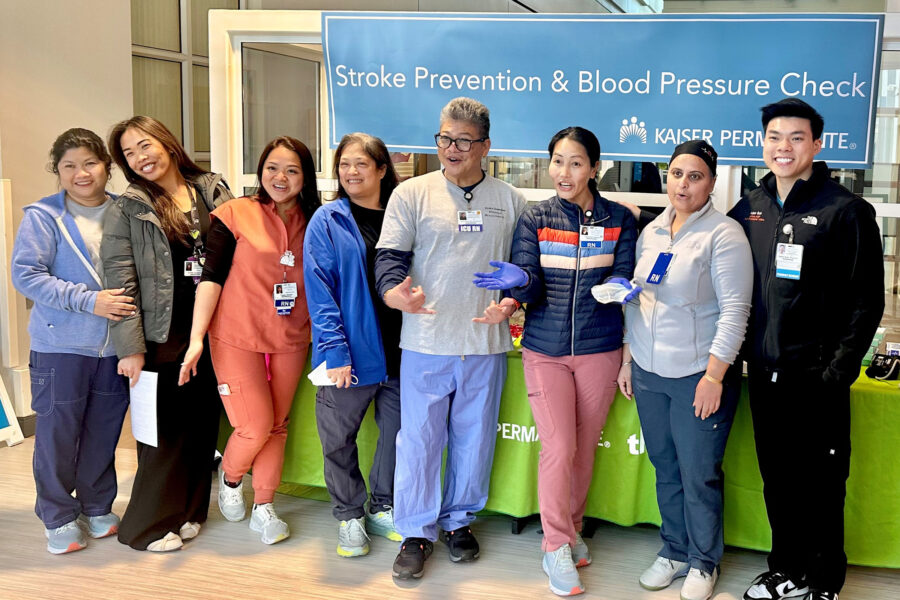
Stroke committee at screening event

Keeping stroke at bay: Kaiser Permanente Richmond’s stroke committee’s educational outreach events 

Kaiser Permanente Richmond’s Stroke Committee demonstrated their unwavering commitment to community health by hosting stroke risk and blood pressure screening events that served 250–350 community members at each gathering. These events provided education about stroke risk factors, warning signs, and the importance of blood pressure management. 

Dedicated committee members engaged Kaiser Permanente members in meaningful conversations, empowering them with tools to recognize the signs of a stroke and act FAST. Participants also received personalized guidance on scheduling follow-up care to better manage their health and reduce future risk. 

Through these impactful events, the Stroke Committee showcased how Kaiser Permanente’s proactive, community-centered approach is advancing health education and affecting lives—one screening at a time. 


Back To Top