Skip to content
11.2-Clinical-Nurses-Teach-Middle-School-Students-Life-Saving-Skills-#3

Nurses teach middle school students life-saving skills 
11.0-Clinical-Nurses-Teach-Middle-School-Student-pic-#2Medical emergencies can occur anytime, anywhere, and to anyone. Bystanders, including the youth, play a critical role in saving lives. According to the American Heart Association, about 40% of people experiencing out-of-hospital cardiac arrest receive bystander CPR before professional medical help arrives. Similarly, most strokes happen in the community, emphasizing the need for laypeople to be trained in life-saving measures. However, a study found that the youth, particularly in the younger age group, struggle to decide when to call 911 or identify a situation as an emergency and how to communicate the situation to the dispatcher effectively.  

As part of an outreach program, 10 clinical nurses from Sacramento Medical Center volunteered their time and expertise to teach 25 middle school students and parents from a local school how to respond to stroke, choking, and cardiac arrest scenarios. The teaching session was designed to be engaging and interactive, focusing on three critical skills: identifying stroke symptoms with the BEFAST acronym—Balance, Eyes, Face, Arms, Speech, Time, performing a Heimlich maneuver, and Hands-Only CPR.  11.1-Clinical-Nurses-Teach-Middle-School-students

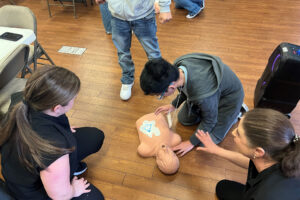
To make it more engaging, the nurse volunteers created scenarios and role-playing to simulate the signs and symptoms of the emergencies and speaking to the 911 emergency dispatcher. The participants also took turns performing Hands-on chest compression using CPR training mannequins. The participants were actively engaged in the education session and hands-on learning. Equipping the youth with the essential knowledge and skills can empower them to make a difference during critical moments 

“This experience deepened my commitment as a nurse at the bedside and to the community. It reminded me why I chose this profession—to make a difference not only at the bedside,” said Brian Teding, MS, RN, NI-BC, a clinical nurse volunteer. 

Defining Care Excellence IlyaGuryanov_Photo CROPPED

Professional development journey of multigenerational clinical nurses

Ilya Guryanov BSN, RN (pictured above)
Staff Nurse II  
KP Nurse Residency Program  

At 16, Ilya participated in the Kaiser Permanente high school internship program, which set the stage for his health care career. At 18, he was a Patient Care Technician at Sacramento Medical Center. He was accepted into the KP Nurse Residency Program in 2024 and now works as a Staff Nurse II.  

“Kaiser Permanente shaped my nursing journey, providing support, practical experience, and professional development…”  

Ace DelosSantosAce Delosantos BSN, RN, MEDSURG-BC 
Insert picture # 8 
Staff Nurse IV, 5th Floor. 
KP Nurse Scholars Scholarship Program  
 

Ace began his nursing career in 2011 working in long-term care and he joined Kaiser Permanente as a Staff Nurse II in the Medical/Telemetry unit in 2016. He is actively involved in projects, the Unit Practice Council, and the Professional Practice Committee. In 2023, he enrolled in the Samuel Merritt University MSN program through the KP Nurse Scholars Academy scholarship program, focusing on clinical leadership and education. He also serves as a preceptor, mentor for the clinical ladder, and Magnet Navigator. 

“I’m pursuing my Master of Science in Nursing Degree to deepen my understanding of the areas I’m passionate about, like evidence-based practice and specialized care. For me, furthering my education is like building my career toolkit. Nursing is not just my job but my profession. I’m invested in it.” 


Ella SilchenkoElla Silchenko ADN, RN, GERO- BC 
Staff Nurse IV, 5th Floor. 
KP Specialty Certification Voucher Program 
 

Ella started her career in health care as a Medical Assistant and then pursued nursing. In 2006, she joined Kaiser Permanente-Sacramento, where she has remained since as a Staff Nurse on the 5th Floor. In 2024, she earned her Gerontological Nursing Certification (GERO- BC™) board certification from the American Nurses Credentialing Center leveraging on a KP-sponsored Geriatric Review Course and the Nurse Scholars Academy certification voucher program.  Ella also completed the NICHE Geriatric Resource Nurse Program at Sacramento Medical Center.  

 “Pursuing my geriatric certification (GERO-BC) was an intentional step to continue growing professionally and personally. It was about enhancing my knowledge of geriatric care and becoming a stronger resource for my coworkers, especially as our patient population ages.” 


Johnhay AnchetaJohnhay Ancheta BSN, RN 
Staff Nurse II, ICU 
KP NCAL Transition to Practice Program (ICU Fellowship) 
 
Before becoming a nurse, Johnhay was a preschool and school-age teacher. He started his nursing career at Kaiser Permanente in 2011 and has been an active member of various hospital committees, earning his Staff Nurse IV.  In 2024, he joined the ICU Transition to Practice, a six-month program of combined didactic, clinical experience in the unit and skills enhancement sessions. Johnhay joined the Sacramento ICU team as a staff nurse on the night shift. 

“After spending ten years in the med-surg telemetry unit, I knew I was ready for a new challenge and to take my nursing career in a different direction. I’ve always been drawn to critical care, so when the opportunity to join the ICU fellowship program came up, I didn’t hesitate—I knew this was my chance to grow and learn. It’s an exciting step that reflects my passion for expanding my skills and taking on a role where I can make an even more significant impact.” 

7.-Could-this-be-sepsis

Could this be sepsis? 

Sepsis continues to be a one of the primary reasons of hospital readmissions from Skilled Nursing (SNF) facilities. Internal data shows that sepsis, predominantly resulting from Urinary Tract Infections (UTI), is the main cause of sepsis related admissions/readmissions from SNF to the Sacramento ED. As one of the measures to address this concern, the hospital collaborated with a SNF to create an educational initiative aimed at training SNF staff on sepsis prevention, early identification and escalation. Clinical nurses Mary Boardman, BSN, RN, CEN (ED) and Ace Delo Santos, BSN, RN, MEDSURG-BC (5th Floor); and Operating Room Assistant Nurse Manager Jennice Singh, MSN, RN, CNOR volunteered their time in developing the materials, teaching, and facilitated the breakout sessions.  

Certified Nursing Assistants (CNAs), who have the most frequent contact with residents, were taught on how to use the STOP AND WATCH acronym to recognize early infection indicators and relay concerns to the on-duty nurse. The program also highlighted how evidence-based care practices that are already part of the resident’s activities of daily living (ADLs), including oral hygiene, skincare, and bladder care, are important in preventing pneumonia, wound infections, and UTIs. Lidija Bilkic, RN, Infection Preventionist at Grammercy Court, noted, “This training empowers CNAs to deliver proactive care to our residents as they are the primary caregivers and best positioned to observe changes in resident conditions.” 

During the breakout session, the SNF nurses examined Systemic Inflammatory Response Syndrome (SIRS) criteria, analyzed case studies, and demonstrated the Situation-Background-Assessment-Recommendation (SBAR) framework for escalating changes in patient conditions. The sessions also stressed the significance of early detection and reporting of any alterations in a resident’s health status. The staff were urged to report to the nurse on duty even minor changes that might appear inconsequential for further assessment and monitoring. The interactive nature of the training allowed participants to apply the SBAR framework in case scenarios, boosting their communication abilities and assurance in escalating concerns.  

The educational sessions were attended by over 50 SNF staff members. One CNA remarked, “I appreciated the class and interactive components. The games are fun and engaging. I learned information that I can use in my work. I also like the badge buddy as a reference so I can recall the STOP AND WATCH acronym for assessing changes in resident’s condition.” 

The collaboration between hospital and skilled nursing facility (SNF) nurses highlights the importance of partnerships in improving community health and reducing preventable hospital readmissions. By combining expertise, sharing resources, and networking, institutions can strengthen their capacities in addressing health conditions such as sepsis, and promoting common goals to improve patient outcomes. 

Doctors reviweing Interventional Radiology scans

Sacramento Medical Center is among the nation’s Comprehensive Stroke Centers

Sacramento Medical Center has once again proven its excellence in advanced stroke care. The Joint Commission has recertified it as a Comprehensive Stroke Center, a distinction held by only 211 hospitals nationwide. Since earning this prestigious designation in 2017, the hospital has maintained it, solidifying its role as a major referral center for advanced stroke care locally and within Northern California. 

A rigorous review by the Joint Commission surveyors followed the Comprehensive Stroke Center designation. The survey team noted several best practices, including: 

  • Physician outreach to stroke patients 7 days post-discharge. 
  • A dedicated patient care coordinator and social worker. 
  • The Wellness After Stroke class and journey to Magnet status. 
  • A pilot in the Neuro Unit to provide patients with blood pressure cuffs and education upon discharge. 

This achievement reflects the hospital’s strong culture of interdisciplinary collaboration, which is essential to delivering and maintaining the highest standard of care for patients requiring advanced medical and surgical stroke treatment. Jason Murray, MSN, RN, Quality Nurse Consultant for Stroke, highlighted the staff’s dedication to quality stroke care, stating, “Our team is committed to delivering exceptional outcomes for stroke patients. Maintaining a prestigious designation requires us to adhere to and exceed the highest standards of advanced stroke care. We are not just checking boxes—our patient outcomes are the true measure of our success.” 

Neuro Clinical Nurse Specialist Almaz Haile, MSN, RN, CCNS, CNS, highlighted the importance of interdisciplinary collaboration, adding, “Every department plays a critical role—from the Emergency Department, Interventional Radiology, and Pharmacy to the ICU and Transport teams. This coordinated effort ensures we deliver care promptly and effectively when every second counts.” 

5.-A-day-away-for-leadership-development-#1

A day away for leadership development

The Patient Care Services (PCS) Day Away is a quarterly event designed for Assistant Nurse Managers, Managers, House Supervisors, Nursing Professional Development Specialists, and Directors to engage in learning, reflection, and team-building activities. Led by the Chief Nursing Executive, this event serves as a professional and leadership development platform through networking, skill-building, and exposure to diverse perspectives. 

During the Day Away, participants take part in interactive learning activities, including presentations, role-playing exercises, and team-building sessions. Leaders are encouraged to step outside their comfort zones by presenting on unfamiliar topics, conducting literature reviews, and sharing leadership insights. Departments are tasked with facilitating Day Away sessions, creatively enhancing each event through unique themes, games, activities, and interactive elements. 

Guest speakers—accomplished leaders from diverse industries—are invited to share their leadership journeys, providing new perspectives beyond health care. These talks highlight the challenges, inspirations, and sense of purpose inherent in leadership roles. 

Nurse leaders may face unique situations daily, from addressing clinical questions to interpreting policies. In the Day Away, a scenario based on an event that occurred in the hospital is presented and each participating team is required to do a role-playing on how they will address the scenario. These exercises are both instructive and entertaining, allowing participants to actively practice critical skills such as conflict resolution, communication, and providing feedback in a fun way. After each role-play, the directors facilitate debriefing sessions to offer constructive feedback and refine leadership strategies for addressing the scenarios presented. 

“Regardless of your position or years of experience, professional and leadership development is an ongoing process for all leaders,” says George Tutu, MSN, RN, Nursing Professional Development Director. “This event is also a valuable platform for nurse leaders to share perspectives and solutions to issues impacting their departments and staff. Each unit leaders faces unique situations but there are commonalities in the principles used on how situations are addressed or approached.”  


4.-Honoring-Nurses-Stories-of-Resilience,-Compassion,-and-Cultural-Heritage-in-Healthcare

Honoring nurses: Stories of resilience, compassion, and cultural heritage in health care 

Filipinos comprise 1% of the U.S. population. During the COVID-19 pandemic, Filipino nurses working on the frontlines, even though they made up only 4% of the nursing workforce, comprised 30% of COVID-19 nurse deaths despite facing a resurgence of anti-Asian hate.  

In the celebration of the Asian Pacific Islander (API) Month and Nurses Week, the Greater Sacramento Equity, Inclusion, and Diversity hosted a special event to honor the contributions of Filipino American nurses. On May 15, 2024, Kaiser Permanente employees and physicians were invited to a complimentary screening of the documentary Nurse Unseen, a film highlighting Filipino nurses’ experiences during the pandemic. The documentary examined the historical context that led to the substantial presence of Filipino nurses in the U.S. The film also highlighted stories of humanity and resilience during the pandemic.   

Following the screening, a virtual panel discussion was conducted, moderated by Esperanza Chavez, MSA, BSN, RN, and the Chief Nursing Executive of Sacramento. Chavez reflected on the film and Filipino American nurses’ contributions to the U.S. health care system. “This documentary brings to light the stories of minority nurses, who have long been part of the backbone of health care in the U.S. Their dedication, resilience, and compassion are often unsung, but their impact is immeasurable. “It also highlights the stories of nurses who bravely cared for patients during the pandemic despite the uncertainties and how their culture shaped their resilience.”  

 The panel also featured the film’s director and producer, as well as Sacramento Medical Center’s Ace Delos Santos BSN, RN, and Staff Nurse IV -5th floor. During the discussion, Ace shared the challenges faced by Filipino Nurses at the bedside, away from their families, and facing the impact of the pandemic on nursing care. The event offered an opportunity to reflect on stories about resilience, culture, and diversity in nursing.  

As one of the nation’s leading health care providers, Kaiser Permanente values its diverse workforce and is committed to fostering a work environment that recognizes cultural heritage and supports the well-being of all employees and patients it serves. 

3.-Professional-Governance-Council-nurturing-the-next-#2

Professional Governance Councils: Nurturing the next generation of nurse leaders

Leadership succession planning is imperative for organizational stability and serves as a structure for staff development and career advancement. The 2024 U.S. Bureau of Labor Statistics RN Occupational Outlook report states that an average of 194,500 annual openings for nurses will be projected by 2033. This increase in nursing job demands may also imply the need to prepare nurses to fill vacancies from retirement and turnover in leadership roles.   

 Nursing Professional Governance Councils (PGC) at Kaiser Permanente Sacramento are unit-based and hospital-wide structures that empower clinical nurses with oversight and autonomy over nursing practice. The structure also serves as a platform for clinical nurses to build leadership skills in key areas, such as communication, problem-solving, decision-making, facilitation, and relationship-building. In their role as chairpersons, committee leads or members, clinical nurses learn how to navigate challenges that affect their practice at the bedside, leading quality initiatives, engaging their peers, and making impactful decisions.   

 “At Kaiser Permanente Sacramento, we support our PGC chairs and committee leads as they assume their roles by offering workshops and mentorship,” explains Joel Mallari, DNP, RN, ACNS-BC, NEA-BC, Magnet Program Director. “The PGC workshops teach them foundational skills on meeting facilitation, structured problem solving, data appreciation, and decision making. We also included leadership development presentations on our monthly PGC Day agenda to supplement learning and skill building. In addition to structured training, every council is mentored by a nurse leader. Council chairs have touch-based meetings with their council mentors to review meeting agenda, seek feedback, or consultations about projects until they are more confident to be independent.”    

While not all clinical nurses involved in council work aspire to formal leadership roles, some discovered new career paths. Recently appointed Assistant Nurse Managers credited their experiences leading council work on their professional growth. 

Elisaden Samier, BSN, RN, CCRN, now an Assistant Nurse Manager (ANM) in the Intensive Care Unit (ICU), related her leadership growth to her role as the ICU Unit Practice Council Chair. “Leading committees, driving quality initiatives, and applying evidence-based practice prepared me for the challenges of my new role,” she shared. In her former role, Elisaden was engaged in council decision-making, team collaboration, and communication, which are essential skills as she transitioned to her ANM role. 

Similarly, Aileen Icmat, MSN, RN, CCRN, ANM of the Post Anesthesia Care Unit, highlights her leadership development journey. While chairing the ICU’s HAPI Committee, she was exposed to work related to cross-department collaboration, resource management, and project implementation. “These experiences shaped my ability to lead effectively as an ANM,” Aileen explains. She also emphasizes the value of tools used in the council work like A3 and KATA in identifying root causes, engaging staff, and fostering a culture of problem-solving. 

Structures such as Professional Governance Councils and mentorship programs help to build leadership skills and open career growth opportunities for clinical nurses. Supporting leadership development at all levels of nursing practice is essential for elevating the profession, improving outcomes, and ensuring organizational stability.  

Korean mature woman leads meeting of multiracial work colleagues discussing ideas and business together sitting at table in modern creative office interior daytime

Improving care experience with interdisciplinary daily leader rounding

Patient experience is an essential aspect of measuring quality care. To enhance this part of care delivery at the Sacramento Medical Center, Esperanza Chavez, MSA, BSN, RN, Chief Nurse Executive led the implementation of interdisciplinary daily leader rounding—an initiative designed to build meaningful connections among leaders, patients, families, and staff.  

Leaders from nursing, ancillary services, and administrative departments conducted daily patient visits to engage with patients, families, and frontline staff. A rounding debrief follows, enabling leaders to escalate concerns, implement quick solutions, celebrate successes, and address barriers, such as service delays or communication gaps. This process also promotes accountability, real-time problem-solving, and a culture of meaningful actions.  

“We are receiving feedback from patients that they feel heard and valued, with many highlighting exceptional staff efforts,” Keith Weaver, MSN, RN, NEA-BC, Area Care Experience Leader, noted, “This process also gives us a chance to hear directly from patients not only about their concerns for service improvement but also the incredible work of our staff—they deserve the recognition.”  

Reflecting on the program’s impact, Chief Nurse Chavez emphasized, “Interdisciplinary rounding isn’t about checking in—it’s about showing up, breaking down barriers, and celebrating the extraordinary people behind our care. It is also about engaging all leaders whose work may not be in direct patient care, but making things happen for clinicians to do their work effectively. Over time, this initiative will help us drive improvements in the patient experience, strengthen interdisciplinary collaboration, and enrich the hospital’s mission to provide high-quality care.” 

large group of nurses in a conference room

Nurse‑led program enhances skills for robotic surgery

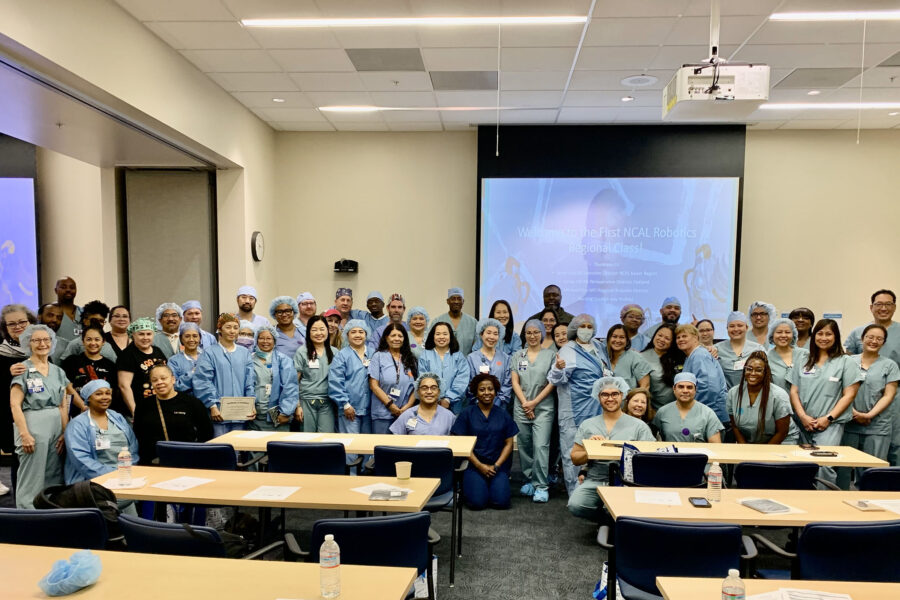
Kaiser Permanente Northern California (NCAL) is at the forefront of surgical innovation, with nurses and surgical technologists (STs) playing a pivotal role in advancing robotic surgery, which offers benefits for patients, including smaller incisions, reduced pain, and faster recovery times.

“This advanced technology requires highly skilled perioperative staff to ensure optimal outcomes,” said Jenny Mendenhall, MSN, RN, CHSE, CNOR, NCAL lead perioperative consultant. “Partnering with industry leaders, we developed a comprehensive training program that focuses on theoretical knowledge and hands‑on experience.”

In June, Mimi Nguyen, RN, Nursing Professional Development Practitioner at Kaiser Permanente San Francisco, piloted the first robotic “Train the Trainer” Kaiser Permanente NCAL training event.

The “Train the Trainer” program empowers experienced nurses and STs to become educators in their respective departments,” said Nguyen.

By equipping these nurses and STs with advanced robotic skills and teaching methodologies, Kaiser Permanente NCAL aims to create a sustainable pipeline of qualified robotic team members.

Another initiative is the regional robotic surgery program which provides hands‑on instruction and simulation to nurses, STs, and Sterile Processing Technicians (SPDs). The staff rotate through robotic stations to learn about the patient’s experience, the surgeon’s perspective, and troubleshooting the robot.

Ruth Leong, RN, who works at the Modesto Medical Center participated in the regionwide training, and said “I now have more knowledge, and am better equipped to answer questions from patients and their families about their robot‑assisted surgeries.”

“By investing in the professional development of our nursing and perioperative workforce, we are ensuring that our patients receive the highest quality care, delivered by highly skilled and knowledgeable clinicians,” said Mendenhall.

Back To Top