Skip to content

Rapid improvement event for emergency department to inpatient units

An interdisciplinary team worked together to evaluate current workflows for patients from the emergency department that need admission to an inpatient unit.  Clinical nurses helped lead this work and partnered with Rick Stransky, area portfolio leader to identify opportunities within the current state and re-design the processes to improve efficiency, communication, and help get our patients to the right level of care at the right time.   

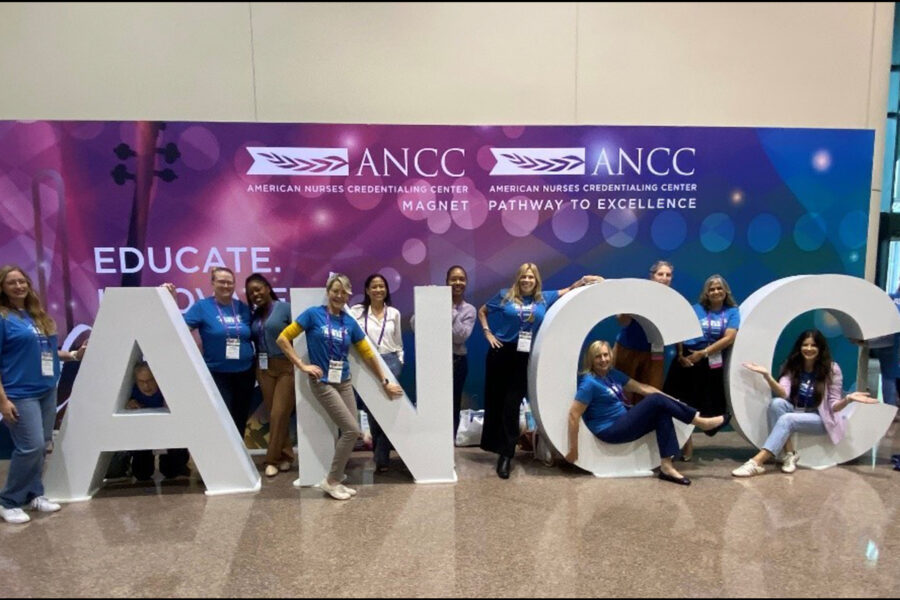
Nurses at the ANCC Conference

San Rafael nurses attend ANCC Magnet Conference

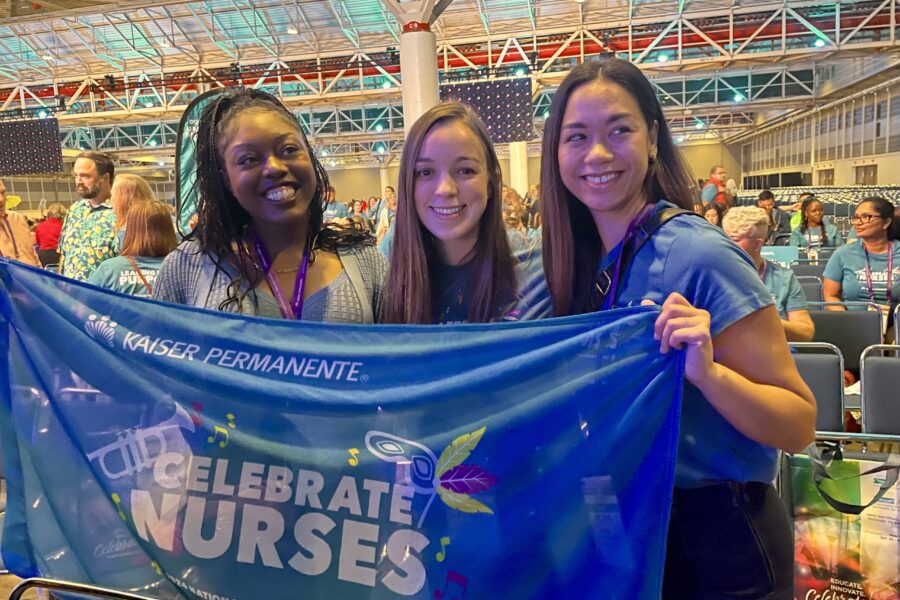
Seventeen San Rafael nurses attended the 2024 annual conference in New Orleans, joining several hundred Kaiser Permanente Northern California nurse colleagues. 

The conference was full of opportunities for professional development, skill building, learning from evidence-based practices, research, and a fantastic opportunity for collaboration with peers and colleagues from across the US and beyond.  It was a fun and exciting way to learn and build upon teamwork and community within nursing.   

3 nurses smiling holding a banner that says Celebrate Nurses

We C.A.R.E. peer support program for well-being 

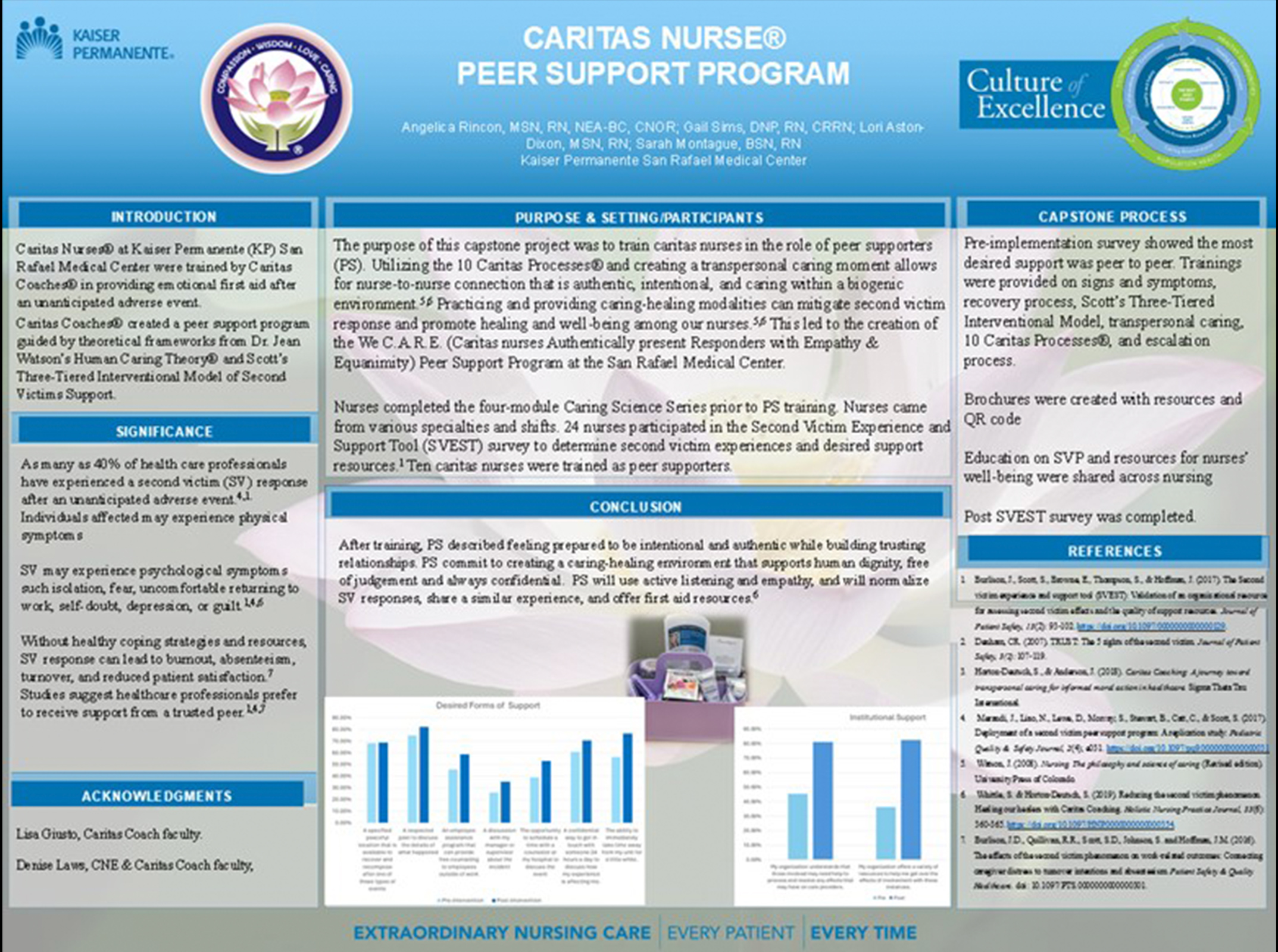
We C.A.R.E. is a caritas nurse peer support program offers emotional first aid to peers within the medical center.  Ten caritas nurses participated in additional training using Dr. Jean Watson’s Human Caring Theory and Dr. Susan Scott’s Three-Tiered Interventional Model as the theoretical framework to build a comprehensive program to assist health care professionals following an unanticipated adverse event. 

Peer support nurses are authentically present, creating a caring-healing environment that supports human dignity within the medical center.  Together, the nursing team is leveraging evidence-based practice to help promote well-being within their working environment. 

Arleen Velasco, BSN, RN; Ashley Thompson-Brundidge, MSN, RN; Giovanna Aiello BSN, RN; Sarah Montague, BSN, RN; Claire Perryman, BSN, RN; Maria Chang BSN, RN; Shirley Hasson, BSN, RN; Sara Stein, BSN, RN, CMSRN; Anecia Mayes, BSN, RN; Lori Aston-Dixon, MSN, RN; Gail Sims, DNP, RN, CRRN, CARF; and Angelica Rincon, MSN, RN, NEA-BC, CNOR are the first cohort of peer supporters. 

Perioperative journal club fuels continuous learning

Perioperative Services first Journal Club commenced in November of 2024.  The journal club serves as a critical platform for continuous learning and professional development in healthcare.  By regularly gathering to critically analyze and discuss recent publications, we can stay current in the latest advancements, information and evidenced based practice. 

The collaborative session between members of perioperative services not only enhances individual knowledge, but also fosters a culture of intellectual curiosity, critical thinking and interdisciplinary dialogue.  Through rigorous peer review and discussion, clinicians can evaluate the methodological rigor of studies and translate the evidenced based care to improve patient care outcomes. 

Moreover, our journal club provides a valuable opportunity for professionals to develop essential skills and knowledge, while encouraging clinicians to stay engaged.  By creating a structure environment for continuous learning, our journal club plays a pivotal role in maintaining high standards of evidenced based practice, promoting innovation and ultimately improving patient outcomes across our team.  New PACU manager, Kimberly Sommerhaug brings her positive experience with journal club because she was able to see how evidenced based practice translates into safe patient outcomes.  The perioperative team and the staff were excited and embraced learning opportunities. 


KP SRO Nurses celebrating

Santa Rosa Magnet Ambassador committee: A year of growth and celebration

In January 2024, Kaiser Permanente Santa Rosa (KP SRO) kicked off the Magnet Ambassador Committee with our first-ever “Retreat,” marking the official launch of this important initiative. The retreat brought together 40 enthusiastic participants from across the medical center, including Home Health and the Emergency Department, to learn about KP SRO’s Magnet journey and the crucial role of Magnet Ambassadors. The energy from this meeting was contagious, and soon the committee grew to more than 60 members, representing various disciplines, with nursing at the heart of the work. 

During Nurses’ Week, the committee held a successful three-day Magnet Fair, themed “Passport to Sonoma County.” This engaging event allowed members of the hospital care team to participate in games and learn more about the Magnet journey, while traveling through different “destinations.” The fair generated tremendous excitement and deepened appreciation for the incredible journey KP SRO is undertaking toward Magnet recognition. 

In July, the committee launched the “Magnet Monday” communication and event series, a weekly initiative open to all employees. These events served as both an educational opportunity and a celebration of how KP SRO exemplifies the Magnet Model components. Highlights included: 

  • Magnet Town Hall 
  • Farmer’s Market 
  • Coffee, Tea, and EBP 
  • Soaring to New Heights for Professional Development 
  • Mentoring for Success 
  • Tea with the CNE 
  • Día de los Muertos 
  • And the ever-popular, Puppy Power Hour! 

These events not only brought our medical center together but also celebrated the incredible ways KP SRO exemplifies the qualities that make it Magnet-worthy. The enthusiasm and engagement of our team reflects the collective pride and dedication in the pursuit of Magnet recognition. 

Magnet Site Visit in Santa RosaIn November, our team had the incredible honor of hosting a 3-day Magnet Site Visit—truly a once-in-a-lifetime opportunity. This visit marked the final step in our four-year journey toward Magnet designation. It was a chance for us to showcase what makes KP SRO not only the best place to work but also the best place to receive care. 

The visit was a celebration of our accomplishments, where we shared the story of our journey and highlighted the outstanding work of our interdisciplinary teams, who make a difference every day. It was our opportunity to tell the appraisers why we are deserving of the highest credential a healthcare organization can achieve. 

Our medical center was transformed to reflect our “Passport to Sonoma County” theme, capturing the essence of the region with displays of the Redwood Forest, the rolling vineyards, and the Sonoma Coast. We even had hot air balloons. More importantly, this was a moment for our entire team to participate in welcoming the appraisers and showcasing the vibrant culture of KP SRO. It was our chance to WOW the appraisers and give them a first-hand experience of the unique and inspirational environment we’ve built here. 

The journey to this point has not been easy. Over the past few years, our team has faced fires, hospital evacuations, and the challenges of COVID-19. Yet, despite these obstacles, we have persevered, coming through each challenge stronger than ever. This resilience is what truly sets us apart, and we were so proud to share our story with the appraisers during this momentous visit.  

Following our successful Magnet Site Visit, we now await the results which we expect to receive in early 2025. As we wait, our team continues to celebrate the incredible contributions of all our Magnet Ambassadors and the dedication of the entire KP SRO team. Every step of this journey has been a testament to our collective effort, and we are proud of everything we have accomplished together. 

25.-A-multipronged-response-to-lagging-survey-scores

A multipronged response to lagging survey scores  

In early 2023, Kaiser Permanente Sacramento Ambulatory Surgery Center (ASC) faced significant challenges in patient satisfaction, ranking 27th out of 29 Kaiser facilities with a care experience score of 71.6%, well below the group average of 79.9%. Identifying issues with discharge instructions, the unit’s Care Experience Committee, a clinical nurse led group, and the leadership team revised their process and workflow in providing discharge instructions, which earned the center the 2024 Outpatient Surgery Magazine OR Excellence Award for Patient Satisfaction and Experience. 

The ASC team found in their gap analysis from patient feedback that unclear recovery instructions and the absence of family members during discharge teaching contributed to low patient satisfaction scores. Patients often struggled to retain or process information while recovering from anesthesia. Not only does this impact patient satisfaction, but it can also negatively affect patient compliance and safety during recovery. In response, the center implemented a quality improvement plan, including: 

  • Delivering recovery instructions pre-operatively before sedation. 
  • Using “recovery” instead of “discharge” to clarify expectations. 
  • Enhancing materials with bold “Recovery and Home Care Instructions” labels. 

The initiative also emphasized staff training in patient-centered care, caring moments, and nurse-patient communication strategies and launched recognition programs to reward and promote excellence in patient-centric care.  

By January 2024, the care experience top box score rose to 86.9%, a 15% increase, surpassing the original 10% improvement goal. Scores continued climbing, reaching a record 92.5% in February 2024. “We’re proud of the progress, but our mission to improve never ends,” said Erica Osborne, BSN, RN, Nurse Manager. “Providing the best possible care experience remains our top priority.” 

(Excerpts from Outpatient Surgery Magazine)  

2 nurses talking at the bedside

Increasing registered nurse-to-patient communication  

Effective communication between nurses and patients is essential in improving patient outcomes by building trust, enhancing adherence to treatment plans, and increasing patient satisfaction. It also helps prevent medical errors, promotes patient autonomy, fulfills nurses’ legal and ethical obligations to keep patients well informed, and ensures continuity of care across different health care settings. 

In the last quarter of 2023, before the intervention, the unit’s HCAHPS top box-composite score on nurse communication was 77.1% on 4 East and 87% on 4 West. To further improve the patient experience, the 4th Floor Care Experience Committee, a nurse-led group under the Unit Practice Council at Kaiser Permanente Sacramento Medical Center, has implemented initiatives to improve RN-to-patient communication by focusing on inconsistent RN-to-patient communication related to explaining the plan of care and progression towards discharge.  

The team used the Kamishibai card system to provide a structured and standardized 10-step process for conducting a Nurse Knowledge Exchange (NKE) at the bedside, including an explanation of the care plan and discharge. To reinforce the practice, the NKE Nurse Leader Validation was also implemented as a process observation to ensure that NKE consistently practiced at the bedside. 

Post-intervention data indicates a shift and improvement in the nurse communication composite’s satisfaction scores of 78.6% on 4 East and 90.9% on 4 West. Staff feedback also indicates improving practice ownership, confidence in the process, and team dynamics. “We are seeing the positive impact of this initiative on both our patients and our team,” said Vanessa Stammler, BSN, RN, Staff Nurse II, 4th floor Care Experience Committee lead. “Patients feel more informed and connected to their care, and our staff has embraced the importance of clear, consistent communication.” 

Nurse at an IV pump

Reducing CLABSI in the ICU: A staff nurse-led quality improvement initiative 

Hospital-acquired infections (HAIs) such as Central Line-Associated Bloodstream Infections (CLABSI) remain a critical concern, particularly in the Intensive Care Unit (ICU), where up to 48% of patients require central lines for treatment delivery and are vulnerable for infections due to underlying conditions and invasive procedures. Central Line-Associated Bloodstream Infections are linked to negative patient outcomes, including high morbidity, mortality, and substantial health care costs.  

A quality improvement initiative led by the ICU Unit Practice Council- Quality Committee addressed the increasing incidence of CLABSI observed in unit-level trended data. From 2023 continuing to 2024, the initiative focused on identifying practice gaps and implementing measures to reduce CLABSI occurrences. Surveys and clinical audits revealed key issues such as non-adherence to dressing change procedures, inconsistent knowledge among staff regarding the CLABSI bundle, and inadequate auditing processes. 

The Quality Committee team provided in-depth, one-on-one peer-to-peer education sessions to over 90% of ICU RNs to address these gaps, enhancing their central line management and care competency. The education also included CLABSI bundle components, proper dressing changes, and blood sampling techniques. As a result of the ongoing gap analysis, the team also introduced practice changes such as replacing the piggyback bags every 24 hours, using port-less IV tubing to minimize contamination, and using pre-installed leur-lock and manifold for multiple drips to avoid manual assembly. Additionally, the frequency of audits was increased to twice daily. 

The ongoing quality improvement initiatives have led to a notable sustained reduction in the CLABSI incidence in the unit. Though fluctuations in data have been observed, the overall trend shows positive progress, with staff continuing to adapt and improve practices. This staff nurse-led initiative has improved CLABSI and enhanced patient safety in the ICU through ongoing education and peer-to-peer feedback. 

Innovation featured image placeholder

Inquiry: What is the evidence behind CHG bathing to reduce CLABSI? 

Central-associated Blood Stream Infection (CLABSI) is one of the nurse-sensitive outcomes that is problem-prone in the hospital’s Intensive Care Unit (ICU). Patients with the central lines are bathed daily using 2 % chlorhexidine gluconate (CHG)-impregnated wipes, a component of the current practice bundle to prevent CLABSI, which has been proven to reduce the bioburden on the patient’s skin and thereby reduces the risk of central line site infection. 

As part of an ongoing quality improvement initiative to address CLABSI in the ICU, the Evidence-Based Practice (EBP) Council, a clinical nurse-led structure at Kaiser Permanente Sacramento Medical Center, evaluated the evidence behind this practice. The council’s goal was to assess whether daily bathing with 2% CHG wipes, is still supported by the latest evidence. 

To guide the clinical inquiry, the following PICOT question was formulated: In adult ICU patients with central lines (P), how does daily bathing using 2% CHG wipes (I), compared to standard soap-and-water bathing or no CHG bathing (C), reduce CLABSI rates? 

Using the PICOT question, a literature review was conducted using PubMed, CINAHL, and Cochrane Library to identify studies matching the search criteria. The literature search yielded four studies- one systematic review and three randomized controlled trials—focused on 2% CHG wipes. A study using 4% CHG wipes was not included because of its higher concentration. After a literature search, studies were appraised using the Johns Hopkins EBP appraisal tool.  

Following the appraisal and synthesis, the evidence suggests that daily CHG bathing reduces CLABSI rates compared to soap and water bathing. The findings support the current practice of daily CHG bathing of patients with central lines as part of the CLABSI prevention bundle, a set of interventions targeting various potential causes of CLABSI. Franco Balitaan, MSN, RN, CPAN, Chair of the EBP Council, shared: “EBP is not solely about adopting new interventions but also about questioning current practices within the context of a rapidly changing world of medicine and health care. The EBP Council members learned a lot taking on this topic as our first EBP clinical inquiry project.” 

Innovation featured image placeholder

Improving code blue response through role delineation in a med-surg telemetry unit

In Med-Surg Telemetry Units, the management and outcomes of a Code Blue (cardiac arrest or medical emergency) event rely, among other processes, on clear role delineation to improve communication and team dynamics. Many nursing units still operate without clear role delineation during a Code Blue response. This lack of defined roles can lead to confusion, delays in life-saving interventions, and poor patient outcomes.  

Racquel Agamata MSN, RN, PCCN, Nursing Professional Development Specialist, conducted an evidence-based practice (EBP) project to inquire on the evidence behind assigning Code Blue role delineation before the shift change, comparing it to the current practice where roles are not pre-assigned in Med-Surge Telemetry Units.  

Clinical Question 

To define the scope of literature search, the PICO question was “How does role delineation (role assignment) at the beginning of a shift affect the efficiency of Code Blue response in a Med-Surg Telemetry Unit compared to no role assignment? 

Search Strategy 

To gather relevant evidence, an organized search strategy was employed across multiple databases such as PubMed, Ovid, CINAHL, Cochrane Database using the search terms Code Blue, Role Assignment, Role Delineation, Cardiac Arrest, Efficiency in Emergency Response. Search Techniques includes Keyword, Title, MeSH Terms, Reference Mining. A total of 7 articles were reviewed, all included in the body of evidence for analysis. 

Evidence Synthesis 

The literature review consistently supports the idea that role delineation improves team efficiency during Code Blue events. The following key findings emerged from the evidence: 

  • Clarity and Efficiency: Pre-assigned roles eliminate confusion, allowing team members to act immediately without delays in task allocation. 
  • Enhanced Communication: Role delineation streamlines communication, enabling quicker decisions and more efficient interventions. 
  • Timely Interventions: Assigning roles ensures critical tasks like airway management, CPR, and medication administration are performed promptly. 
  • Improved Coordination: Clear roles improve team dynamics, maximizing skill utilization and task execution efficiency. 

Practice Recommendations 

Based on the evidence reviewed, several practice changes are recommended to improve Code Blue response efficiency: 

  1. Pre-Assigned Roles: Assign roles during shift handoff to ensure preparedness.
  2. Color-coded systems: Use visual cues for quick role identification.
  3. Staff Engagement: Involve team members in the role assignment process.
  4. Equipment Readiness: Ensure crash carts and medications are easily accessible.
  5. Ongoing Education: Train staff on role delineation and Code Blue protocols.
  6. Mock Drills: Conduct regular practice drills with post-event critiques.
  7. Feedback Loops: Gather staff input to refine the process.
Back To Top