Skip to content
Jocelyn-for-delirium-rounds

Geriatric Resource Committee

The Geriatric Resource Committee (GRC) is a hospital-wide, multi-disciplinary, nursing-led forum focused on the care of older adult care. Key leaders and participants are Geriatric Resource Nurses (GRNs) who have completed a comprehensive module series on the health span of older adults. GRNs support important initiatives aimed at the care of older adults including the hospital’s Geriatric Surgery Verification and Age-Friendly care, the new CMS measure. In 2024, the GRC focused on supporting bedside nurses in delirium assessment accuracy. The GRNs led a delirium awareness roving fair and supported the Confusion Assessment Method Tournament. These initiatives engaged over 200 health care providers.

Another significant accomplishment was the expansion of GRN-led delirium rounds, which involve identifying high-risk patients, conducting bedside assessments and chart reviews, and collaborating with primary nurses and physicians to provide recommendations. All with an aim to prevent delirium. Positive outcomes have included reduced patient tethering, improved sleep-wake cycles, and increased mobility. Committee participation has also contributed to nurses achieving ladder promotion and board certification. Congratulations, Jocelyn Manalo and Shiobee Paningbatan! The GRC is facilitated by Colette Jappy, RN Geriatric Clinical Nurse Specialist.

  • Charmel Cabildo, BSN, SN II, Med Surg Tele, 1 North
  • Jillian Guglielmo, BSN, SN II, Med Surg Tele, 1 North
  • Tiffany Jiang, BSN, SN II, Med Surg, 3 Center
  • Aeran Cho, PhD, SN II, Med Surg, 4 Center
  • Shiobee Paningbatan, BSN, CMSRN, SN III, Med Surg Tele, 5CE,
  • Junia Bote, BSN, SN IV, Med Surg Tele, Cardiac Procedure Unit/5Ce
  • Jeffrey Silao, SN II, Med Surg Tele, 6 South
  • Jocelyn Manalo, BSN, MEDSURG-BC, SN IV, Med Surg Tele, 1 North
  • Deborah Quinto Capistrano, BSN, SCRN, SN IV, Med Surg Tele, 7CE
  • Donald Taracido, ADN, SN II, Med Surg Tele, 7 South
  • Eric Witkowski, BS, ADN, CCRN, SN II, CVICU
  • Monica Tsai, BSN, PCCN, SN II, ICU
Goal milestone featured image placeholder

Critical Care implementation of SSKIN Bundle

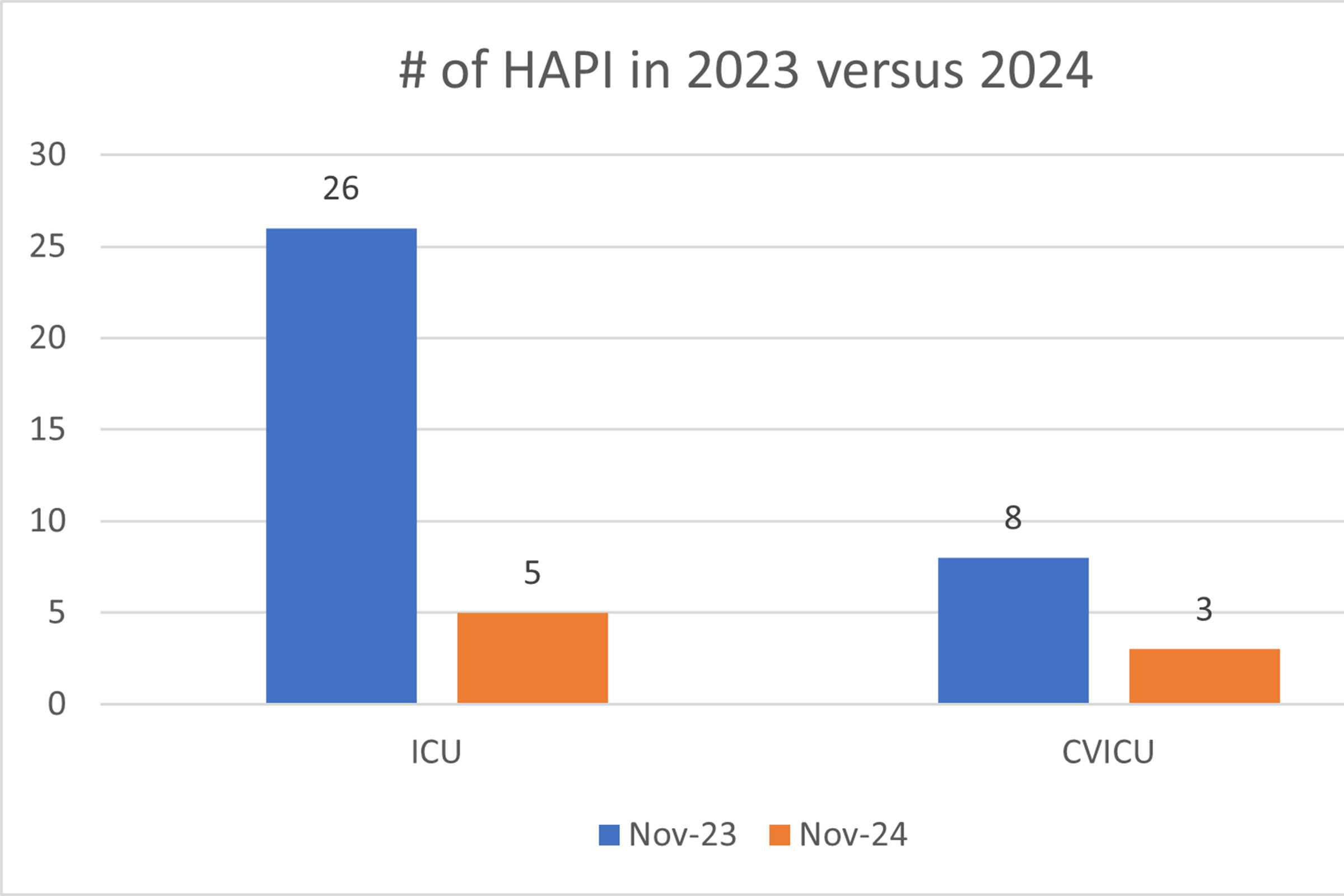
Hospital-Acquired Pressure Injuries (HAPIs) are a significant concern, particularly in critical care departments where patients are often less mobile and at higher risk due to disease processes. In 2023, KP SFO was leading NCAL region for highest HAPI Rates. In November 2023, 40% of KP SFO HAPI were from Critical Care Units (ICU: 29.8% and CVICU: 10%). Reducing HAPIs is directly aligned with the department’s goal of improving patient outcomes, increasing patient safety, and reducing the hospital’s overall health care costs associated with pressure injuries. The adult critical care department, led by Liz Ramirez, BSN, CCRN, SN IV, implemented targeted strategies with goal of reducing department HAPI incidences by 30% for 2024 while enhancing early identification and treatment of high-risk patients by:

  • Providing staff education on HAPI prevention SSKKIN bundle.
  • Implementing “4eyes in 4hrs” 2RN skin assessment.
  • Changing CVICU/ICU patient 2RN skin assessment minimum frequency to daily.
  • Utilizing advanced technologies (.CCSKIN smartphrase).

#-of-HAPI-2023-v-2024 graph

LC-skills-day-1

Breastfeeding collaborative increases Exclusive Chest feeding rates by 10%

The breastfeeding collaborative was a committee established this year. It includes a multidisciplinary team approach with MD, NPs, staff from the clinic and RNs within the hospital. There are RNs that participate from labor and delivery, postpartum and NICU. They work to improve the communication and education between the clinic and the hospital setting. This team also worked to put on two skills days, one in the spring and one in the fall, to support and empower the RNs with their lactation skills and the RNs with the DHM program. This team also collaborates with quality to review data each month so we can better understand where we are doing well, and where there are opportunities for improvement. This year they have worked to increase our exclusive breastfeeding results from 59% to 69 %!

Bridget Williams, SF Chief Nurse Executive with a group of nurses.

San Francisco 2024 posters and publications

KP National Nursing Conference posters

“External urinary catheter device: A multisite project involving point prevalence”, Alexandra Fogli, MS, RN, CNS-BC; Teresa Buhagiar, RN, MS, GCNS-BC, ACHPN, CEN, NPD-BC, Mary K Salas, MSN, RN, AGCNS-BC; Krystal Pombo, MSN, RN, CNS, AGCNS-BC; Christa Perryman, MS, RN, CNS, AGCNS-BC; Shavinderpal Sanga, MSN, RN, CNS, ACCNS-AG, CCRN; Annette Tuatagaloa, MSN, RN, CNS; Colette Jappy, DNP, RN, ACCNS-AG

“Enhancement of Stroke Patient Education at a Primary Stroke Center”, Lawrence Yee , BSN, RN, Kelley Kruze, BSN, RN, PHN, CPHQ

“San Francisco Kaiser C-Section SSI Reduction Performance Improvement Project”, Primary Author, Co-lead: Paula Doran Shelley, RN MBA Infection Prevention Manager, Col-leads: Maya Denny, BSN, RN L&D Nurse Manager; Marva Charles, MSN RN Post Partum Nurse Manager; Keith Hering CRNA; Rachel Racker, CRNA, Staff Nurse Champions: Cheri Sabella, RN; Yolanda Castaneda-Futol, RN; Katherine Zweber, RN; Bernadette Farrell, RN; Brooklynn Aiello, RN; JoAnn Johnson RN Champions and Sponsor: Brenda L. Jones, DHSc, MSN, CPPS, RN, Clinical Director of Women and Children; Celeste Prothro RN, MPH, CIC, CPPS, CPHQ Director of Risk, Patient Safety, AR&L and Infection Prevention; Bridget Williams, CNE, DNP, MSN, RN, NEA-BC

Caitlin Cannon, MSN, PHN, CCRN, AC-CNS-P, CNS-BC


Research and Innovation Academy Conference posters

“Kaiser Permanente Peer Review Outcomes Supporting Professional Nursing Excellence and Readiness (KP-PROSPER): San Francisco Focus”. Colette Jappy, DNP, RN, ACCNS-AG, , Kathryn Kennedy MSN, RN, NPD-BC, NE-BC

“External urinary catheter device: A multisite project involving point prevalence”, Alexandra Fogli, MS, RN, CNS-BC; Teresa Buhagiar, RN, MS, GCNS-BC, ACHPN, CEN, NPD-BC, Mary K Salas, MSN, RN, AGCNS-BC; Krystal Pombo, MSN, RN, CNS, AGCNS-BC; Christa Perryman, MS, RN, CNS, AGCNS-BC; Shavinderpal Sanga, MSN, RN, CNS, ACCNS-AG, CCRN; Annette Tuatagaloa, MSN, RN, CNS; Colette Jappy, DNP, RN, ACCNS-AG


California Association of Clinical Nurse Specialists poster

“Perspectives Across a Health System: The Role of Clinical Nurse Specialists in Implementing and Sustaining a Delirium Prevention and Early Intervention Program”. Colette Jappy, DNP, RN, ACCNS-AG


American Heart Association International Stroke Conference poster

“Quality Improvement for Improved Ischemic Stroke Large Vessel Occlusion Door-In-Door-Out Times at an Urban Primary Stroke Center Integrated Health System” . Kelley Kruze, BSN, RN, PHN, CPHQ; Patricia Zrelak, PhD, RN, NEA-BC, CNRN, SCRN, ASC-BC, CCRN, PHN, FAHA, Dr. John Beleman


Publication

  • External urinary catheter devices: A multisite project involving point prevalence, Geriatric Nursing, Alexandra Fogli, MS, RN, CNS-BC; Teresa Buhagiar, RN, MS, GCNS-BC, ACHPN, CEN, NPD-BC, Mary K Salas, MSN, RN, AGCNS-BC; Krystal Pombo, MSN, RN, CNS, AGCNS-BC; Christa Perryman, MS, RN, CNS, AGCNS-BC; Shavinderpal Sanga, MSN, RN, CNS, ACCNS-AG, CCRN; Annette Tuatagaloa, MSN, RN, CNS; Colette Jappy, DNP, RN, ACCNS-AG
Mentee: Christian Justin Carreon / Mentor: Sarah Abdolcader

Supporting the future of nursing

Pictured: Christian Justin Carreon, mentee (left) and mentor Sarah Abdolcader.

Mentoring is a hallmark of professional practice and transformational leadership that inspires, empowers, and develops leaders at all levels of nursing. Several nurse leaders supported the future of nursing by serving as a mentor to nurses new to their practice.

“I’m very grateful for the mentorship program through the Middle Management Institute with Sarah Abdolcader. Over the past few months, her insights and advice have helped me navigate through challenging situations while gaining a deeper understanding of my role as a nurse leader. Our regular conversations provided a structured space for problem-solving, allowing me to develop new perspectives on leadership situations. I’ve been able to reflect on our conversations and explore ways to apply these insights in the future. Sarah’s mentorship helped me translate theoretical knowledge into practical leadership strategies.”

“I would strongly recommend this program to other nurse leaders seeking personalized guidance from experienced health care leaders who understand the unique demands of nursing leadership. The skills and insights gained through this mentorship will continue to influence my leadership approach well into the future, an invaluable investment in professional development.”

Christian Justin Carreon

2 nurses in front of a poster presentation

Peer recognition in critical care, ASU, and PACU

Critical Care originally started the peer recognition program, Critical Care Star award, as a way for the Critical Care department to recognize each other for going above and beyond for patients and/or each other. It is awarded from interdisciplinary team members to interdisciplinary team members. In 2024, it spread to ASU and PACU, as a way to recognize their interdisciplinary team members.

2024 STAR award recipients in Critical Care

Nick Avdienko, MSN, RN, CNL, SN II, CVICU

Dr. Jeff Gotts

Milan Shahi, BSN, RN, SN III, CVICU

Dr. Dustin See

Vic Ferraris, UA, CVICU

Adriel Macalintal, BSN, RN, ANM, CVICU

Jasmine Miyamoto, PCT, CVICU

Naran Phattharawittakorn, BSN, RN, CCRN, SN II, CVICU

Joan Lo, ADN, RN, CCRN, SN II, CVICU

Jemma Parayno, UA, ICU

Dr. John Alexander


2024 STAR award recipients in ASU and PACU

Amor Arcilla, ADN, RN, AMB-BC, SN IV, ASU

Josephine Canales, LVN, PACU

Heidi Lau, MSN,RN, SN IV

Narelle Lange, RN, SN II, PACU

Erik Tvede, BSN,RN, SN III, ASU

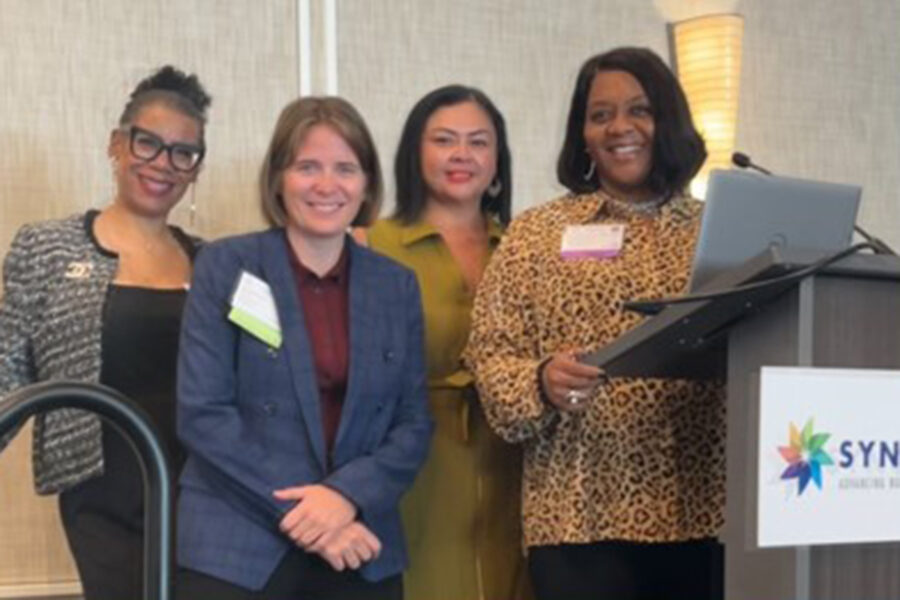
A group of nurses at a podium

Unplanned extubations prevention

Unplanned Extubations (UEs) are the fourth-most common adverse event in the nation’s Neonatal Intensive Care Units (NICU) and can lead to airway trauma, bleeding, and cardiovascular collapse (Kambestad, 2019). Exposure to one or more UE is associated with a nearly one-week increase in the duration of mechanical ventilation, an additional 10 days in the hospital, and/or patient demise (Sadowski, 2004).

KP San Francisco’s NICU had 4 UEs occurred out of less than 300 total ventilator days in 2023, averaging a rate of 1.3 UE per 100 ventilator days, while the national benchmark for like units is <1 UE per 100 ventilator. In response, a multidisciplinary team worked to develop and implement a UE prevention bundle with the aim of reaching and maintaining the <1/100 UE rate goal for 2024.

After an apparent cause analysis (ACA) using the UE questionnaire of the 4 UE events, a multidisciplinary team identified the need to develop and implement a UE prevention bundle with the aim of reaching and maintaining the <1/100 UE rate goal. UE prevention practices across comparable NICUs in the region were compiled and a literature review of articles through PubMed, Cochrane, and CINAHL for bundle components was conducted. Findings support the implementation of a UE Prevention Bundle that consisted of 8 different pieces. A performance improvement plan using the Plan Do Study Act (PDSA) was developed to support bundle education, implementation, and ongoing compliance. The UE Prevention bundle was rolled out on March 1st, 2024. KPSFO has had 0 UE since bundle implementation and surpassed the goal of 1.0 UE per 100 ventilator days on November 1st, 2024.

A group of nurses from San Francisco 4C unit.

4 Center Mobility project

On 4 Center, a medical-surgical telemetry unit at Kaiser Permanente San Francisco that specializes in caring for post-surgical patients, nurses know how important mobility is. Early mobilization increases functional capacity, decreases postoperative complications, and decreases length of stay, thereby enhancing patient safety during and after hospitalization. RNs perform a daily mobility assessment (Clinician Level of Function or CLOF) that provides a daily mobility goal for each patient.

Despite widespread awareness of the importance of early mobilization, 4 Center’s 2024 mobility data showed that independent walkers (patients with CLOF ≥38, or Mobility Group 6) were not meeting the regional mobility benchmark. That is when the 4 Center team developed the idea of piloting a project to give patients pedometers. A pedometer is an innovative wearable technology that tracks step count. Research shows that giving patients pedometers can increase physical activity, decrease sedentary behavior, and improve physical functioning.

Health and wellness caring science featured image placeholder

Feed the Hungry program

The Feed the Hungry program started initially on the 3OB unit. Jen Dash, BSN, RN, SN IV jump started this program when she identified the amount of waste that was taking place each shift. She advocated and worked with the nutrition director at the time to develop a workflow that included trays from the previous shift being placed in a bin at the bottom of the patient refrigerator if they were not used by patients the previous day.

This made an easy workflow for the nutrition team to pick up and bring it back to their department to get ready for donation. Once the process was streamlined, Jen helped get it started on the 6OB unit as well. We currently provide approximately 5-10 meals a day to: Replate, Epiphany House, and Food Runners within the city of SF. Since it has been such a large success, Jen is helping to move this project hospital wide hoping to make even more of an impact within the community. In total, this project has donated approx. 2,000 meals to local San Francisco non-profit organizations.

SF Nurse council members

San Francisco councils

Coordinating Council

  • Bridget J. Williams, DNP, MSN, RN, NEA-BC
  • Joselito Aguilar, MSN, RN, SN IV, ICU
  • Jess Evans, ADN, RN, ANM, Adult Services
  • Gabriela Debenedetti, BSN, RN
  • Kathryn Kennedy, MSN, RN, NE-BC , NPD-BC, PHN

Chair and co-chair

  • Gabriela Debenedetti, BSN, RN
  • Joselito Aguilar, MSN, RN, SN IV, ICU

Council accomplishments

Professional Development Core Council

  • Increased BSN + degree: from 49 – 67%; 62% increase increased newly designated SN 3 / 4 by 20% , promoted clinical ladder application, developed professional organization information resource

Evidence-Based Practice and Research

  • Started completing the Ohio State EBP modules series; completed an EBP-QI project and gave RNs the option to use a smaller catheter when inserting indwelling urinary catheters to promote patient comfort and urethral integrity; EBP co-leads attended the NCAL EBP symposium.

Professional Governance Council

  • Started a 6-month Associate Performance Improvement training led by Area Portfolio Leader, Winta Mogos and Anzer Habibula

Quality and Safety Council

  • Collaborated with Quality Nurse Consultants to standardize work processes and workflows, focusing on enhancing quality and safety at the unit level

Nursing Practice Council

  • Nursing Practice Council focused on breaking down key driver questions among unit patient populations and strategies for improvements, bringing our score of Likelihood to Recommend for an overall hospital from 70.1 in Jan 2024 to 72.7 in December 2024; as well as improved partnership with volunteer services throughout the hospital.

Magnet Ambassador Committee

  • Developed Nursing Excellence Newsletter and Magnet Ambassador survey
Back To Top