Skip to content
Vacaville Core Council

Vacaville Core Council

Chair and co-chair

Leslie Anderson

Chair
Leslie Anderson, MSN, RN, CCRN, CEN, TCRN

Meghann Turner

Co-chair
Meghann Turner, MSN, RN

Over the past year, we have diligently pursued nursing excellence at Kaiser Permanente Vacaville Medical Center. We are proud to have established monthly councils dedicated to enhancing the nurse and patient experience and elevating our team.

Our Magnet Steering Committee meets monthly to address organizational needs, set timelines and goals, and collaborate with leadership to foster a culture of nursing empowerment.

The Professional Nursing Excellence Council organizes the monthly Professional Governance Day, which includes meetings of all 10 Unit Practice Councils, 4 Core Councils, and a CNE Update on the hospital’s status and team recognition. The Care Experience Council has promoted caring moments and recognition during Care Experience week and increased the visibility of care experience data in the departments.

The Professional Development Core Council has conducted needs assessments with clinical nurses to identify educational needs and promote professional development, including certifications.

The Evidence Based Core Council continues to support units in integrating evidence-based practice into their projects.

The Quality/Safety Core Council has reviewed and supported teams in focusing on nurse-sensitive indicators and improving patient quality outcomes. Our Professional Governance team leads the journey on nursing excellence in quality, service, and culture.

Hospital featured image placeholder

A tiny life, a critical task: Improving newborn screening compliance in the Neonatal Intensive Care Unit

Imagine the excitement of welcoming a brand-new baby into the world. Every tiny newborn arrives brimming with hope and endless possibilities. One of the most important things we do to protect their future is the Newborn Screen (NBS) blood test. It’s a simple prick, but it can uncover important information that helps keep babies healthy.

However, behind this simple test lies a bit of paperwork that needs to be filled out correctly. We worked together with the health care team to create a special guide to help our amazing nurses navigate those forms with ease. This guide makes it super easy to complete the paperwork accurately, which is crucial for ensuring every baby gets the best possible care.

We’re so proud of our team for embracing this new tool and making it a part of their everyday routine. Our goal is 100% accuracy every single time, and we’re well on our way.

Thank you to the following nurses for supporting this important body of work.

Longmire, Tenisha, BSN, RN
Julie Lucero MSN, RN, RNC-NIC
Rivera, Theresa, MS, BSN, RN
Stavropoulos, Arlene, BSN, RN
Storace, Maura, BSN, RN
Toma, Alexandra BSN, RN
Tracy, Marquitta, MSN, RN
Vega-Baraan, Joice, BSN, RN

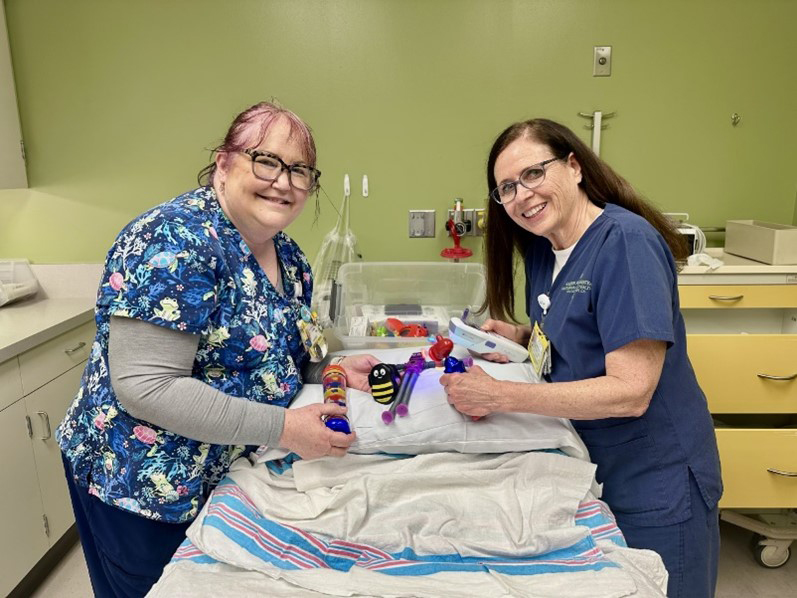
Mary Klingler and Linda Laney with distraction tools

Distraction techniques in the pediatric population

Imagine a world where getting a shot or an IV wasn’t such a scary experience for our little patients.

We noticed that many children felt anxious, upset, and even experienced more pain during these procedures. A big reason for this was the lack of fun and engaging ways to distract them.

Our unit’s distraction tools were a bit limited. We dreamed of having a whole toolbox filled with exciting things like bubbles, pinwheels, those cool Buzzy Bees, maybe even some virtual reality headsets. Our Unit Practice Council (UPC) got really excited and did some research to see if distraction could actually help our young patients. And guess what? They found that it could make a big difference.

Our goal was simple: create a more positive and less stressful experience for everyone. And the distraction toolbox has been a huge success in helping our nurses achieve that.

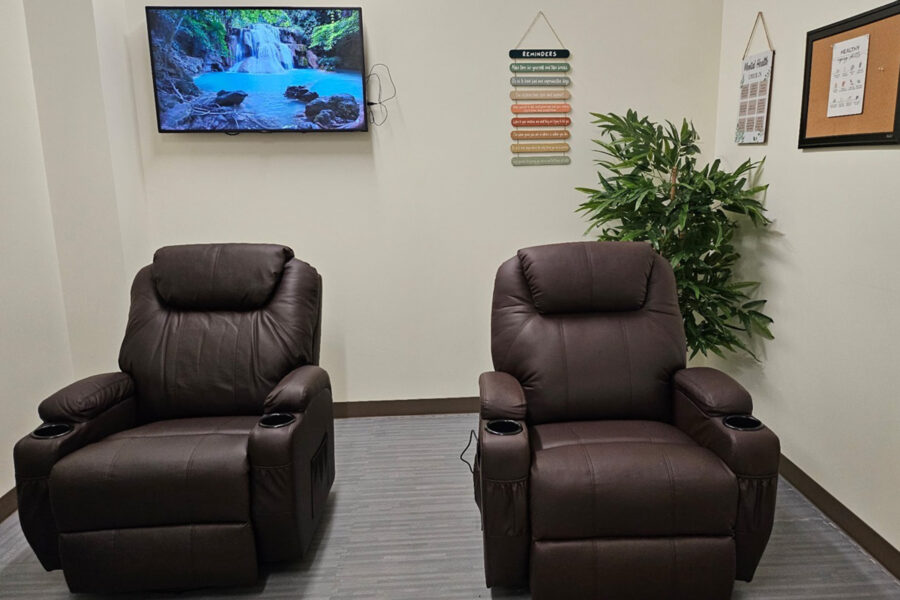
Zen room with 2 lounger chairs

Introducing a wellness room designed by frontline staff using evidenced based practice: Caritas Zen Room

The Ambulatory Surgery Unit (ASU) team demonstrated a commitment to RN wellness by actively engaging in an Evidence-Based Practice (EBP) process. Leveraging the art and science of nursing, they developed an SBAR and project plan that prioritized RN well-being while integrating the principles of Caring Science – specifically, Caritas processes – into their intervention.

The team proposed the creation of a dedicated meditation room. This tranquil space would serve as a quiet retreat for staff, facilitating relaxation, stress reduction, and improved mental health. By embracing Watson’s Human Caring Theory, the initiative aimed to foster a caring environment where staff could prioritize self-care and support each other.


Enhancements

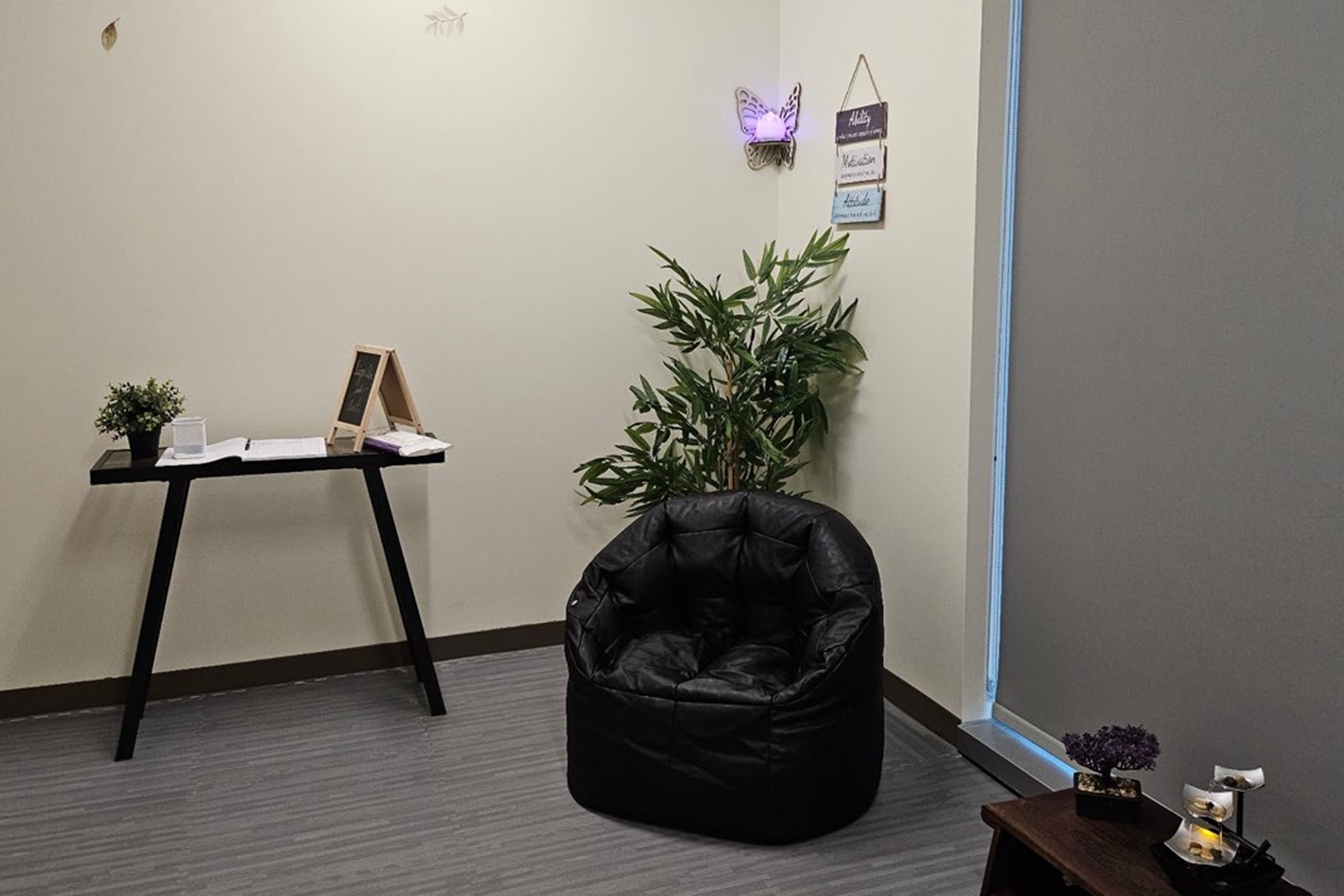
The Zen Room will serve as a dedicated space for relaxation and meditation, aimed at reducing stress and anxiety among health care providers. Equipped with calming essentials, the room will create a soothing atmosphere conducive to mental rejuvenation. By promoting self-care and emotional balance, the Caritas Zen Room aims to improve staff morale, foster stronger team relationships, and ultimately enhance the quality of patient care. Studies have shown that meditation has healing effects and is effective in stress reduction, the promotion of self-healing, while building trusting working relationships.


Testimonials

“The Zen Den has been a relaxing retreat from a stressful day. Having a room for a mental break to focus on myself is an option I’ve never had available in my workplace. It has provided quiet time during a busy day that I am grateful for. The room is clean, smells great, and has a relaxing atmosphere. Thank you to the team that envisioned this space for all of us to unwind and take care of ourselves which helps us provide better care for others.””

—Ashley Silva, RN, Dublin ASU – Recovery

“I am so thankful for the opening of our Zen Den here in Dublin. This is the first time in 21 years with Kaiser that we have actually had a room to ‘chill’ in. After a particularly busy day, I was able to sit and relax in the Zen room. In 15 min I actually fell asleep to the calming music, the dimly lit room and a super comfortable recliner chair. It recharges me every time I use it, and I have encouraged others to take advantage of it as well. Thank you, Angeli and Kaiser for this relaxing zone that is much appreciated.”

—Kelley Brandley, RN, Dublin ASU – Recovery

“I appreciate the Zen Den for its accessibility so I can use it during my breaks. I do stretches and exercises to avoid workplace injury.”

—Jeffrey Wilson, Sr. Surgical Tech, DUB ASU – Outpatient Surgery

“I love it. It is quiet. Having soft soothing music and dimmer lights would be great.”

—Maryann Quebral, RN, Dublin ASU – Outpatient Surgery

“Room smells nice, Chairs are comfortable, good for a nap.”

—Ryan Stormes, RN, Dublin ASU – Outpatient Surgery

Corner of the new zen room with a lounge chair
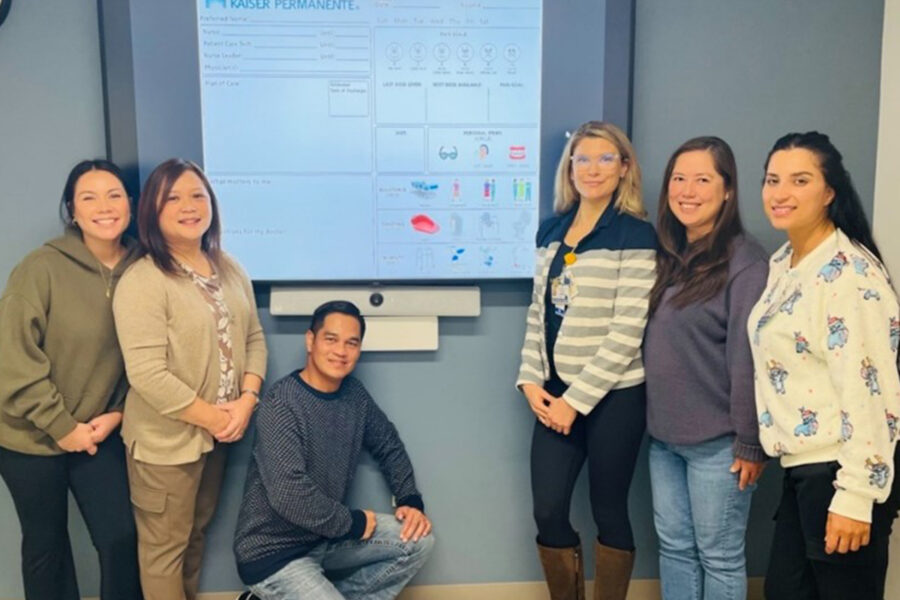
1North nurses next to the care board

Redesigning communication boards: A nurse led intervention

In 2024, we discovered something exciting. Our patient population had grown to include a much wider variety of medical conditions. This presented an incredible opportunity for our unit to embrace innovation while staying true to evidence-based practice (EBP).

We started with a simple yet impactful change: relabeling the communication boards from “What do you want from us?” to “My Goal.” This subtle shift immediately made things feel more patient-centered, and we were thrilled with the results.

To further enhance this approach, we embarked on a redesign of our communication boards. Our goal was to create a board that truly reflected the “My Goal” concept and aligned perfectly with EBP.

To ensure a smooth transition and maximize the impact of these changes, we prioritized staff education. By empowering our team with the knowledge and tools to effectively use the new boards, we aimed to cultivate stronger patient-provider relationships and create an even better patient experience. We’re so excited about the positive impact these changes will have.

1 North Unit Base Council members

Alcasabas, Sophia, BSN, RN
Alesna, Lerma, BSN, RN
Fowler, Jacquelyn, BSN, RN
Frenklakh, Kathryn, BSN, RN
Hakimzada , Zohra, BSN, RN
San Pedro, Melvin, BSN, RN
Zhao, Jiaxin, BSN, RN

An Emergency Department Ready Room at the WCMC

Improving emergency department room readiness using process improvement and technology

Being able to room patients in a timely manner was a consistently difficult endeavor, especially during peak hours of the day. Fragmented communication and lack of standardization left staff feeling frustrated and created unnecessary delays for our members. By utilizing visual management, tightening communication amongst the care team, and streamlining our process for room readiness, we were able to facilitate a better patient experience as well as decrease care delays. Standard work was written by the team that included clear identification of the type of room clean needed, an expectation for specific room cleans, and an escalation pathway for barriers. Room readiness is a critical component of the care provided in this department because it facilitates timely intervention.

By improving room readiness, overcrowding of the halls and the internal waiting room is limited and we can ensure efficient flow through the phases of care. Our sub-wait area nurses felt frustrated and burdened by the lack of communication, coupled with the need to get members to treatment rooms. Setting clear expectations for the timing around cleaning rooms, coupled with creating visual management, has alleviated some of the pressures nurses feel when they can’t get their patients where they need to be.


“Ready Room”

We used to struggle getting patients into rooms quickly, especially during busy times. Communication and inconsistent processes caused delays and frustration, but we knew there must be better way.

This project was multidisciplinary in that it included nurses, techs and our unit assistants to make the changes occur. Our UPC chair Alisa Bowron, RN and UPC member Joel Blevins, RN led the event. Before, communication did not exist and with the span of our emergency department it is necessary to have efficient, reliable communication about room readiness for throughput. Before there was no consistent communication in the ED manager in healthconnect which led to frustration, delays and at times arriving patients to dirty rooms. In the prior state the room would just show a brown or white delineation in healthconnect and it was not clear to the care team rooming patients whether the room was clean or dirty. The changes that the team implemented and carried out have made a huge difference in our ability to provide timely, efficient care and seamlessly transfer patients for intervention.

To improve, we:

  • Improved communication: We started talking more clearly and used visual tools to track progress.
  • Streamlined the process: We created a clear system for getting rooms ready.

This helped us:

  • Reduce patient wait times.
  • Improve the flow of care.
  • Reduce stress for our nurses.

By working together and improving our processes, we’re providing a better experience for our patients.

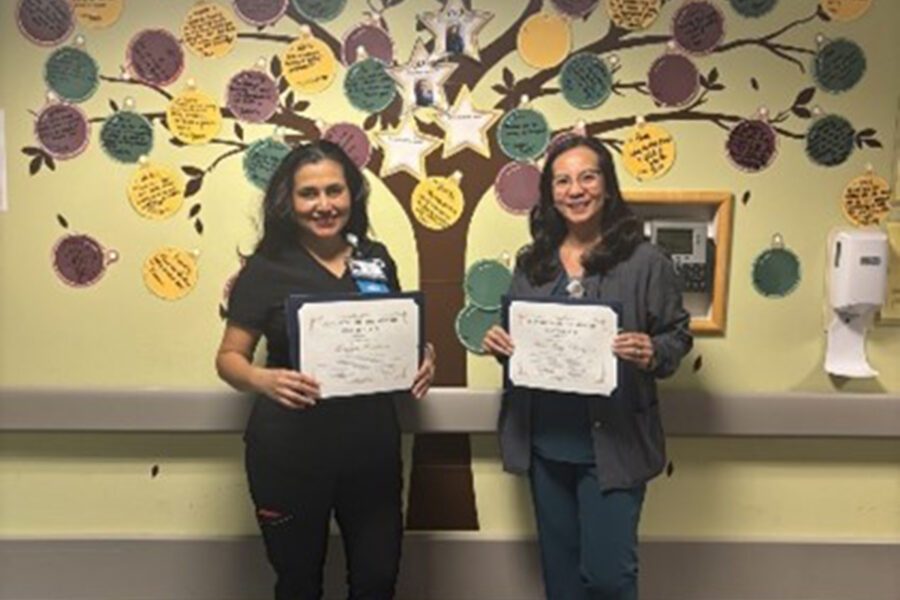
Merlyn and Aura in front of the gratitude tree.

The gift of gratitude through the lens of team recognition

On 3 South B (3SB), we believe that teamwork and collaboration are not merely buzzwords, but the bedrock of quality patient care.

Our Unit Practice Council (UPC) wanted an innovative and fun way to recognize our team contributions, thus, the gratitude tree was planted. Recognition has a lasting impact on morale. In response to this, we introduced the Gratitude Tree initiative as a heartfelt effort to bring positivity and support back into our work environment.

As in Rejuvenating Meaningful Recognition Through Shared Governance, formal recognition of nurses’ contributions can profoundly improve job satisfaction, while lifting both nurse and patient morale.1

The Gratitude Tree, though simple, became a powerful way to encourage genuine RN-to-RN recognition, build collaboration, and nurture the sense of teamwork that’s so vital to the heart of care. Through this initiative, we hoped to not only express our deep appreciation for each other but also rekindle a sense of unity and shared purpose. This initiative reminds us of the incredible strength we have when we support one another.

1 APA: Wojnar C. Rejuvenating Meaningful Recognition Through Shared Governance. J Nurs Adm. 2023 Oct 1;53(10):498-499. doi: 10.1097/NNA.0000000000001324. PMID: 37747172.

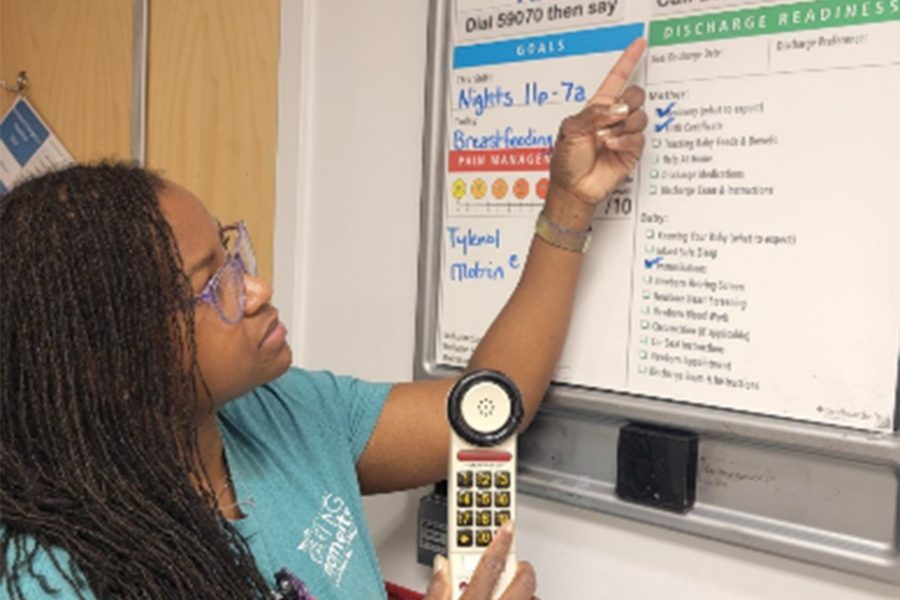
Alisha Thompson pointing to care board

An innovative approach to communication using Vocera instruction for Mother-Baby Unit patients

A recent technological upgrade impacted critical nursing workflow and responding to our patient’s needs. This new change inspired our nursing team to design and trial new workflows to communicate with our patients using new technology. With Vocera, patients can now connect directly to the care team using the new Genie feature.

This new feature allows patients to directly contact their nurse. We’ve also added clear instructions to the journey home board and welcome letter.

The care team in Mother-Baby Unit (MBU) is thrilled to use this innovative approach to communicate with patients.

Achievement featured image placeholder

Santa Rosa nurses soar to new heights in their practice

Kaiser Permanente nurses demonstrated their commitment to creating and sustaining a culture of excellence by advancing their professional practice through earning advanced degrees, moving to the next level of the clinical ladder, obtaining national board certification, and graduating from the nurse residency program.

Career Ladder advancements

Allison Hazel SNIV OR
Angela Alvarez SNIII Med-Surg
Adelayda Arteaga SNIII Labor and Delivery
Reynaldo Bano SNIII Emergency Department
Angela Bee SNIII Home Health Department
Keith Beslee SNIII Med-Surg
Karlene Bialoblocki SNIII Outpatient Pediatrics
Emily Black SNIII Med-Surg
Tristan Brandmeyer SNIII Med-Surg
Sara Butcher SNIII Recuperative Skills
Katie Campos SNIV Med-Surg
Amy Cantrell SNIII Coordination of Care
Leah Bella Cardona SNIV GI
Rebecca Clark SNIII ICU
Kelly Collins SNIV Wound Care
Danielle Cooley SNIII Inpatient Pediatrics
Nerissa Coralde-Pagulayan SNIII Coordination of Care
Deanna Crudo SNIII Emergency Department
Susan Degan SNIV Outpatient Pediatrics
Michelle Demoss SNIV Labor and Delivery
Kelli Dempsey SNIII Home Health
Talia Dougan SNIII Coordination of Care
Hannah Egge SNIV Med-Surg
Lauren Eklund SNIV ICU
Daniel Estep SNIII Oncology
Tara Fairchild SNIII Med-Surg
Anna Gappi SNIV ICU
Rheeta Gomez SNIII Med-Surg
Monica Green SNIII Inpatient Pediatrics
Deanna Haas SNIII AFM
Jennifer Heinly-Uricoechea SNII Postpartum
Jennifer Hewitt SNIII GI
Tarja Hirvonen SNIII Home Health
Kate Howe SNIII Med-Surg
Ben Huggins SNIV ICU
Diana Hyatt SNIV Inpatient Pediatrics
Nora Iroz SNIV Medical imaging
Samantha Jackson SNIV Med-Surg
Mary James SNIII Emergency Department
Se Jang SNIV OR
Barbara Keefer SNIV Outpatient Pediatrics
Alea Kelleher SNIII Outpatient Pediatrics
Tami Kennedy SNIII ICU
Laura Landon SNIII Home Health
Mary Lapeere SNIII Coordination of Care
Katy Larkin SNIII ICU
Trang Le SNIII Oncology
Amber Lichau SNIII GI
Snjezana Lonac SNIII Med-Surg

Sara Lopez SNIV GI
Sharon Love SNIV Postpartum
Kayla Maomanivong SNIV Labor and Delivery
Amanda McNally SNIII Labor and Delivery
Cassondra McWilliams SNIII ICU
Jemima Menke SNIV ICU
Ann Meroney SNIV Labor and Delivery
Eve Metro SNIII Emergency Department
Melissa Michaud SNIV OR
Julie Michelena SNIV Labor and Delivery
Karen Olson SNIV Outpatient Pediatrics
Mary Opatz-Neustadt SNIV ICU
Melissa Osmon SNIII Home Health
Diana Owens SNIII Oncology
Rebecca Patterson SNIII Labor and Delivery
Andreya Pels SNIII ICU
Beth Philp SNIII Labor and Delivery
Deborah Ponzo Inpatient Pediatrics
Lucinda Reyes SNIV Recuperative Skills
Alma Rosenstein SNIII Oncology
Geidre Roth SNIII Recuperative Skills
Sarah Royall SNIV Outpatient Pediatrics
Michael Sullivan SNIV Emergency Department
Ailyn Tan SNIV ICU
Cathie Taurian SNIV Inpatient Pediatrics
Wendy Sue Taylor SNIII Wound Care
Kelly Thomas SNIII Med-Surg
Suzanne Tolksdorf SNIII Recuperative Skills
Danielle Torri SNIV Med-Surg
Lori Tyler SNIII Inpatient Pediatrics
Lucila Udarbe SNIII ICU
Vincent Umscheud SNIV Cardiology
William Vanderlind SNIII ICU
Katrina Viduya SNIII Home Health
Brenda Villagomez SNIII Med-Surg
Janet Voss SNIV Oncology
Melissa Wayne Rudy SNIII Postpartum
Emilie White SNIII Labor and Delivery
Camron Whitley SNIV ICU
Nanci Williams SNIV Emergency Department
Lisa Winkler SNIV Labor and Delivery
Kimberly Winn SNIV Postpartum
Angela Wynne SNIII Med-Surg

Scholars Academy Evidence-Based Practice Program graduates

Selam Gebreslassie, MSN, FNP, RN
Beth Philp, BSN, RN
Teresa Buhagiar, MS, RN, GCNS-BC, ACHPN, CEN, NPD-BC
Christina Andrade, MS, APRN-CNS, CCRN, CNRN
Katrina Viduya, MSN, RN
Rebecca Taylor-Ford, DNP, RN, NE-BC

Gudrun Reiter-Hiltebrand, DNP, RN, CNL, RNC-NIC, C-ONQS, C-ELBW
Amy Cantrell, BSN, RN
Kate Howe, BSN, RN
Laila Smith, BSN, NC-BC
Octlan Martinez Libreros, RN, Charge Nurse III
Kimberly Winn, MSN, RN, IBCLC, CNE, RNC-MNN

Leadership featured image placeholder

Santa Rosa Voice of Nursing Coordinating Council

Tara Fairchild, RN, CMSRN, SNIII

Chair
Tara Fairchild, RN, CMSRN, SNIII

Tara Fairchild has worked at Kaiser Permanente Santa Rosa Medical Center for 20 years and was its first ever DAISY award honoree in 2009. Fairchild has led the Voice of Nursing (VON) Core Committee for the last 3 years and was instrumental in the creation of the VON Coordinating Council which launched in March of 2024.

In January 2024, the Excellence Enculturation Committee (EEC) decided to rebrand itself, changing its name to “Voice of Nursing” (VON) to better reflect the committee’s purpose and focus. The committee recognized the need to further develop and establish a strong foundation for Professional Governance within the organization.

In February 2024, VON initiated a restructuring of its professional governance with a “kick-off” education session. This session aimed to educate all Unit Practice Council (UPC) co-chairs and establish the foundational principles of Professional Governance.

Following the “kick-off” session, the team launched the “VON Day,” an 8-hour Professional Governance model. This event brought together all Unit Practice Councils (UPCs) and other nurse-led committees to work simultaneously, fostering interdepartmental collaboration and the sharing of best practices.

Additionally, the VON committee established the “Coordinating Council,” composed of all UPC chairs and co-chairs. This group reports on the accomplishments of each committee and identifies any support needed for their success. It also serves as the governing body for Professional Governance, overseeing the identification of educational needs and opportunities to strengthen the work of nurse-led teams.

Throughout the restructure, we successfully developed UPCs in every nursing unit across the hospital and the Continuum of Care, including Patient Care Coordinators, Home Health, Recuperative Skills, Perioperative Services, and Inpatient Palliative Care.

Back To Top