Skip to content
Transformational-Leadership-Culture-Crew-Cart-w-Aphrieka-SHT

Culture C.R.E.W. (Cultivating Resilience, Engagement, and Well-Being)

Kaiser Permanente’s Central Valley Area (CVA) is committed to strengthening the emotional and intellectual engagement of its workforce, with a focus on transforming workplace culture.

Culture C.R.E.W. is the overarching People strategy central to our culture transformation. The approach and deployment of intentional initiatives, activities, and events are directly aligned with the organization’s mission, vision, values, and strategic priorities. Its purpose is to strengthen the emotional and intellectual commitment of Kaiser Permanente’s Central Valley workforce through thoughtfully designed, purposeful experiences. By fostering deeper connections to our organizational objectives, the strategy promotes a culture of transformation, driving greater engagement, empowerment, and overall well-being within the workplace. This is a grassroots strategy collaborating with frontline employees honoring our Speak Up culture.

One of the key initiatives is the creation of an Employee Engagement Committee, comprised of at least 80% frontline staff, that will help drive initiatives reflecting the organization’s Service Values and its Culture of Health initiatives, including Rise & Renew, Live Well Be Well, Community, Equity, Inclusion & Diversity, Highly Reliable Organization, and Workplace Safety. A focus on promoting joy at work and fostering a supportive, inclusive environment is also prioritized.

While the Culture C.R.E.W. Thank You Rounds play a crucial role in advancing the broader objective of creating an environment where employees feel heard, valued, and included. They offer a dedicated space for pause & play, feedback, sharing updates on key initiatives, and reinforcing organizational priorities. The insights gained from these interactions are instrumental in shaping decisions that drive improvements in employee satisfaction, engagement, and performance that drive engagement and position CVA as the best place to work, fostering an environment of well-being and fulfillment, and ensuring CVA is a place where employees want to work, providers want to practice, and members want to seek care.

The expected outcomes include recruiting and retaining top talent, fostering an inclusive and diverse work environment, and promoting a culture of health. The initiative aims to create a supportive atmosphere where employees feel valued, contributing to Kaiser Permanente’s ability to provide world-class care and service to the communities it serves.

Aphriekah Duhaney-West, MSN, MBA, FACHE, PHN, CPPS
Senior Vice President and Area Manager

Goal milestone featured image placeholder

Implementation of Kaizen Principles reduces hospital-acquired pressure injuries

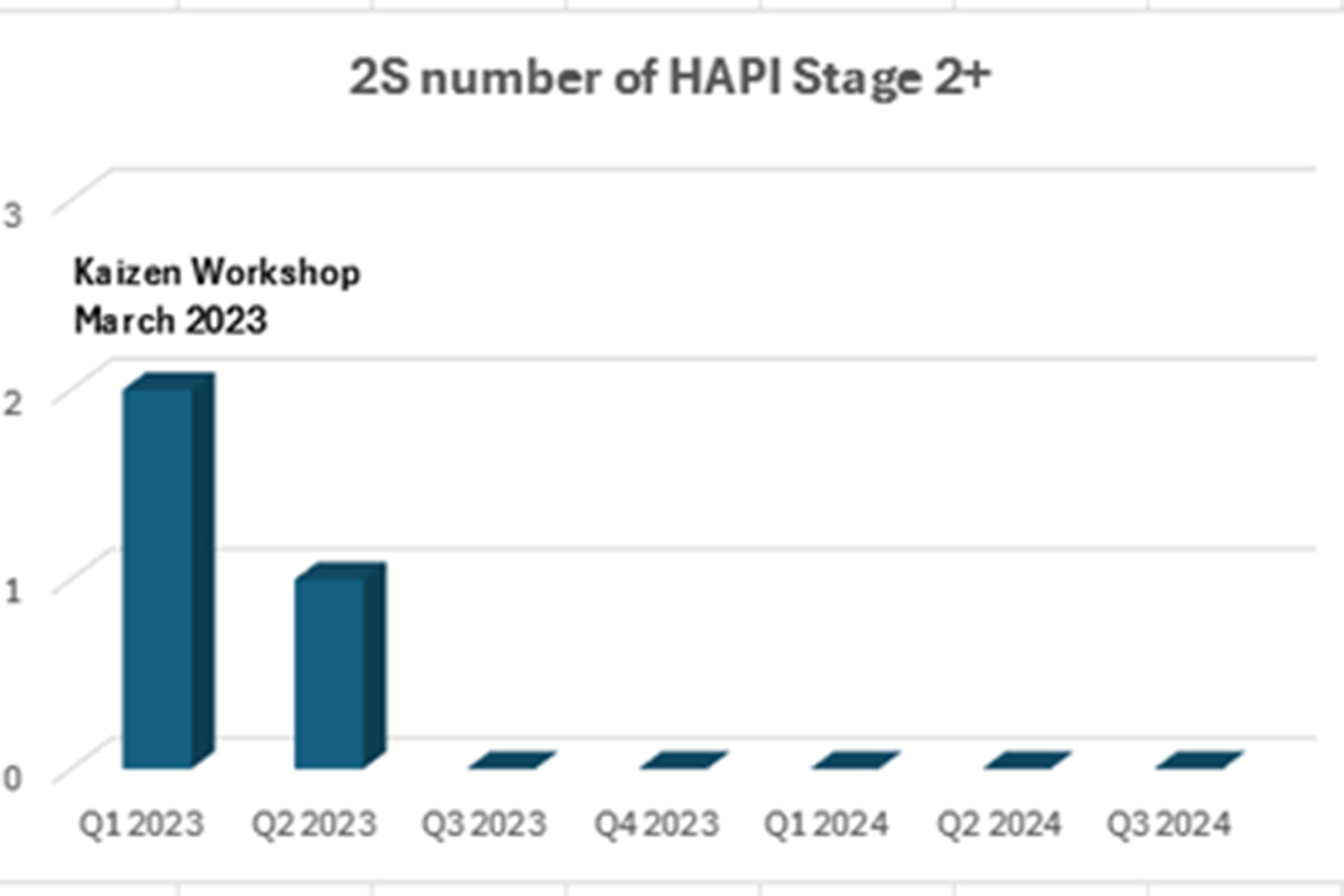
One of the Medical-Surgical and Telemetry departments, 2 South, was selected to pilot the Hospital Acquired Pressure Injuries (HAPI) reduction effort due to its high rate of HAPI stage 2 and above. A core team was formed to attend the HAPI Kaizen two-day workshop in March 2023. The HAPI Kaizen was the selected approach as it embodied the principles of Highly Reliable Organization (HRO), Human Centered Design and Performance Improvement involving frontline clinical nurses at the center of the design process in creating ideas and standard work solutions to prevent HAPI.

The workshop covered cluster analysis of opportunities and gaps in the system. Initial findings showed that patients missed every two-hour repositioning, inadequate heel protection, improper bed, missed two RN skin checks, delayed wound consultation, and inadequate moisture control. Several performance improvement tools were introduced to equip the nurses for co-designing ideas. These include process mapping, Ishikawa fishbone diagram, brainstorming and Plan-Do-Study-Act.

A significant outcome of the initiative is the 55% reduction in stage 2+ HAPIs compared to baseline rates, achieved as of November 18, 2024. A notable success is observed in the pilot inpatient medical-surgical unit, without a single HAPI event, from July 2023 to September 2024. Initial PDSA cycles demonstrated measurable process improvements, including: 1) Increased compliance in turning and skin checks 2) Adherence Monitoring: Utilization of an adherence monitoring tool showed improvements in several critical areas such as malnutrition screening, medical device-related pressure injury prevention, and pressure-reducing bed surfaces.

EO-HAPI-Data

Goal milestone featured image placeholder

Achieving zero catheter-associated urinary tract infection in the ICU

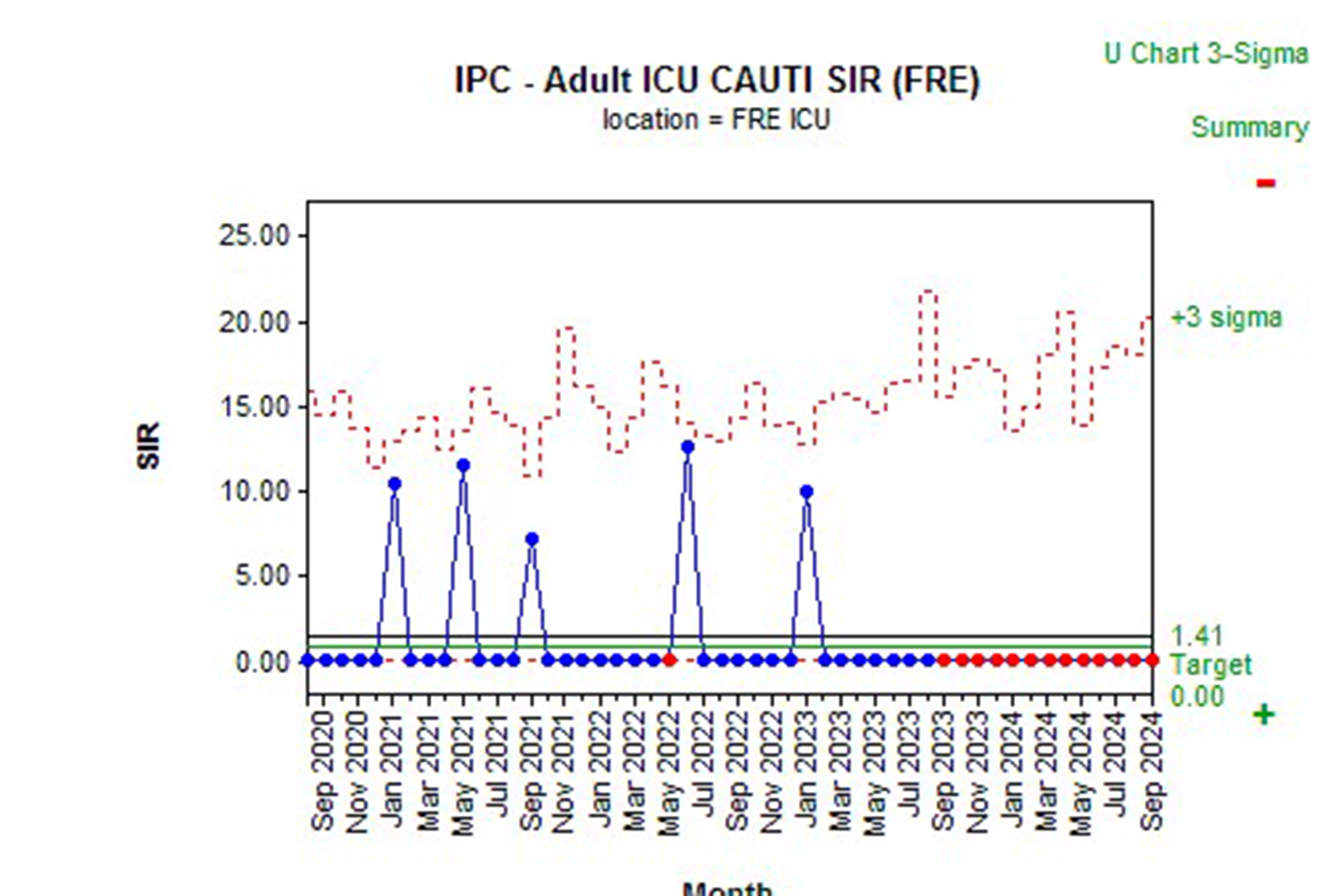
At the Fremont Medical Center ICU, achieving zero Catheter-Associated Urinary Tract Infections (CAUTIs) has been a top priority, driven by strict adherence to the CAUTI prevention bundle. This includes ensuring that urinary catheters are used only when necessary, maintaining proper insertion and care techniques and removing catheters as soon as they are no longer needed.

Our dedicated nursing team plays a critical role in this success, consistently monitoring catheter care, ensuring adherence to infection prevention protocols and advocating for early removal. Daily discussions during Multidisciplinary Rounds (MDRs) focus on reviewing each patient’s catheter status, promoting early removal and ensuring best practices are followed. Leadership support and regular staff education further reinforced these efforts, creating a culture of accountability and vigilance. As a result of this comprehensive approach, the Fremont ICU has proudly maintained a zero CAUTI rate for 2024, significantly enhancing patient safety and outcomes.

FRE-CAUTI graph
Epic-Wound-Rover

Mobile application interface to improve skin assessment

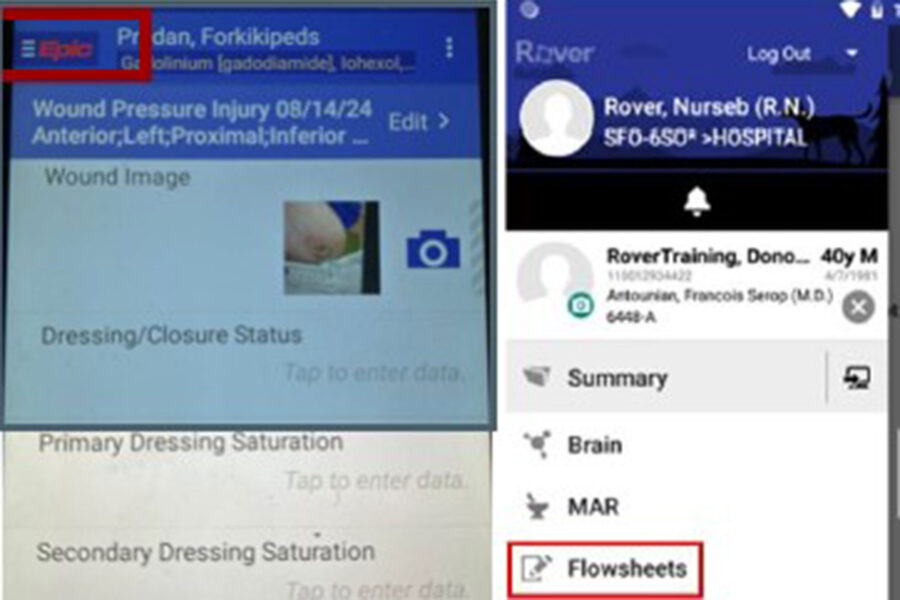
Epic Rover presents a unique ability to document and track wounds via photos directly on a mobile device. The app features advantages including consistent, real time, and accurate wound documentation with measurements, spans the continuum throughout the health system, the integration into the flowsheet and chart to attach photos in health care provider’s notes, and a quick glance at the LDA Avatar for easy visualization of wound location’s on a patient’s body.

“The Rover App is very promising and convenient for nurses to assess and document wounds in the health record while providing patient care,” said Carolina Melendez, BSN, RN, CWOCN, a certified wound care and ostomy expert.

Innovation featured image placeholder

TrackCore improves efficiency

Kaiser Permanente Fremont Perioperative Services implemented TrackCore tissue implant tracking system in June 2024 for tissue implant tracking from loading dock receipt to implantation and follow-up activities post implantation.

TrackCore tissue implant tracking system is a significant step forward in improving efficiency and compliance. It provides automated tracking and inventory control of tissue implants in the Operating Room to help efficiency and cost control. This software is compliant with FDA and Joint Commission standards ensuring that the Fremont Medical Center Operating Room meets regulatory requirements for tracking biologic and non-biologic implants.

This transition enables Intraoperative Nurses to document in one location. KP Health Connect (KPHC) and KPHC documentation are uploaded to TrackCore, eliminating the need for nurse documentation in two systems. This software also has advance features like real time shipment notifications, advanced analytics and integrated RFID tracking to enhance inventory management and patient safety.

Shiny-and-Winchell

KP Cares 2.0

The Kaiser Permanente Fremont Medical Center continues to participate in the KP CARES: Kaiser Permanente Caring Attributes and Resilience to Stress in 2024. The purpose of this study is to 1) assess the effectiveness of the “Enhancing Our Culture of Caring” initiative and its enhanced experiential learning module series by analyzing staff and leaders’ self-assessments of self-care behaviors, evaluating the organization’s caring culture, and measuring the prevalence of compassion fatigue before and after the intervention, and 2) investigate the lived experiences of clinical nursing staff, including leaders.

This study has two primary goals. The first goal is to evaluate self-care, leadership caring behaviors, organizational practices, burnout, secondary traumatic stress, compassion satisfaction, bias awareness, bias mitigation self-efficacy, and bias mitigation practices at baseline, immediately after, and six months post-intervention. This evaluation is based on participation in an experiential education program grounded in Dr. Jean Watson’s Human Caring Theory and the 10 Caritas Processes. The second goal is to gain insight into the lived experiences of clinical staff who have been actively practicing and leading at the bedside during the COVID-19 pandemic.

Winchell Kuttner, DNP, RN, CPHQ and Shiny Thomas, RN, are co-investigators of this qualitative study exploring a curriculum designed to cultivate healthcare professionals educated in resiliency through the Caring Science framework. The study aims to enhance resilience in healthcare ambassadors, preparing them as leaders in Caring Science, HeartMath, and Equity, Inclusion, and Diversity. Key themes identified include self-compassion, mindfulness, burnout, mutual respect, and bias awareness.

My hospital visit folder

Nursing contributions to the Care Experience

At our Fremont Medical Center, Nursing Communication is the area of focus for patient experience as measured by the HCAHPS patient experience survey. The Nursing Communication composite includes Nurses Listen Carefully, Nurses Treated Me with Courtesy and Respect, and Nurses Explained Things to Me in a Way That I Can Understand.

In March 2024, Christopher Neilson, BSN, RN, NE-BC, Chief Operating Officer and Chief Nurse Executive introduced a daily “Golden Hour” from 10-11 a.m. for leader rounding, allowing leaders to connect with patients and demonstrate active listening using Commit to Sit stools in patient rooms. After rounding, the interdisciplinary leadership team holds a debrief to address care concerns and select an exceptional recognition for weekly celebration. The Magnet Care Experience team focused on improving communication tools, including adding patient education handouts to the My Hospital Visit folder. These handouts featured an updated Welcome Letter, detailing what to expect during a hospital stay, and medication information. Additional tools such as pocket amplifiers for hearing-impaired patients and ASL interpreters for deaf patients (with ASL being the sixth most prevalent language) were also implemented. As 11% of patients speak a primary language other than English, visual identification of patients needing interpreters has enhanced care team communication. These efforts contributed to meeting the Nursing Communication organizational goal for the year, with a 9 percentile increase in the benchmark score.

ICU-HAP-Group-Photo

Preventing hospital-acquired pneumonia in ICU

Left to right: Shaun Noronha, MD, Intensivist, Arveena Balu, MSN, RN, ICU Nurse Manager, Lupita Posos, BSN, RN, Arlene Acosta, BSN, RN, Grace Cacacho, BSN, RN, Roshini Sharma, Respiratory Therapist

Hospital-Acquired Pneumonia (HAP) remains one of the most common and serious infections in the ICU, contributing to prolonged hospital stays, increased health care costs and higher mortality rates. However, evidence shows that proactive strategies, including early assessment, patient mobilization and enhanced nurse education, can significantly reduce the incidence of HAP and improve patient outcomes.


Mobilization: A key strategy in HAP prevention

One of the most effective, yet often underutilized, interventions in ICU settings is early and progressive mobilization. Recent studies indicate that even short bursts of early mobilization in critically ill patients can reduce the likelihood of developing HAP. Physiologically, movement helps in preventing Ventilator-Associated Pneumonia (VAP) by enhancing airway clearance and improving overall respiratory mechanics. Importantly, early mobilization has also been shown to decrease ICU length of stay, reduce delirium and improve long-term recovery.

Sedation Assessment and Titration (SAT) and Spontaneous Breathing Trials (SBT) : A key strategy in HAP prevention

At the Fremont Medical Center ICU, reducing HAP has been a key focus, with Sedation Assessment and Titration (SAT) and Spontaneous Breathing Trials (SBT) playing a crucial role. By regularly assessing and minimizing sedation through SAT, we encourage patient alertness and improve respiratory function, which helps prevent complications like atelectasis and aspiration. Additionally, implementing SBTs allows us to evaluate a patient’s ability to breathe independently, improving lung function and reducing reliance on mechanical ventilation. Together, these strategies not only reduce the risk of HAP but also promote quicker recovery, shorter ICU stays, and better overall patient outcomes.

Emmy-Lou-Taguinin

Nurse resident’s journey

Emmy Lou Taguinin, BSN, RN is a proud member of Cohort 7 in the Kaiser Permanente National Nurse Residency Program in Northern California. Originally from Manila, Philippines, Emmy completed her nursing education at Unitek College in Bakersfield, where she earned the distinction of Best in Theory and graduated Cum Laude. A passionate traveler, Emmy enjoys exploring new places and cultures.

As part of Cohort 7, which included seven new graduate nurses, Emmy was one of three nurse residents assigned to 2 North Unit at the Fremont Medical Center. Her preceptors, Shiny Thomas, RN and Salena Bullo, BSN, RN quickly recognized her potential. Emmy regards Shiny as her “Guru” for her leadership and nursing expertise, while Salena’s intuition in guiding new nurses was invaluable. Both preceptors built Emmy’s confidence, and she continues to view them as mentors, friends, and protectors. With their unwavering support, Emmy looks forward to work each day, knowing they are always checking in on her progress.

After completing the program’s 11-week orientation, Emmy accepted a permanent position on the 2-South Unit in Fremont. While she was sad to leave her preceptors, she eagerly embraced the challenge of a new shift and unit, excited to continue learning, especially on night shift. Emmy is deeply grateful for the warm welcome she received from her colleagues in 2-South, her Fremont Nurse Professional Development Specialist, and her Nurse Residency Coordinator. She graduated from the Nurse Residency Program on December 13, 2024.

Jinumol

Earning a master’s degree in nursing

I earned my associate degree in nursing and midwifery from Christian Fellowship Hospital School of Nursing in India. My early work with diverse adult and pediatric patients fueled my commitment to continual learning and providing compassionate, knowledgeable care.

After several years as a frontline nurse, I advanced my education, earning a bachelor of science in nursing from Rajiv Gandhi University of Health Science in India. Over the past 13 years, it has been my pleasure to work at Kaiser Permanente, where my values and dedication to quality care align closely with the organization’s mission. Kaiser Permanente’s commitment to promoting excellence in patient care is reflected in the countless opportunities and support it provides for staff development. Thanks to Kaiser Permanente’s tuition reimbursement benefits, I completed a master’s degree in nursing earlier this year without a substantial financial burden.

I completed my practicum and capstone project under the mentorship of an experienced preceptor at Kaiser Permanente. My capstone project focused on enhancing the patient care experience by improving nurse–patient communication in the perioperative unit through the evidence-based intervention, Commit to Sit. The project outcomes showed positive trends, confirming the value of this approach. Additionally, my role as a magnet ambassador on the Quality Council has enabled me to strive for high-quality care and a positive patient care experience.

Jinumol Thomas, MSN, RN
Patient care coordinator case manager
Kaiser Permanente Fremont Medical Center

Back To Top