Skip to content
A group of Central Valley Nurses

Central Valley nurses soar to new heights in their practice

Kaiser Permanente nurses demonstrated their commitment to creating and sustaining a culture of excellence by advancing their professional practice through earning advanced degrees, moving to the next level of the clinical ladder, obtaining national board certification, and graduating from the nurse residency program.

Nurse Residency graduates

Alexis Castro, RN
Erica Gaubatz, RN
Gurinder Kahlon, RN

Bani Solano-Tovar, RN
Alyssa Trejo, RN
Farhad Waziri, RN

Career Ladder advancements

Clinical Nurse 3

Lorena Valencia-Blake, RN
Ashley Aceves, RN
Christina Akinnusotu, RN
Anthony Alberto, RN
Sandra Alves, RN
Melanie Amentin, RN
Roselia Arce, RN
Jan Aronson, RN
Celia Arzate, RN
Kaleigh Balan, RN
Melissa Barcelos, RN
Matthew Bethancourt, RN
Anil Biviyodavid, RN
Roberta (Bobbie)Reed, RN
Maijil Brunet, RN
Prince Buttar, RN
Mandeep Chahal, RN
Sya Chuon, RN
Patrick Collins, RN
Valerie Cornwell, RN
Gary Correria, RN
Corey Cortez, RN
Neal Cudal, RN
Diana Dueck, RN
Amie Edwards, RN
Maria Eloisa Mangalindan, RN
Kimberlee Fedorko, RN
Michael Garcia, RN

Waseem Gheith, RN
Rajveer Gill, RN
Amy Glass, RN
Melanie Green, RN
Deborah Gunn, RN
Kudzai Gwasira, RN
Jacob Hammond, RN
April Harvey, RN
Sarah Hawthorne, RN
Chelsey Jerner, RN
Tenzin Kajioka, RN
Mandeep Kaur, RN
Prabhdeep Kaur, RN
Kamaljeet Kaur, RN
Ramanjot Kaur, RN
Gurvinder Kaur Grewal, RN
Jatinder Kaur Singh, RN
Penny Keller, RN
Charleyne Khamasi-Soomalan, RN
Rebecca Longoria, RN
Andrew Luera, RN
Gabrielle Luna, RN
Amandeep Mandahar, RN
Jennifer Mande, RN
Manix Mathew, RN
Gina McCay, RN
Danielle Parks, RN
Teresita Pizarro, RN
Amanda Polugar, RN

Central Valley nurse residents in the Sim lab.

Supporting the future of nursing

Mentoring is a hallmark of professional practice and transformational leadership that inspires, empowers, and develops leaders at all levels of nursing. Several nurse leaders supported the future of nursing by serving as mentors to nurses who are new to their practice.

Mentors

Stephanie Rangel, RN
Shanelle House, RN

Terrie Hemman, RN
Shayna Gastellum, RN

Mentees

Christopher Navalta, RN
Lucia Paniagua, RN

Kristie Silva, RN
Susan Thimon, RN
Ashley Weber, RN

Empirical-Outcomes--VIDA-Photo

VIDA (Very Important Discharge Appointment)

As we move forward on our journey to becoming a Magnet-designated hospital, VIDA stands as a testament to the innovation and dedication of our Mother Baby nurses. Spearheaded by our nurses and rolled out in the NCAL region, this project marks an important milestone in our commitment to excellence. 

Planning for VIDA began in November 2022, and we proudly launched it on March 28, 2023. This initiative, conceived and executed by the Mother Baby team and nurses, is focused on efficiently discharging eligible mothers and infants before 11 a.m.  

Our vision was clear: We aim to empower new, healthy moms to return home sooner, facilitate better rest, minimize the risk of hospital-acquired infections, and enhance the overall recovery experience in a comfortable home setting. 

The mother baby workgroup began the project by determining the eligible patients and establishing a Vida tracker. After identifying the eligible patients and setting up the tracker, the work group members-initiated education sessions for the Assistant Nurse Manager/ Relief in higher class, and staffs about the changes and the GO-LIVE date. Nurses were actively involved in the project, which helped us design and evaluate processes for improvement. Throughout this process, we maintained a strong focus on patient safety and upholding the highest standards of quality care, which are our top priorities. 

VIDA has also strengthened collaboration across various departments, including OBs, pediatricians, labs, hearing screeners, and HIM, fostering a culture of teamwork that drives success. 

The results speak for themselves: from January to October 2024, we’ve achieved significant progress in our goal of 80% of discharges occurring before 11 a.m.  

This is a remarkable success story for the Mother Baby department, and we are proud of our achievements.

Emperical Outcomes VIDA Graph

5 nurses smiling in the hallway

Maternal Fetal Triage Index

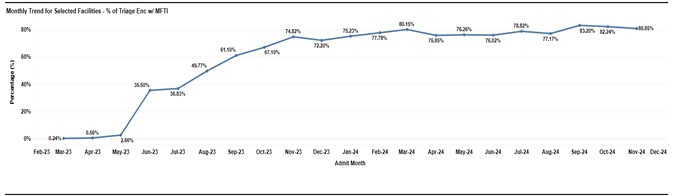
To ensure our patients are seen in a timely manner and align with the latest evidence-based practices, implementing the Maternal Fetal Triage Index (MFTI) is a crucial step in enhancing patient safety and optimizing obstetric care. In May 2023, we began our MFTI journey by educating staff on this evidence-based framework, highlighting its role in standardizing the assessment of maternal and fetal conditions upon admission. The core triage team was instrumental in leading and facilitating this education.

The MFTI framework prioritizes patients using exam flags, with Priority 1 marked in red and ascending numerically through 2, 3, 4, and 5. These visual cues streamline the triage process, ensuring patients are assessed and treated according to their clinical needs. To support the transition, experienced triage nurses and core triage team members provide guidance and oversight for 60 to 90 days following the go-live date.

Successful implementation of the MFTI requires collaboration among all team members, including RNs, midwives, physicians, and unit assistants, to ensure consistent application of the tool. Key strategies include establishing clear protocols, conducting simulation-based training, and integrating the MFTI framework into electronic health records to improve usability and compliance.

Continuous monitoring of outcomes, along with periodic reviews and feedback, is essential to refine the process. By prioritizing timely identification of high-risk conditions, the MFTI improves resource allocation and ensures patients receive the appropriate level of care promptly. This initiative underscores our commitment to advancing patient safety and delivering high-quality obstetric care.

At Modesto Labor and Delivery, we have successfully embedded the MFTI process into our practice. When we first began this journey, only 0.24% of our MFTI scores were recorded. Recent data reveals significant progress, with 80.85% of our scores now being documented, demonstrating our dedication to continuous improvement and excellence in patient care.


Emperical Outcomes Maternal Fetal Triage Graph

Empirical-Outcomes-Fall-Prevention-RIE

Fall Prevention Rapid Improvement Event (RIE): Transforming patient safety

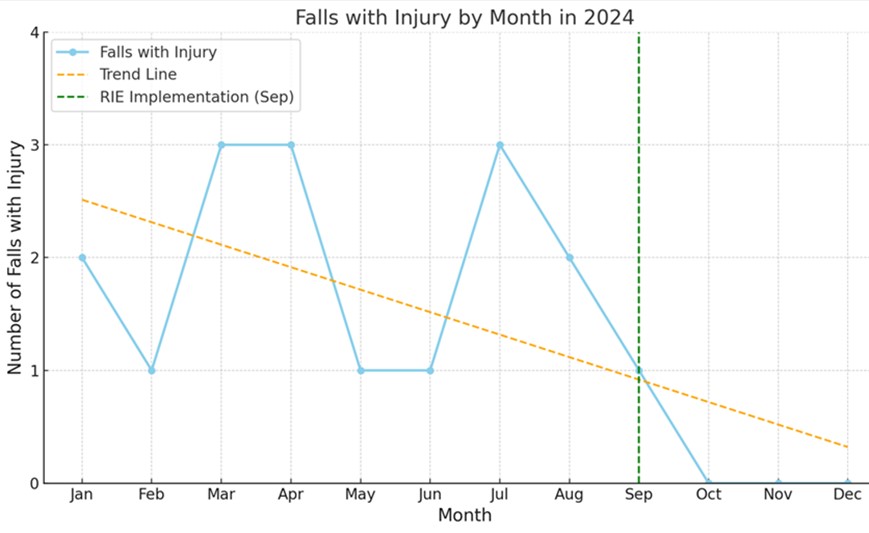
In September 2024, the Fall Prevention Rapid Improvement Event (RIE) marked a transformative milestone in patient safety at Kaiser Permanente Modesto Medical Center. Before this initiative, the Medical-Surgical Units had recorded 13 falls with injury year-to-date, underscoring the urgent need for action. Falls posed significant risks to patient recovery, impacted care quality, and highlighted the necessity for systemic improvements. Under the dedicated leadership of Lorry Quintero, MSN (Clinical Adult Nursing Director), and Sameer Khullar, DNP (Lead Quality Nurse Consultant), the RIE brought together an interdisciplinary team led by frontline nurses, to implement lasting solutions.

Through root cause analysis, the team identified key contributors, including inconsistent rounding practices, delayed responses to call lights, and environmental hazards like cluttered pathways. Using the Plan-Do-Study-Act (PDSA) framework, they introduced standardized hourly rounding to meet patient needs proactively, a “No Pass Zone” to ensure timely assistance, and targeted environmental improvements, such as decluttering and labeling mobility aids for easy access. These interventions created a culture of accountability and patient-centered care.

The results were extraordinary. Since the RIE, the Medical-Surgical Units have reported zero falls with injury, a remarkable improvement from the 13 incidents recorded earlier in the year. The accompanying graph vividly illustrates this steep decline, showcasing the sustained impact of the interventions. This success underscores the power of collaboration and innovation, led by strong, focused leadership and a dedicated team.

The Fall Prevention RIE has set a new standard for patient safety at Kaiser Permanente Modesto Medical Center and serves as a model for future initiatives. Through collaboration, data-driven strategies, and an unwavering focus on excellence, this initiative showcases that transformational change is both achievable and enduring.


Emperical Outcomes Falls RIE Graph

A group of nurses from the Maternal Child Health Team

Lactation: A cornerstone of excellence in mother-baby care

Our Mother Baby department proudly ranks among the top three in the NCAL region and is recognized for delivering exceptional lactation support. On November 25, 2021, we launched the Donor Breast Milk program in the NCAL region, piloting a groundbreaking initiative that underscores our unwavering commitment to comprehensive feeding solutions for our babies. This program thrives thanks to our dedicated lactation consultants and Mother Baby nurses, whose tireless efforts significantly enhance the health and well-being of mothers and newborns alike.

Our Mother Baby Lactation Workgroup plays a crucial role in our unit’s outstanding success. We provide extensive breastfeeding support and education for new mothers, offering expert guidance to initiate and sustain lactation. Our advocacy for optimal infant nutrition addresses challenges like poor latch, sore nipples, and low milk supply with proficiency.

We take pride in offering around-the-clock lactation support, empowering mothers to navigate their breastfeeding journey confidently. Our devoted team ensures effective feeding for babies, maximizing the countless benefits of breastfeeding for both mother and child and promoting their ability to thrive.

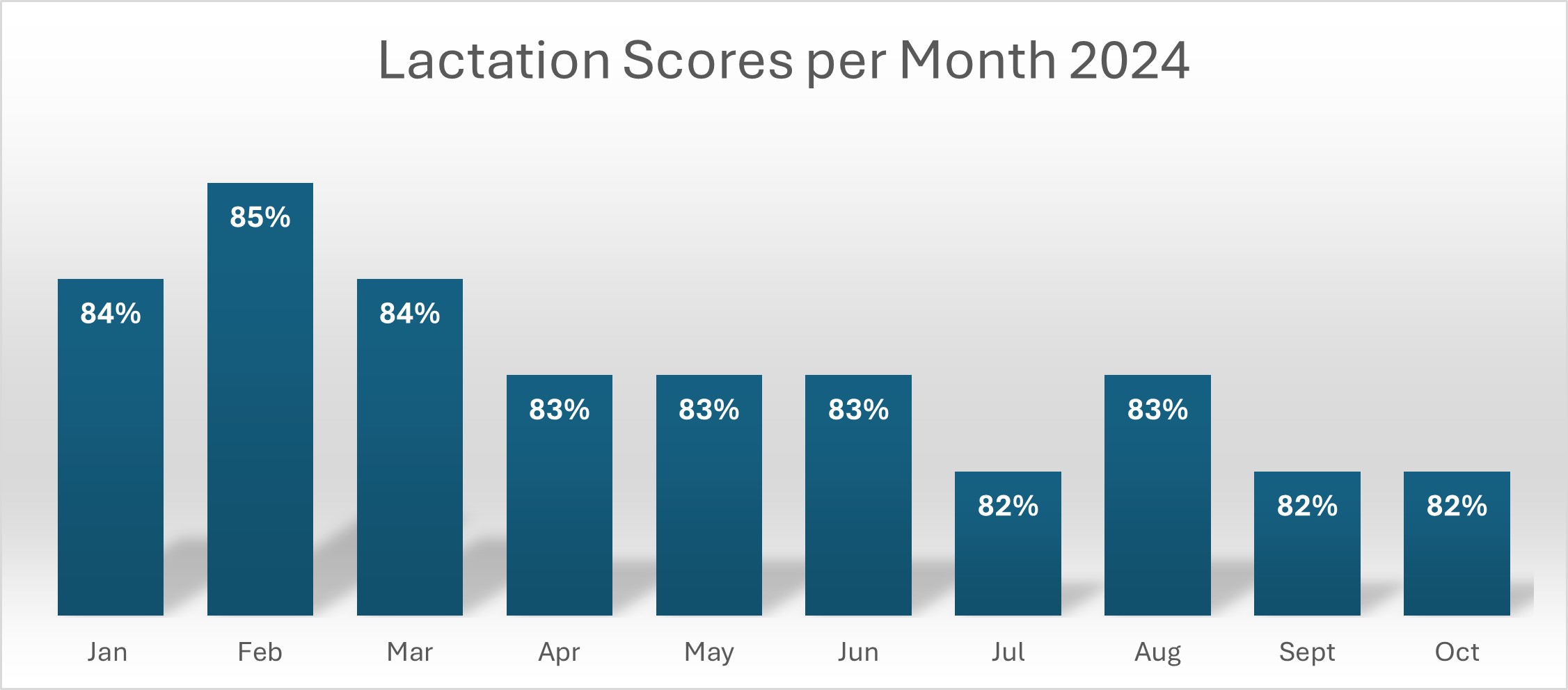
Through strong teamwork and a steadfast commitment, we profoundly impact the families we serve, solidifying our leadership in lactation care. Our goal is to maintain an 80% success rate in lactation metrics, and from January to October, we not only achieved this goal but consistently exceeded it, showcasing our relentless pursuit of excellence in lactation support.

Empirical Outcomes Lactation Cornerstone of Excellence Graph

A group of pediatric nurses

Strategic growth and excellence in pediatric care: Ensuring leadership in the Central Valley

To secure market leadership and provide comprehensive care for an anticipated 545,000+ members by 2034, the Central Valley Area (CVA) must invest strategically in primary, specialty, and acute care services. Focused growth in the southeast quadrant of Northern California will address health care and geographical disparities, ensuring equitable access to high-quality care.

The Central Valley Area is Kaiser Permanente’s largest planned service area by 2033, and the strategy aims to deliver exceptional care through clinical excellence, a strong organizational culture, and an engaged workforce. Modesto, with the second-largest patient population, requires a consistent continuum of care to retain members, particularly mothers, whose decisions significantly influence family health care choices.

Recent pediatric satisfaction trends are promising, with October results showing an 85.7% “Top Box” recommendation rate, the highest in the region. This success reflects a commitment to excellence and prioritizing patient and family care. Leadership rounding from Monday to Friday has played a key role in improving survey distribution and completion rates.

To enhance care experiences, key initiatives include:

  • Hardcopy Surveys: Recognizing not all families have online access, hardcopy surveys provided before discharge have been effective in capturing feedback. These are easily accessible to staff and can be returned via the Unit Assistant desk or mailed home.
  • Focused Leadership Rounding: Direct engagement between leadership and families ensures experiences align with care standards, reinforcing trust and supporting continuous improvement.

Looking ahead, maintaining this momentum is crucial for sustaining leadership in pediatric care. Ensuring consistently positive experiences throughout the care continuum will strengthen member loyalty and uphold Kaiser Permanente’s reputation for clinical excellence. With strategic investments and a focus on patient satisfaction, the Central Valley Area will remain a trusted health care partner for Northern California families.

Innovation featured image placeholder

Implementation of the Nasal Bridal Securement Device

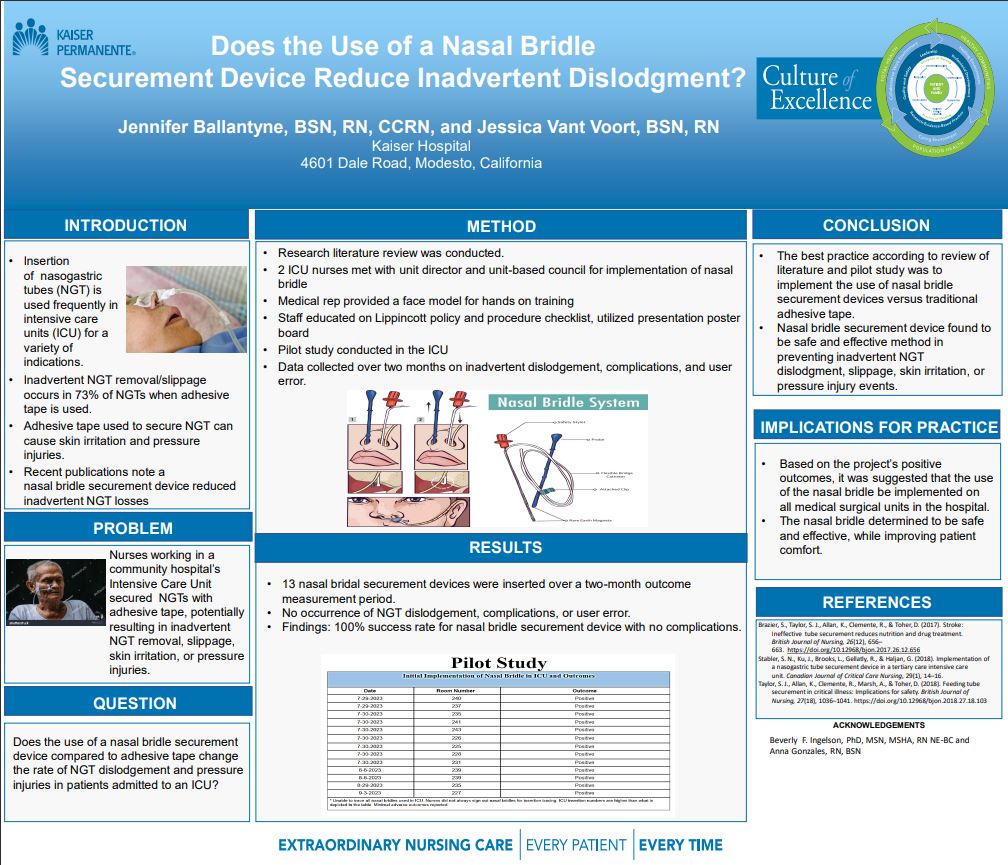
In our Modesto Medical Center, Intensive Care Unit (ICU), nurses faced challenges in securing nasogastric tubes (NGTs) with adhesive tape. While tape was a common method, it often resulted in unintended NGT removal, slippage, skin irritation, or pressure injuries. Recognizing the need for a safer, more effective solution, our team embarked on a journey to improve patient care through evidence-based practice.

A thorough literature review highlighted the Nasal Bridal Securement Device as a promising alternative. This device has shown to securely stabilize NGTs, reducing the risk of dislodgement while also improving patient comfort. To validate its efficacy, a pilot study was conducted within our ICU, where the device proved to be safe, effective, and well-received by both patients and staff. In fact, the success rate in our pilot unit was 100%, with no instances of inadvertent NGT removal or associated complications.

Encouraged by these results, the findings were presented to the nursing Professional Governance Councils and the Chief Nurse Executive. After a thorough review, both groups approved the widespread implementation of the Nasal Bridal Securement Device across our facility. This project became the first evidence-based practice change to successfully complete the full process—from literature review, evaluation of the evidence, pilot study, committee presentation and review to final approval for system-wide adoption.

The implementation of this device marked a significant milestone in our hospital’s commitment to enhancing patient safety and comfort. It also set the stage for future evidence-based practice initiatives, empowering nurses to continue improving care through research and innovation. The Nasal Bridal Securement Device not only addressed an immediate need but also demonstrated the power of collaboration and data-driven decision-making in nursing practice.

Poster of implementation of the Nasal Bridle Device
Goal milestone featured image placeholder

Manteca Enhanced Recovery Medicine

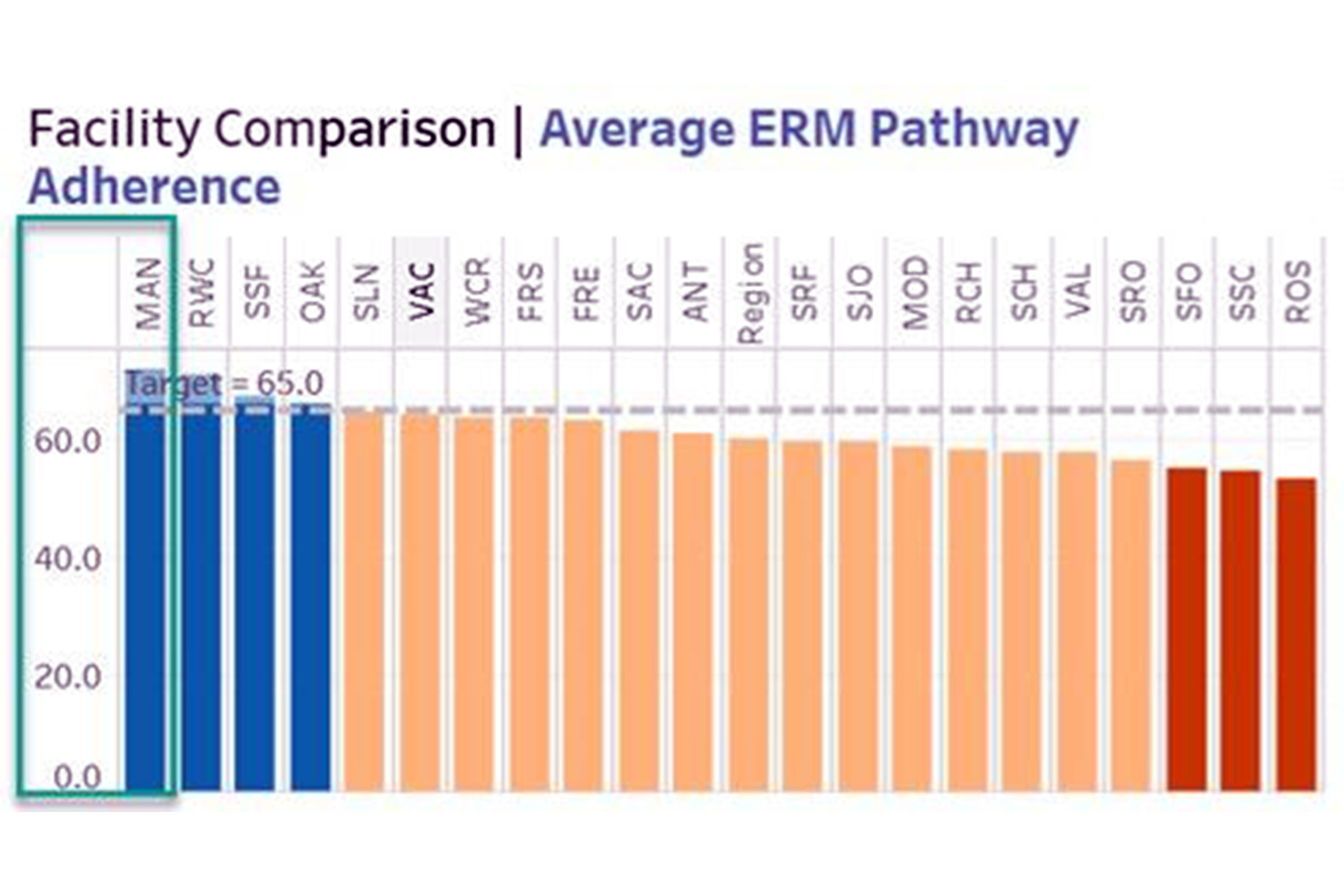
In 2024, Manteca’s Enhanced Recovery Medicine (ERM) team reached an extraordinary milestone by becoming the number one performer in the Kaiser Permanente, Northern California region, setting a new benchmark for excellence in patient care. This achievement reflects the dedication of the Manteca ERM team, guided by the strategic leadership of Jasleen Sandhu, MSN, RN, Department Manager of the ICU, Medical/Surgical/Telemetry and Float Pool, and Sameer Khullar, DNP, MSN-FNP, RN, CPH, Lead Quality Nurse Consultant. Together with the frontline nursing team leading the way, they fostered a culture of continuous improvement, leveraging data-driven strategies to enhance outcomes and operational efficiency. By tackling critical areas such as length of stay (LOS), readmission rates, and ERM assessment bundle compliance, the team transformed challenges into opportunities. Among their standout accomplishments was the consistent reduction of Average Length of Stay (LOS). They achieved this by streamlining discharge processes, improving communication across care teams, and refining workflows using real-time data. These interventions optimized patient flow and significantly improved the care experience for patients and staff alike.

Another significant success was maintaining Assessment Bundle Compliance, where the team consistently exceeded the regional target of 90%. This was accomplished through rigorous training, interdisciplinary collaboration, and strict adherence to evidence-based protocols, ensuring thorough and timely patient assessments. These improvements strengthened care quality and earned Manteca’s ERM team its leadership position. The accompanying graphs vividly illustrate these achievements, highlighting steady declines in LOS and sustained success in bundle compliance. Manteca ERM’s teams’ commitment to excellence demonstrates the power of collaboration, innovation, and a shared vision. Their success sets a new standard for patient care, serving as an inspiration for future initiatives. By combining teamwork, data-driven strategies, and visionary leadership, the Manteca ERM team proved that transformational change in health care is not only possible but also sustainable.

2024 CVA Annual Nursing Report Exemplary Professional Practice Manteca Enhanced Recovery Medicine Graph (Photo)(2)
Graph of ERM
Central Valley periop nurses

Guided imagery: An evidence-based, nurse-driven complimentary intervention

Surgery typically leads to acute postoperative pain, which physicians manage with pharmacologic interventions to alleviate discomfort. However, fear of pain and potential outcomes can intensify a patient’s perception of pain. Effective pain management plays a crucial role in ensuring both short- and long-term positive patient outcomes. In some cases, pharmacologic interventions alone do not address the unique needs of each patient. To meet these needs, one nurse began integrating a distraction technique by guiding patients to visualize their favorite place, finding a compatible soundscape on the internet, and assisting with purposeful breathing. This approach proved effective, prompting the nurse to seek out literature to understand the underlying reasons behind its success.

Through clinical inquiry, the nurse discovered evidence linking preoperative anxiety with increased postoperative pain, as well as supporting the use of guided imagery to reduce preoperative pain. After obtaining approval from the Kaiser Permanente, Research and Development Office (RDO), an evidence-based practice study was conducted in the Ambulatory Surgery Unit in Stockton. The study compared pre-intervention pain levels, length of stay, and opioid consumption in patients who received guided imagery. Additionally, patients who participated in guided imagery were assessed for anxiety both before and after the intervention, and they engaged in a follow-up discussion about their experience.

Key findings from the study included:

  • Guided imagery reduced preoperative anxiety by an average of 54%.
  • There was a 7-minute reduction in discharge readiness time from the first pain report when guided imagery was used.
  • For patients presenting with preoperative pain, guided imagery led to a 13-minute reduction in discharge readiness time.
  • Opioid consumption decreased by nearly 4 points on average when guided imagery was used with patients experiencing preoperative pain.
  • Patients reported an average satisfaction rating of 80% with their guided imagery experience.
  • Guided imagery, as a nurse-driven complementary intervention, has been shown to effectively reduce preoperative anxiety, improve postoperative pain management, and enhance the overall patient experience.
Back To Top